

10 Coldest Capital Cities in the World in 2026
Ulaanbaatar is the coldest capital city in the world with -1.3°C average temperature per year.

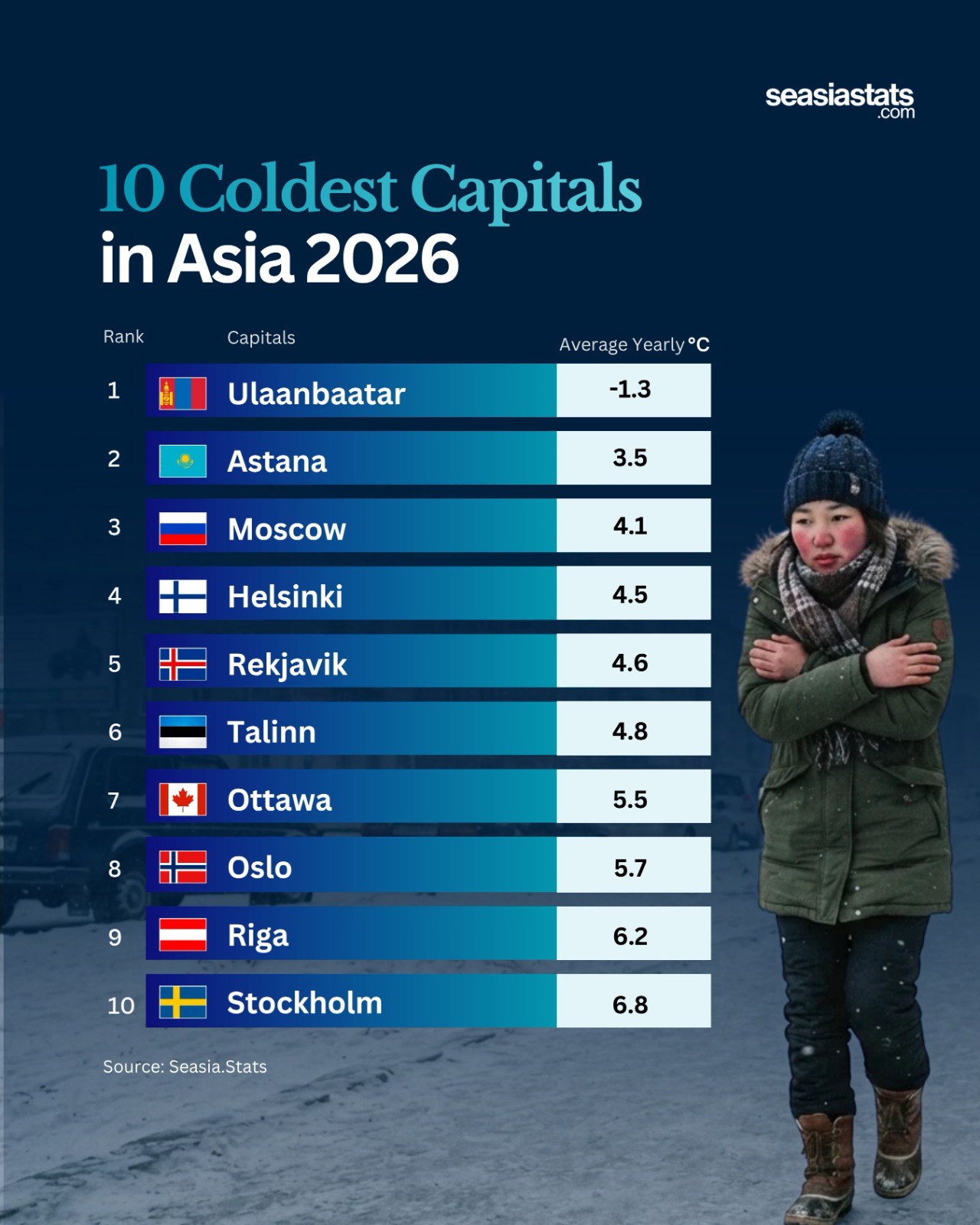
Temperature is one of the defining characteristics of a city's climate, shaping its lifestyle, culture, architecture, and daily activities. Around the world, some capital cities experience extremely cold conditions throughout the year, with long winters, freezing temperatures, and relatively short summers.
Based on their average annual temperatures in degrees Celsius, here are the ten coldest capital cities in the world in 2026.
Leading the ranking is Ulaanbaatar, Mongolia, with an average annual temperature of -1.3°C. Located at a high elevation, Ulaanbaatar experiences extremely harsh winters, when temperatures can drop far below freezing. Its long, bitterly cold winter makes it one of the coldest national capitals on Earth.
Following Ulaanbaatar is Astana, Kazakhstan, with an average annual temperature of 3.5°C. Known for its severe continental climate, Astana experiences freezing winters and considerable temperature differences between seasons.
In third place is Moscow, Russia, recording an average annual temperature of 4.1°C. The Russian capital is famous for its snowy winters, icy streets, and freezing conditions that often transform the city into a winter landscape.
Meanwhile, Helsinki, Finland, ranks fourth with an average of 4.5°C. Its northern location along the Baltic Sea contributes to its cold climate, particularly during the long winter months.
The fifth position belongs to Reykjavik, Iceland, with an average annual temperature of 4.6°C. Despite its coastal location, the Icelandic capital remains relatively cold throughout the year. Next is Tallinn, Estonia, recording 4.8°C. Its Baltic climate brings cold winters, frequent snowfall, and cool summers.
In seventh place, Ottawa, Canada, has an average annual temperature of 5.5°C. Canada's capital experiences dramatic seasonal changes, including extremely cold winters and warm summers. Oslo, Norway, follows closely in eighth place with 5.7°C, combining snowy winters with relatively mild summer conditions.
The final two cities are Riga, Latvia, and Stockholm, Sweden, with average annual temperatures of 6.2°C and 6.8°C, respectively. Both capitals experience chilly winters influenced by their northern European locations and proximity to the Baltic Sea.
Overall, these ten capitals demonstrate how geography, elevation, and climate influence temperatures around the world.
From the freezing conditions of Ulaanbaatar to the comparatively milder climate of Stockholm, each city offers a unique experience of life in colder regions. These destinations highlight the remarkable diversity of climates found among the world's national capitals in 2026.