

10 Countries with the Best Natural Environment
These ten countries are serious in protecting their beautiful natural environment.

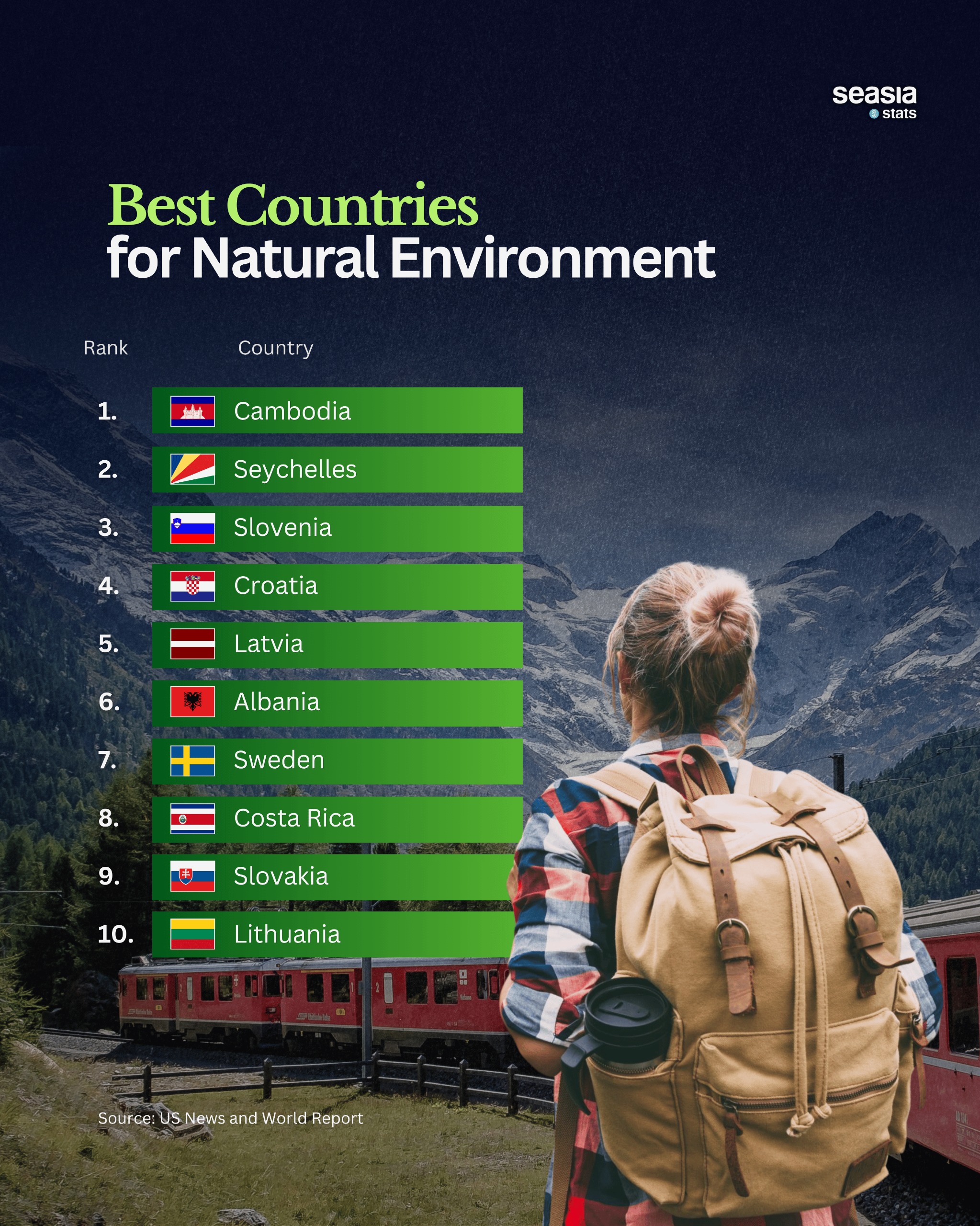
The world’s most beautiful natural environments are often found in countries that successfully preserve their forests, coastlines, mountains, rivers, and biodiversity. In 2026, several nations stand out globally for their breathtaking landscapes and strong connection to nature.
From tropical islands to alpine valleys, these countries offer some of the planet’s most remarkable environmental treasures.
Cambodia is increasingly recognized for its rich ecological diversity and ancient natural landscapes. Beyond the famous temples of Angkor Wat, the country features lush rainforests, wetlands, and the massive Tonlé Sap Lake, one of Southeast Asia’s most important freshwater ecosystems.
The island nation of Seychelles is widely admired for pristine beaches, crystal-clear waters, and extraordinary marine biodiversity. Its protected coral reefs and tropical forests make it one of the world’s leading eco-tourism destinations.
Similarly, Costa Rica continues to earn global praise for environmental conservation, with nearly a quarter of its land protected through national parks and reserves. The country is famous for volcanoes, rainforests, and incredible wildlife including sloths, toucans, and sea turtles.
In Europe, Slovenia stands out for its green tourism initiatives and stunning alpine scenery. Attractions such as Lake Bled and Triglav National Park showcase the country’s commitment to preserving nature. Neighboring Croatia combines dramatic Adriatic coastlines with waterfalls, forests, and islands, especially within Plitvice Lakes National Park.
The Baltic nations of Latvia and Lithuania are appreciated for dense forests, clean air, and peaceful natural reserves. These countries provide an ideal setting for sustainable tourism and outdoor recreation. Meanwhile, Sweden remains one of the world’s environmental leaders, offering vast forests, thousands of lakes, Arctic landscapes, and strong ecological policies.
The Balkans are represented by Albania and Slovakia. Albania has rapidly gained popularity for untouched beaches along the Albanian Riviera and rugged mountain scenery. Slovakia, home to parts of the Carpathian Mountains and the High Tatras, attracts visitors seeking dramatic peaks, caves, and hiking opportunities.
Together, these countries demonstrate how natural beauty and environmental preservation can coexist. Their landscapes not only support tourism, but also remind the world of the importance of protecting ecosystems for future generations.