

10 Countries with the Highest Annual Freshwater Withdrawal
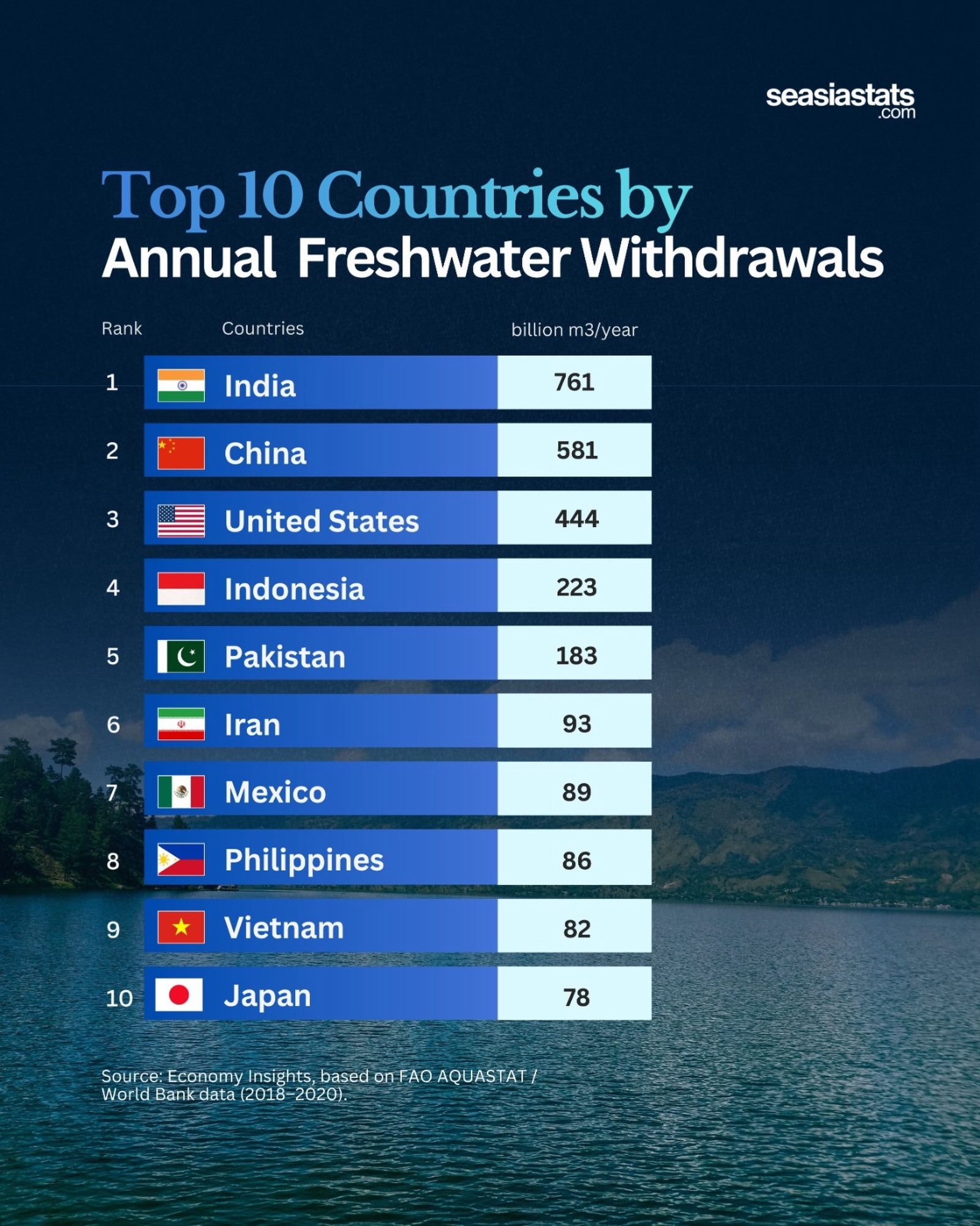
India withdraws the most freshwater per year with 761 billion cubic meters.

Freshwater is one of the world's most important natural resources, supporting agriculture, industry, energy production, and everyday household activities. Across the globe, countries withdraw enormous quantities of freshwater each year to meet the needs of their populations and economies.
Among the countries with the highest annual freshwater withdrawals, India stands at the top with approximately 761 billion cubic meters. This figure reflects the country's enormous population and extensive agricultural sector, which depends heavily on irrigation.
China follows India with around 581 billion cubic meters of annual freshwater withdrawal. As one of the world's largest agricultural and industrial economies, China requires significant quantities of water for crop production, manufacturing, energy generation, and domestic use.
The United States ranks third, withdrawing approximately 444 billion cubic meters each year. Its water demand comes from a combination of agriculture, industry, electricity production, and municipal consumption across a geographically diverse country.
Indonesia occupies fourth place with approximately 223 billion cubic meters. Its large population, extensive agricultural areas, and growing economic activities contribute significantly to national water demand.
Pakistan follows with 183 billion cubic meters, with agriculture representing an especially important source of freshwater demand. Much of the country's farming activity depends on irrigation, making reliable water supplies essential for food production and rural livelihoods.
Iran records approximately 93 billion cubic meters of annual freshwater withdrawal, followed closely by Mexico with 89 billion cubic meters. Both countries have substantial agricultural sectors, while differences in climate and water availability also influence how freshwater is managed.
The Philippines comes next with approximately 86 billion cubic meters. Its growing population, agricultural activities, industries, and urban centers all contribute to the country's overall freshwater requirements.
Vietnam withdraws around 82 billion cubic meters annually, placing it ninth among the countries in this group. Water plays an important role in Vietnamese agriculture, particularly rice cultivation, while industrial and household needs also contribute to demand.
Japan completes the list with approximately 78 billion cubic meters. Despite having a smaller land area than many countries on this list, Japan has considerable industrial, agricultural, and domestic water requirements due to its population and highly developed economy.
Together, these figures illustrate the enormous scale of freshwater use around the world. The amount of water withdrawn by a country is influenced by many factors, including population size, agricultural practices, industrial development, climate, and infrastructure.
High withdrawal does not necessarily mean that a country consumes all of the water it takes from natural sources, as some water can be returned to rivers, lakes, or groundwater systems after use.
The rankings also highlight the importance of responsible water management. As populations grow, economies expand, and climate conditions change, ensuring reliable freshwater supplies will become increasingly important.
Efficient irrigation, improved infrastructure, conservation, and sustainable resource management can all help countries meet their water needs while protecting freshwater resources for future generations.