

10 Countries with the Highest Carbon Emissions From Forest and Land Fires
Indonesia's current devastating forest and land fires are contributing the most carbon emissions in the world.

Forest and land fires are significant sources of carbon emissions worldwide, contributing to climate change, environmental destruction, and air pollution.
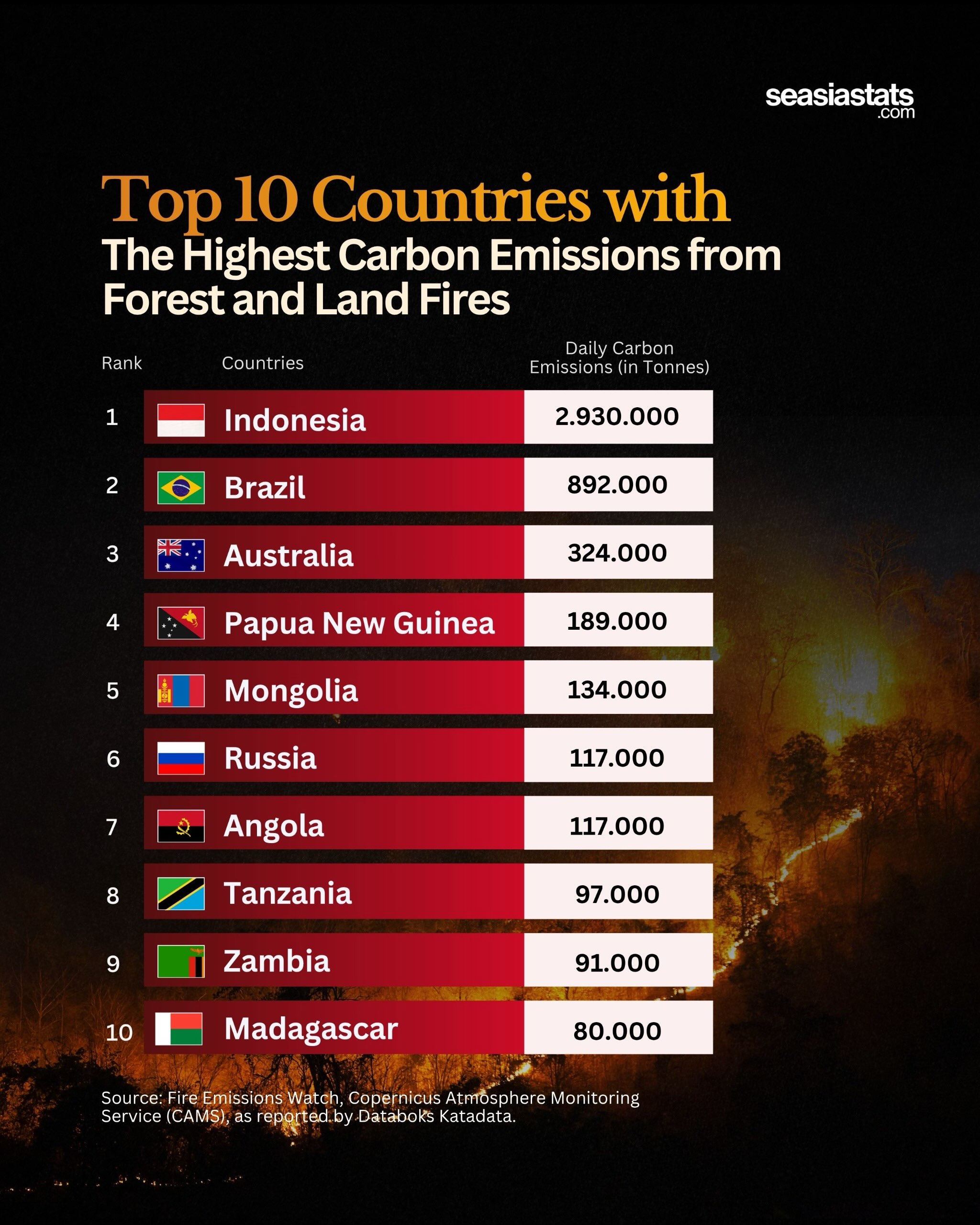
According to figures from Fire Emissions Watch and the Copernicus Atmosphere Monitoring Service (CAMS), Indonesia ranks first among the top 10 countries with the highest daily carbon emissions from forest and land fires.
Indonesia recording an estimated 2,930,000 tons emissions, far exceed those of the other countries on the list due to its ongoing forest and land fires. This is highlighting the substantial impact of fires on its forests and peatlands.
When vegetation burns, carbon stored in trees, plants, and soil is released into the atmosphere. Fires in peatlands can be particularly damaging because they may burn underground and release large amounts of carbon over extended periods.
Brazil ranks second, with daily emissions of 892,000 tons. The country's extensive tropical forests, especially in the Amazon, are vulnerable to fires associated with dry conditions and human activities such as land clearing.
Australia follows in third place, recording 324,000 tons per day, reflecting the considerable emissions that can result from bushfires across its vast landscapes.
Papua New Guinea occupies fourth place, with daily emissions of 189,000 tons, while Mongolia ranks fifth at 134,000 tons. Russia and Angola share sixth place, each recording 117,000 tons per day. These figures demonstrate that fire-related emissions affect a wide range of environments, from forested regions to grasslands and savannas.
African countries also feature prominently in the rankings. Tanzania ranks eighth, with daily emissions of 97,000 tons, followed by Zambia in ninth place at 91,000 tons. Madagascar completes the top 10, recording 80,000 tons per day.
These emissions highlight the importance of fire monitoring and land management across different ecosystems, particularly where seasonal burning and agricultural activities can contribute to widespread fires.
The figures underline the global challenge of reducing emissions from forest and land fires. Beyond releasing greenhouse gases, fires destroy wildlife habitats, threaten biodiversity, damage communities, and worsen air quality. They can also weaken the natural ability of forests to absorb carbon dioxide, making climate change mitigation more difficult.
Preventing uncontrolled burning, improving forest management, protecting peatlands, and strengthening early-warning systems are essential steps toward reducing fire-related emissions. International cooperation and effective environmental policies are equally important in addressing the problem.
With Indonesia recording the highest daily emissions among the listed countries, the rankings emphasize the urgency of protecting forests and other vulnerable landscapes to limit carbon emissions and safeguard the global climate.