

10 Countries with the Highest Road Traffic Death Rates
These countries are the most dangerous to be on the road.

Road traffic accidents remain a major global public health concern, claiming millions of lives and causing serious injuries every year.
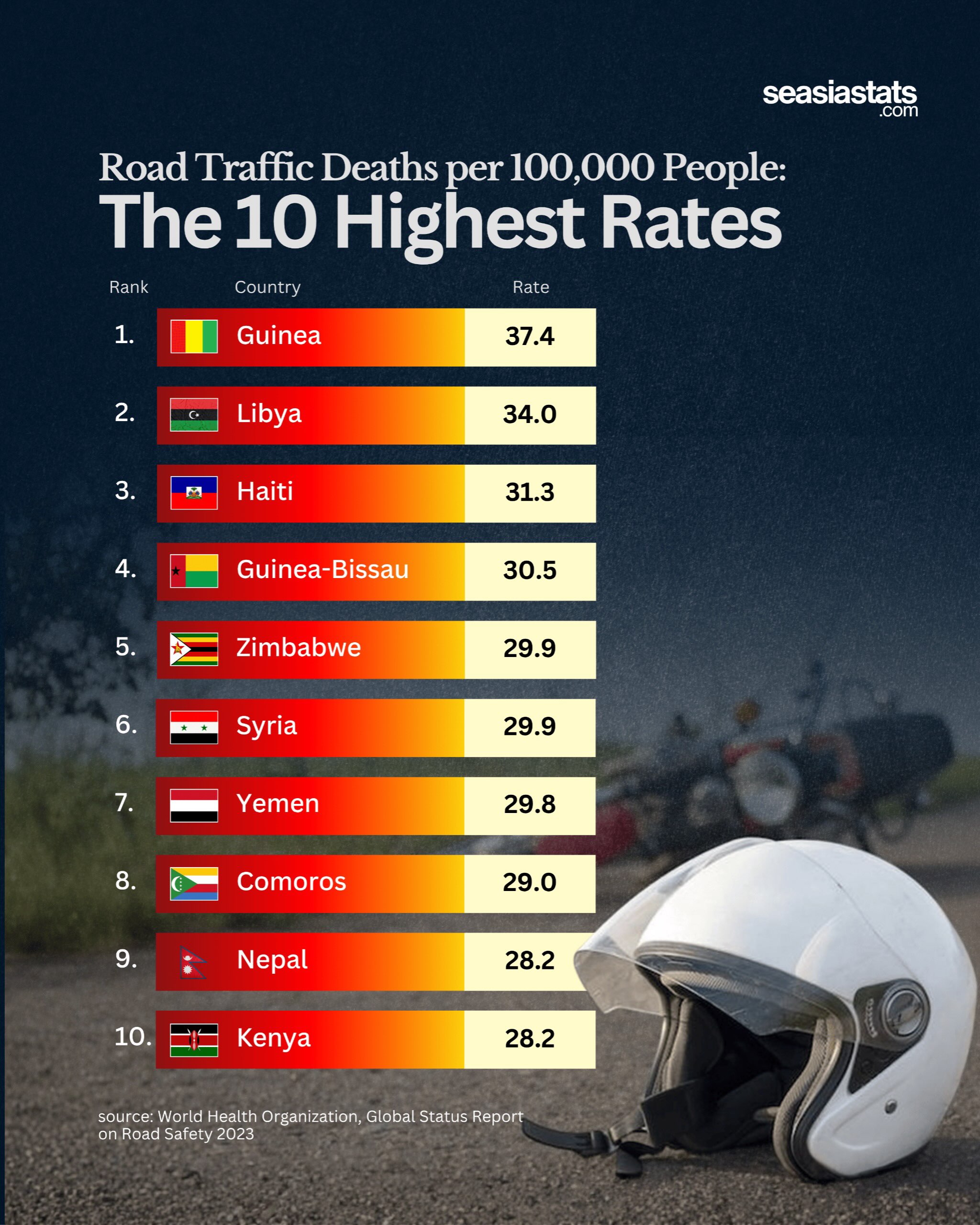
According to the World Health Organization (WHO) Global Status Report on Road Safety 2023, some countries experience significantly higher road traffic death rates than others. The figures highlight the urgent need for stronger road safety measures, improved infrastructure, and greater public awareness.
Based on the figures provided, Guinea ranks first, with 37.4 road traffic deaths per 100,000 people. This high rate emphasizes the challenges associated with road safety, including infrastructure limitations, vehicle conditions, and enforcement of traffic regulations.
Libya ranks second, recording 34.0 deaths per 100,000 people. Road safety challenges may be compounded by difficulties in maintaining transport infrastructure and ensuring consistent enforcement of traffic laws.
Haiti ranks third, with 31.3 deaths per 100,000 people. Limited resources for road maintenance, emergency medical services, and traffic management can make preventing road deaths particularly challenging.
In fourth place, Guinea-Bissau records 30.5 deaths per 100,000 people. Improving road conditions, strengthening driver education, and promoting safer driving practices could help reduce fatalities.
Zimbabwe ranks fifth, with 29.9 deaths per 100,000 people. Road safety initiatives, including stricter enforcement against speeding and drunk driving, could contribute to safer roads.
Syria also records 29.9 deaths per 100,000 people, placing it alongside Zimbabwe in the reported figures. Conflict-related damage to infrastructure and disruptions to emergency services may further complicate road safety efforts.
In seventh place, Yemen reports 29.8 deaths per 100,000 people. Investment in road infrastructure, vehicle safety, and accessible emergency medical care is essential to reducing preventable fatalities.
Comoros ranks eighth, with 29.0 deaths per 100,000 people. Greater attention to road maintenance, pedestrian protection, and road user education could improve safety.
Nepal ranks ninth, with 28.2 deaths per 100,000 people. Its mountainous terrain, winding roads, and exposure to challenging weather conditions can increase transportation risks, making safer road design and effective traffic management especially important.
Finally, Kenya also records 28.2 deaths per 100,000 people, sharing the reported rate with Nepal. Measures such as enforcing speed limits, improving vehicle inspections, promoting seat belt and helmet use, and strengthening emergency response systems could help save lives.
In conclusion, these ten countries illustrate the continuing challenge of reducing road traffic fatalities. Governments, communities, and road users all have important roles in improving safety.
Through investment in safer infrastructure, effective legislation, public education, and timely medical assistance, countries can work toward reducing preventable deaths and making roads safer for everyone.