

10 Countries with the Most Female Surplus in 2027
In 2027, Russia will have 10.5 million more women than men, the biggest female surplus in the world.

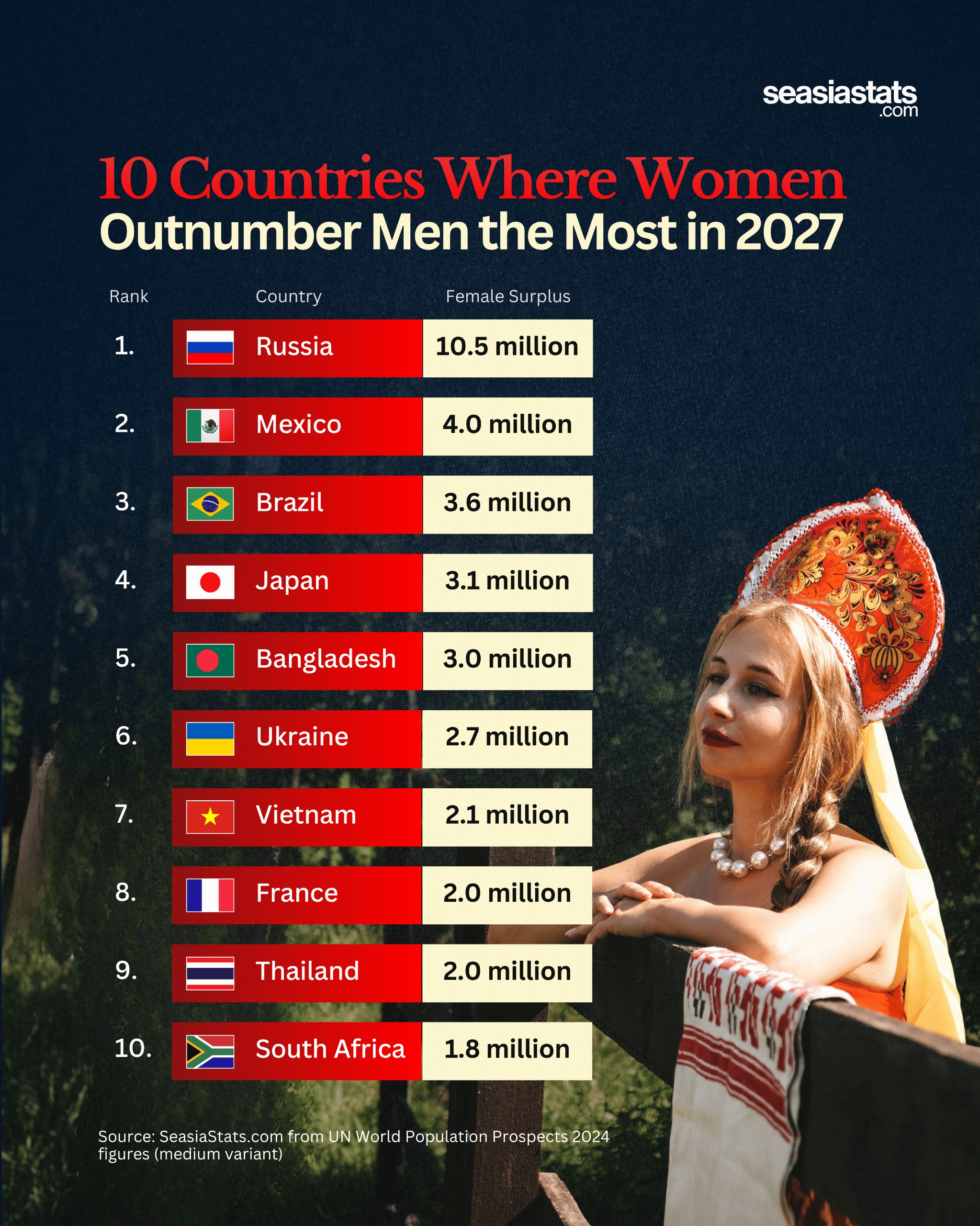
According to the United Nations’ World Population Prospects 2024, several countries are projected to have significantly more women than men in 2027. This female surplus reflects differences in life expectancy, mortality rates, migration patterns, and demographic changes.
Russia is expected to have the world's largest female surplus, with approximately 10.5 million more women than men.
This substantial difference is largely associated with the country's gender gap in life expectancy, as Russian women generally live considerably longer than men. Historical demographic patterns and higher male mortality have also contributed to this imbalance.
Mexico ranks second, with an estimated female surplus of 4 million. The country's population structure, differences in life expectancy, and migration patterns contribute to the growing gap between its female and male populations.
Brazil follows closely in third place, with approximately 3.6 million more women than men. Its aging population and longer female life expectancy are important factors behind this difference.
Japan occupies fourth place, with an estimated surplus of 3.1 million women. As one of the world's oldest societies, Japan has a particularly noticeable gender imbalance among older age groups, where women make up a larger proportion of the population because they tend to live longer.
Bangladesh ranks fifth, with approximately 3 million more women than men. Its demographic development, changing mortality patterns, and population structure contribute to the female advantage.
Ukraine follows in sixth place, with a projected female surplus of 2.7 million, reflecting longstanding differences in male and female life expectancy as well as the country's complex demographic circumstances.
Vietnam ranks seventh, with around 2.1 million more women than men. Meanwhile, France occupies eighth place, with approximately 2 million additional women. Its aging population and women's higher average life expectancy help explain this demographic pattern.
Thailand also records a female surplus of approximately 2 million, placing it ninth. Similar to Japan, its aging population and longer female life expectancy contribute to the difference. Finally, South Africa completes the top ten, with an estimated 1.8 million more women than men.
Overall, these projections highlight how demographic differences shape population structures around the world. Although the size of the female surplus varies considerably, longer female life expectancy remains an important factor in many of these countries.
By 2027, Russia is expected to stand far ahead of the others, demonstrating the most significant numerical difference between women and men among these ten nations.