

10 Countries with the Most Snake Species in the World
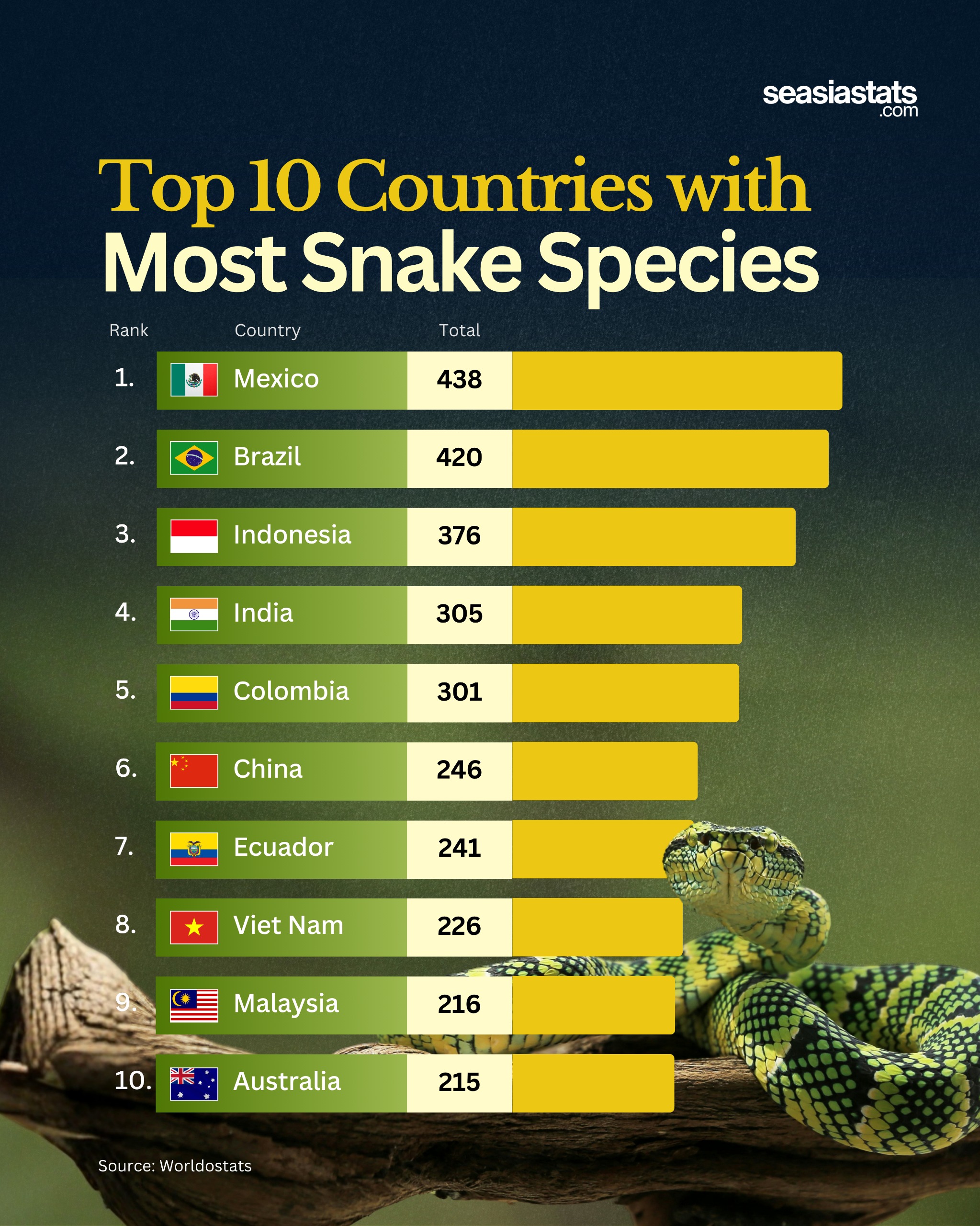
Mexico has 438 different species of snake, the most in the world.

Snakes are among the most fascinating and diverse groups of reptiles on Earth, inhabiting a wide range of environments, from tropical rainforests and grasslands to deserts, mountains, and wetlands. With thousands of species distributed across different continents, some countries stand out for their remarkable snake diversity.
Their warm climates, varied ecosystems, and extensive natural habitats provide ideal conditions for numerous snake species to thrive. Among the world's most snake-rich countries, Mexico takes the leading position, followed by Brazil and Indonesia.
Taking first place is Mexico, with an impressive 438 snake species. Its extraordinary biodiversity is supported by diverse landscapes, ranging from tropical forests and dry deserts to coastal ecosystems and mountainous regions.
This variety of habitats allows numerous snake species to coexist, including colorful, nonvenomous snakes and some of the world's most recognizable venomous species.
In second place, Brazil records 420 snake species. As home to the Amazon rainforest, the Pantanal wetlands, and vast tropical ecosystems, Brazil provides an enormous range of habitats for reptiles. Its rich biodiversity makes the country one of the most important destinations for snake research and conservation.
Indonesia ranks third with 376 snake species. Spread across thousands of islands, the country possesses an extraordinary variety of tropical forests, wetlands, mountains, and coastal environments.
Its geographical diversity and unique island ecosystems support many fascinating snake species, making Indonesia one of Asia's richest countries for snake biodiversity.
In fourth place, India has 305 snake species. From the Himalayan foothills and dense tropical forests to grasslands and agricultural landscapes, India's varied environments provide habitats for an impressive range of snakes.
Meanwhile, Colombia ranks fifth with 301 species. Its Amazonian forests, Andean mountains, and tropical lowlands create exceptional conditions for reptile diversity. China follows in sixth place with 246 species, reflecting its enormous geographical range and diverse climatic zones.
With 241 species, Ecuador occupies seventh place. Despite its relatively small size, the country boasts remarkable biodiversity, particularly in the Amazon rainforest and other tropical regions. Vietnam ranks eighth with 226 species, supported by its tropical forests, mountainous landscapes, and extensive river systems.
In ninth place, Malaysia records 216 snake species. Its tropical rainforests and rich ecosystems provide excellent habitats for numerous reptiles. Completing the top ten is Australia, with 215 species. Famous for its unique wildlife, Australia is particularly notable for its extraordinary diversity of venomous snakes, alongside many nonvenomous species.
Together, these ten countries demonstrate the remarkable diversity of snakes around the world. Their rich ecosystems highlight the importance of protecting natural habitats, supporting scientific research, and conserving biodiversity for future generations.