

10 Countries with the Most Threatened Wildlife Species
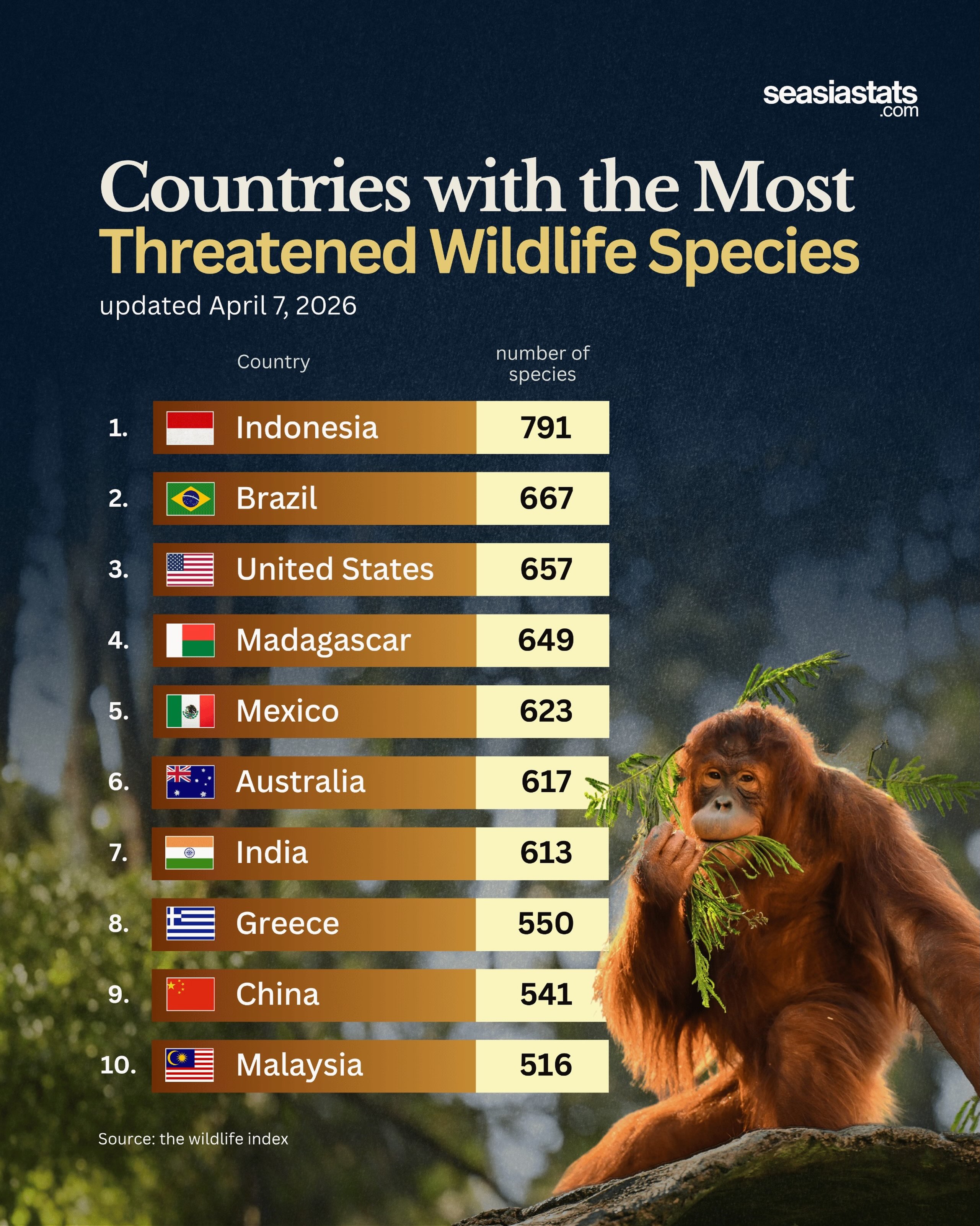
Indonesia currently has the most threatened wildlife species with 791.

Wildlife around the world is facing growing pressure from habitat destruction, climate change, pollution, hunting, and other human activities. According to The Wildlife Index, which uses data from the International Union for Conservation of Nature (IUCN) Red List, several countries stand out for having particularly high numbers of threatened wildlife species.
Indonesia ranks first, with 791 threatened species. Its vast archipelago contains rainforests, wetlands, mountains, and marine ecosystems that support extraordinary biodiversity. However, deforestation and habitat loss are major threats to species such as orangutans and Sumatran tigers.
Brazil follows with 667 species. Its Amazon rainforest and Pantanal wetlands provide habitats for jaguars, giant otters, and countless other animals, but deforestation, agriculture, and mining continue to put wildlife at risk.
The United States ranks third, with 657 threatened species. Its wide range of ecosystems, from forests and deserts to coastal environments, supports diverse wildlife, although urban expansion and climate change create significant conservation challenges.
Madagascar, with 649 species, is also highly vulnerable. Its unique wildlife, including many species found nowhere else on Earth, is threatened largely by habitat destruction.
Mexico has 623 threatened species, while Australia has 617. Both countries are recognized for their distinctive ecosystems and endemic animals, but habitat change, climate pressures, and other environmental threats are placing many species under increasing stress.
India, with 613 threatened species, also faces challenges from habitat loss, human development, and pressure on natural resources.
The remaining countries in the top ten are Greece (550), China (541), and Malaysia (516). These figures demonstrate that threatened wildlife is not limited to one continent or type of ecosystem. From tropical rainforests and islands to deserts and temperate forests, biodiversity is under pressure across the globe.
The rankings also highlight an important paradox: countries with enormous biodiversity can have some of the highest numbers of threatened species. A high number does not necessarily mean that a country has poor wildlife protection; it can also reflect the sheer number and uniqueness of species living there.
Nevertheless, the figures emphasize the importance of protecting habitats, reducing illegal hunting and wildlife trade, addressing climate change, and strengthening conservation programs.
Ultimately, these ten countries show how closely the future of wildlife is connected to the protection of natural habitats. Effective conservation efforts can help ensure that threatened species survive for future generations.