

10 Countries with the Shortest Average Male Height
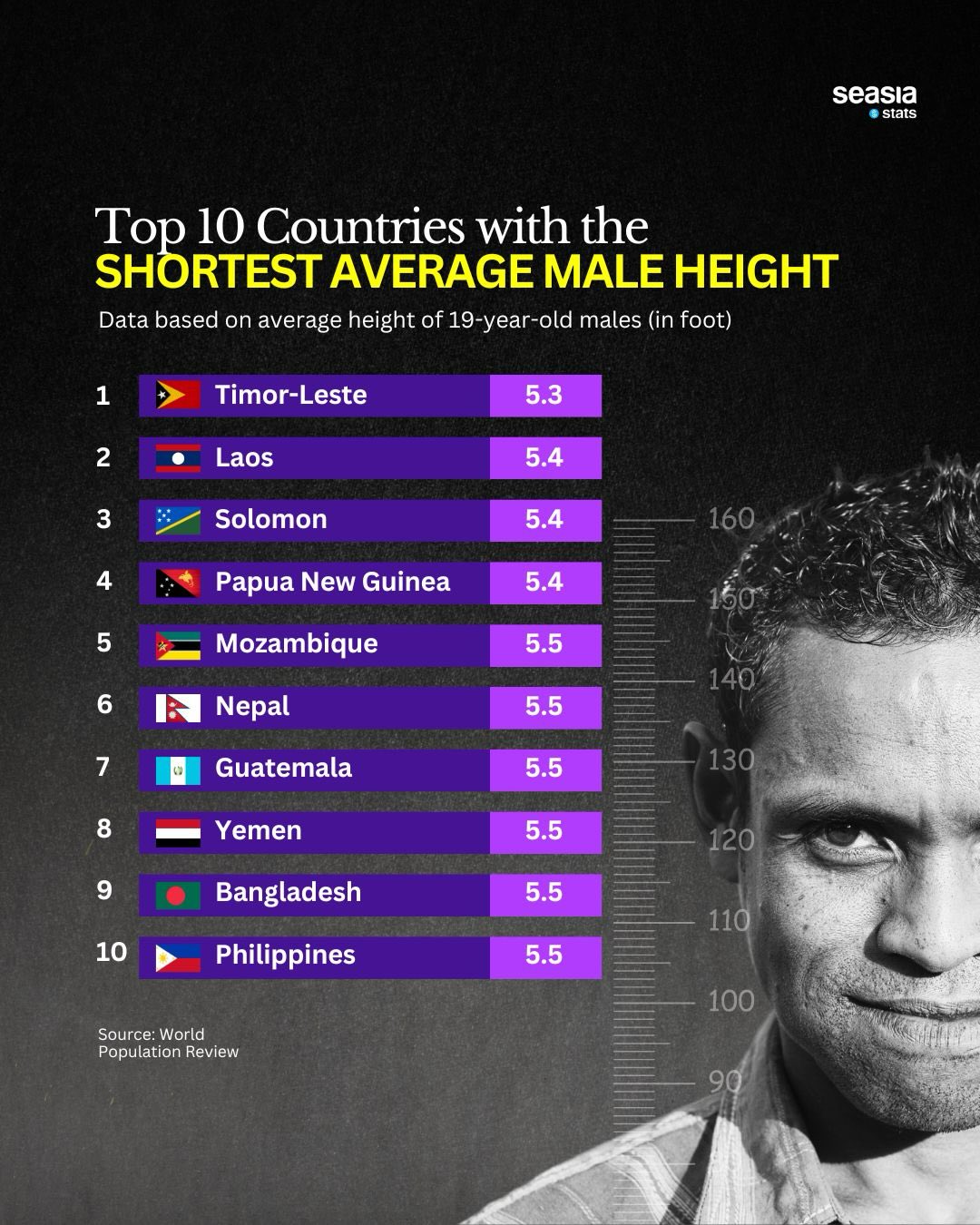
Timor-Leste has the shortest average male height in the world with 5.3 feet.

Average height varies significantly around the world due to a combination of genetics, nutrition, healthcare, living conditions, and environmental factors.
While height is not an indicator of a country's success or quality of life, it remains an interesting demographic characteristic. Based on the figures provided, the following are the ten countries with the shortest average male height, measured in feet.
Timor-Leste ranks first with an average male height of 5.3 feet. As one of the youngest nations in the world, Timor-Leste has faced economic and developmental challenges that have influenced nutrition and healthcare outcomes over generations. Despite these obstacles, the country has made progress in improving public health and education.
Laos, the Solomon Islands, and Papua New Guinea share an average male height of 5.4 feet. These nations are characterized by diverse ethnic populations and unique geographical environments.
In many rural areas, access to healthcare and nutritious food remains limited, which can affect physical development. However, ongoing improvements in infrastructure and healthcare are helping to address these challenges.
Mozambique, Nepal, Guatemala, Yemen, Bangladesh, and the Philippines all have an average male height of 5.5 feet. Although these countries are located on different continents and have distinct cultures, they share some common factors, including large rural populations and varying levels of economic development.
In Nepal, mountainous terrain has historically made access to healthcare and resources difficult for many communities. Bangladesh, despite its rapid economic growth in recent decades, continues to face challenges related to population density and nutrition. Yemen has experienced years of conflict that have negatively impacted living conditions and public health.
Guatemala and Mozambique also face development challenges that affect health outcomes, particularly in rural regions. Meanwhile, the Philippines has made significant progress in economic growth and education, though regional disparities continue to exist across the archipelago.
It is important to recognize that average height is influenced by many factors and does not determine individual potential, athletic ability, intelligence, or overall health. Within every country, there is considerable variation among individuals, and average figures only provide a broad demographic overview.
As nutrition, healthcare access, sanitation, and living standards continue to improve around the world, average heights may gradually increase in many developing nations. The study of human height offers valuable insights into long-term trends in public health and development, making it an interesting topic for researchers and policymakers alike.