

10 Loneliest Countries in the World
Loneliness is rising and people in these countries are experiencing it the most.

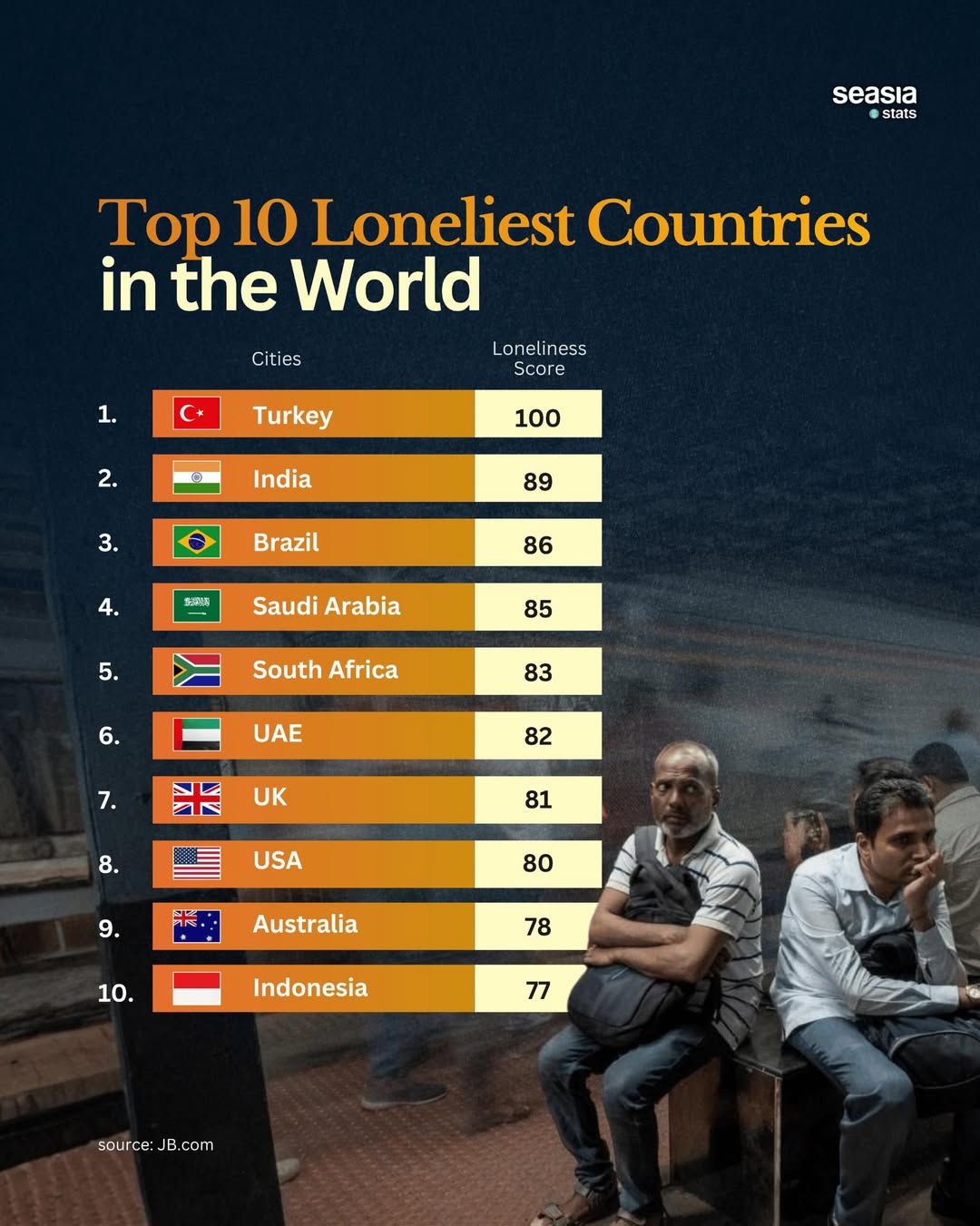
Loneliness has become a growing social challenge across the globe, affecting people of all ages and backgrounds. According to a study by JB.com, several countries stand out for having particularly high levels of loneliness.
The ranking reflects a combination of factors, including social isolation, changing lifestyles, urbanization, and the impact of digital communication on personal relationships.
Turkey ranks as the world's loneliest country with a score of 100, making it the benchmark against which all other countries in the study are measured. Rapid urban growth, economic pressures, and evolving social structures may contribute to feelings of isolation among many residents.
India places second with a score of 89. Despite its large population and strong family traditions, modernization, migration to major cities, and increasing work demands have created new challenges for social connection. Many people find themselves separated from traditional support networks as they pursue educational and career opportunities.
Brazil ranks third with a score of 86. While known for its vibrant culture and social gatherings, economic inequality, urban stress, and changing lifestyles can still contribute to loneliness for many individuals.
Saudi Arabia follows closely with a score of 85. The country has experienced rapid social and economic transformation in recent years, and changing patterns of work, family life, and urban living may influence feelings of social isolation.
South Africa ranks fifth with a score of 83. Social and economic disparities, along with geographic and community challenges, can affect opportunities for meaningful social interaction.
The United Arab Emirates records a score of 82. As a global business hub with a large expatriate population, many residents live far from family and long-term social networks, increasing the risk of loneliness.
The United Kingdom ranks seventh with a score of 81. Loneliness has been recognized as a significant public health issue in the country, affecting people across different age groups despite widespread digital connectivity.
The United States follows closely with a score of 80. Research has increasingly highlighted concerns about social isolation, declining community participation, and the effects of modern lifestyles on personal relationships.
Australia ranks ninth with a score of 78. Although it consistently performs well on many quality-of-life measures, factors such as geographic distance, remote living, and changing social habits can contribute to loneliness.
Indonesia completes the top ten with a score of 77. As the country continues to urbanize and modernize, traditional community ties are evolving, creating new challenges for maintaining social connections.
The findings highlight that loneliness is a global issue affecting countries with diverse cultures, economies, and populations. Addressing it will require strengthening communities, encouraging meaningful relationships, and promoting social well-being in an increasingly connected yet often isolated world.