

10 Major Forest and Land Fire Seasons Around the World
Australia had the worst forest and land fire seasons in the world.

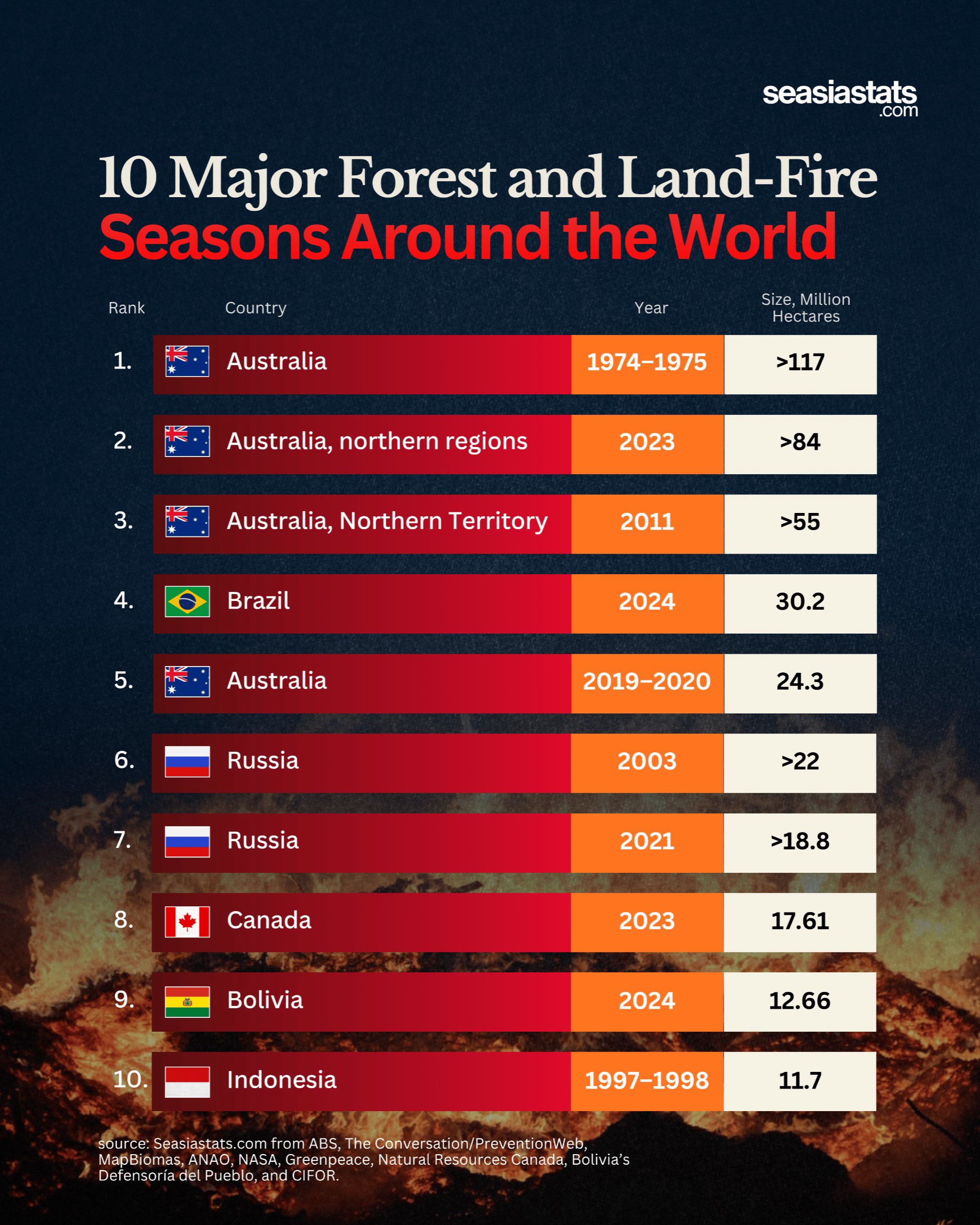
Forest and land fires are among the most serious environmental disasters worldwide. They destroy natural habitats, threaten wildlife, damage human settlements, and release large amounts of smoke and greenhouse gases into the atmosphere.
Extreme temperatures, prolonged droughts, land clearing, and human activities can contribute to the spread and intensity of fires. Throughout history, several countries have experienced fire seasons that burned millions of hectares of land, demonstrating the global scale of this environmental challenge.
One of the largest recorded fire events occurred in Australia during the 1974–1975 fire season, when more than 117 million hectares reportedly burned. The fires affected extensive areas of grassland, woodland, and other vegetation.
In 2023, Australia's northern regions experienced another enormous fire season, with more than 84 million hectares reportedly burned.
Similarly, the Northern Territory experienced extensive fires in 2011, when more than 55 million hectares were reportedly affected. These figures highlight the vulnerability of Australia's vast savannas and grasslands to widespread burning.
Brazil experienced a devastating fire season in 2024, with approximately 30.2 million hectares reportedly burned. Fires affected several ecosystems, including the Amazon and Cerrado, raising concerns about biodiversity loss, deforestation, and climate change.
Australia's 2019–2020 bushfire season, widely known as Black Summer, burned approximately 24.3 million hectares. It destroyed homes, damaged ecosystems, killed wildlife, and generated extensive smoke pollution.
Russia also experienced a major fire season in 2003, when approximately 18.8 million hectares reportedly burned. Extensive forest fires contributed to air pollution and the release of carbon emissions.
In Canada, the 2023 wildfire season burned approximately 17.61 million hectares, setting a national record for burned area. The fires threatened communities, damaged forests, and sent smoke across large parts of North America.
In Bolivia, fires in 2024 reportedly burned approximately 12.66 million hectares, severely affecting forests, grasslands, and wildlife habitats. Meanwhile, Indonesia's 1997–1998 fire crisis burned approximately 11.7 million hectares.
Associated with land clearing and exceptionally dry conditions, the fires produced severe regional haze that affected public health, transportation, and neighboring countries.
Taken together, these fire seasons demonstrate the urgent need for effective fire prevention, sustainable land management, early-warning systems, and international cooperation.
However, the reported burned areas should be interpreted carefully because estimates may include forests, grasslands, agricultural land, and other vegetation. Consistent measurement and reliable data are essential for understanding the true scale of global fires and protecting the environment for future generations.