

10 Must-Try Traditional Foods When Visiting Southeast Asian Countries
If you're planning a trip to Southeast Asia, here are the dishes you must try from each country.

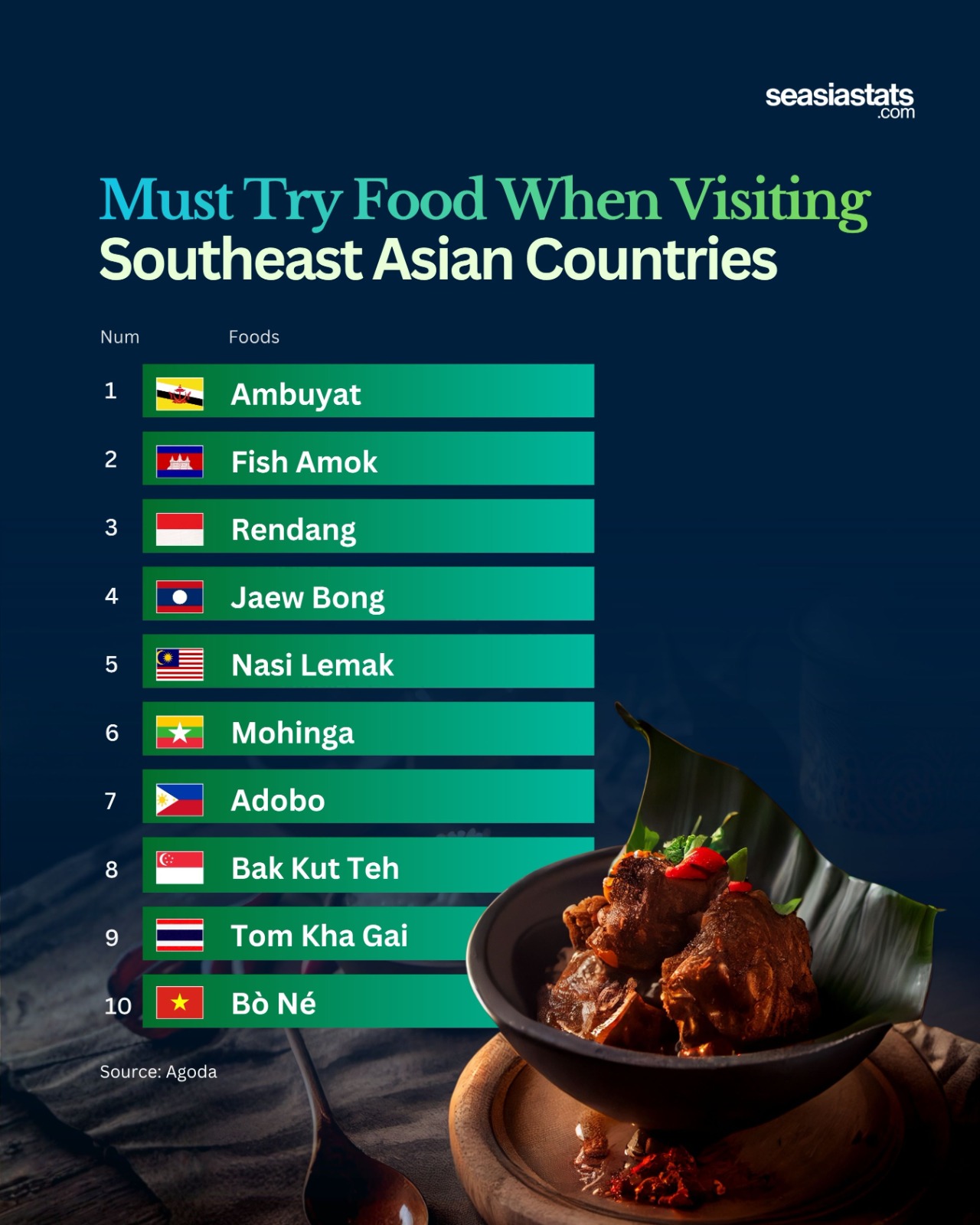
Southeast Asia is a fascinating destination for food enthusiasts, offering an incredible variety of traditional dishes influenced by local cultures, history, and culinary traditions. From spicy delicacies and rich coconut-based dishes to comforting soups and flavorful rice meals, every country has something unique to offer.
According to Agoda, there are ten must-try traditional foods that travelers should experience when visiting Southeast Asian countries, each representing the distinctive flavors and culinary heritage of its homeland.
In Brunei, one of the most unusual local specialties is Ambuyat, a traditional dish made from sago starch extracted from the trunk of the sago palm.
Known for its sticky and glue-like texture, Ambuyat has a mild taste and is usually eaten with a variety of flavorful dipping sauces, particularly those with sour and spicy flavors. It is often accompanied by fish and vegetables, making it an interesting culinary experience for visitors.
Travelers visiting Cambodia should try Fish Amok, one of the country's most famous traditional dishes. Prepared with freshwater fish, coconut milk, and a fragrant mixture of Khmer spices called kroeung, the dish is traditionally steamed in banana leaves. Its creamy texture and aromatic flavor make it a favorite among locals and international visitors.
In Indonesia, Rendang is a must-try specialty, particularly for those who enjoy rich and flavorful food. Originating from the Minangkabau culture of West Sumatra, this traditional beef dish is slowly cooked with coconut milk and a combination of spices until the meat becomes tender and absorbs the intense flavors.
Meanwhile, Laos offers Jaew Bong, a traditional chili paste made with dried chilies, garlic, shallots, and various seasonings. Its combination of spicy, sweet, and savory flavors makes it a popular accompaniment to sticky rice and fresh vegetables.
In Malaysia, Nasi Lemak is widely recognized as a national culinary favorite. The dish consists of fragrant rice cooked in coconut milk and pandan leaves, served with sambal, anchovies, peanuts, cucumber, and boiled eggs.
Myanmar has its own iconic specialty called Mohinga, a comforting fish-based noodle soup commonly enjoyed for breakfast. Its flavorful broth combines fish, lemongrass, ginger, and other aromatic ingredients.
For visitors to the Philippines, Adobo is an essential dish to experience. Usually prepared with chicken or pork simmered in soy sauce, vinegar, garlic, bay leaves, and black pepper, it offers a delicious balance of savory and tangy flavors.
Singapore is famous for Bak Kut Teh, a comforting pork rib soup seasoned with garlic, pepper, and aromatic herbs. In Thailand, Tom Kha Gai is another popular choice, featuring chicken, coconut milk, galangal, lemongrass, and mushrooms in a distinctive creamy and slightly sour broth.
Finally, visitors to Vietnam should not miss Bo Ne, a sizzling beef dish served on a hot metal plate with eggs, pâté, onions, and sometimes sausages. Usually accompanied by crispy baguette, it is a satisfying breakfast favorite.
From traditional recipes passed down through generations to everyday comfort foods, these ten specialties highlight the remarkable culinary diversity of Southeast Asia. Trying them is not simply about enjoying delicious meals but also about discovering the culture, traditions, and local flavors that make each country a memorable travel destination.