

10 Tallest Buildings in the World
Out of ten, China has half of the world's tallest buildings.

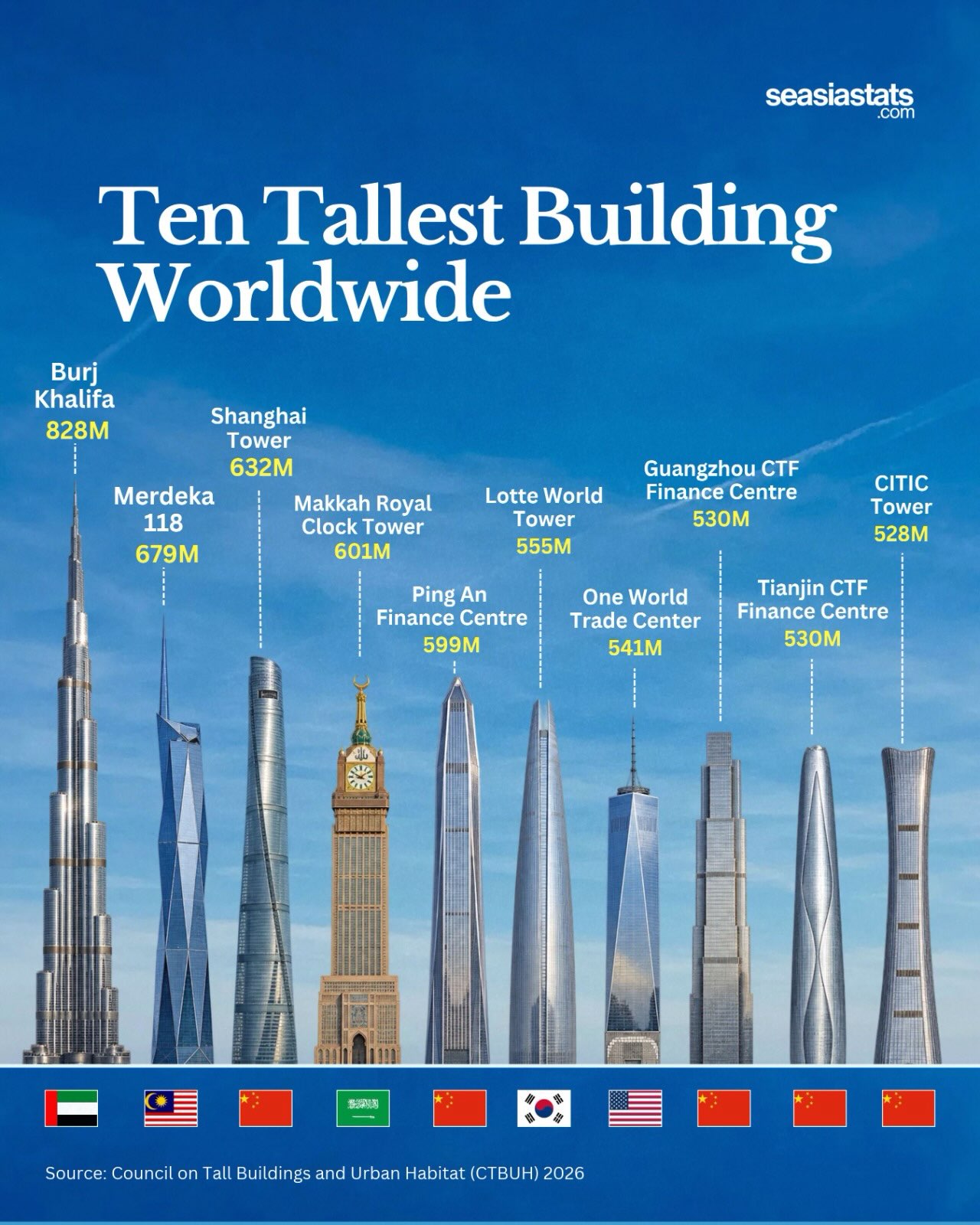
The world’s tallest buildings are remarkable examples of modern architecture, engineering, and technological progress. These impressive structures demonstrate how countries are pushing the boundaries of construction to create taller, stronger, and more innovative buildings.
From the Middle East to Asia and North America, the ten tallest buildings in the world showcase human creativity and ambition.
At the top of the list is the Burj Khalifa in the United Arab Emirates, standing at an incredible height of 828 meters. Located in Dubai, it is the tallest building in the world and a famous symbol of the country’s development.
In second place is Merdeka 118 in Malaysia, reaching 679 meters. Located in Kuala Lumpur, it is one of the world’s most impressive skyscrapers and a significant landmark for Malaysia.
The third tallest building is Shanghai Tower in China, with a height of 632 meters. Situated in Shanghai, it features a twisting design that helps reduce wind pressure. Fourth is the Makkah Royal Clock Tower in Saudi Arabia, standing 601 meters tall. Located near the Grand Mosque in Mecca, it is famous for its enormous clock faces and religious significance.
In fifth place is the Ping An Finance Center in China, reaching 599 meters. Located in Shenzhen, this skyscraper serves as an important commercial and financial center. The sixth tallest is Lotte World Tower in South Korea, measuring 555 meters. Found in Seoul, it combines offices, residences, hotels, and entertainment facilities within its elegant design.
The seventh building is One World Trade Center in the United States, standing 541 meters tall. Located in New York City, it represents resilience and renewal following the September 11 attacks. In eighth place is the Guangzhou CTF Finance Center in China, reaching 530 meters. This modern skyscraper in Guangzhou accommodates offices, hotels, and residential spaces.
The ninth tallest building is the Tianjin CTF Finance Center, also in China, with a height of 530 meters. Located in Tianjin, it is known for its streamlined appearance and advanced engineering. Finally, the tenth building is CITIC Tower, standing 528 meters tall in Beijing. Also called China Zun, its distinctive shape was inspired by a traditional Chinese ceremonial vessel.
These ten skyscrapers highlight the achievements of modern engineering and architectural design. They serve as important business centers, tourist attractions, and national landmarks. As technology continues to advance, the construction of taller buildings will likely continue, reflecting humanity’s desire to reach new heights and shape the skylines of the future.