

12 New UNESCO Global Geoparks
This year, UNESCO just added twelve new global geoparks for us to admire and preserve.

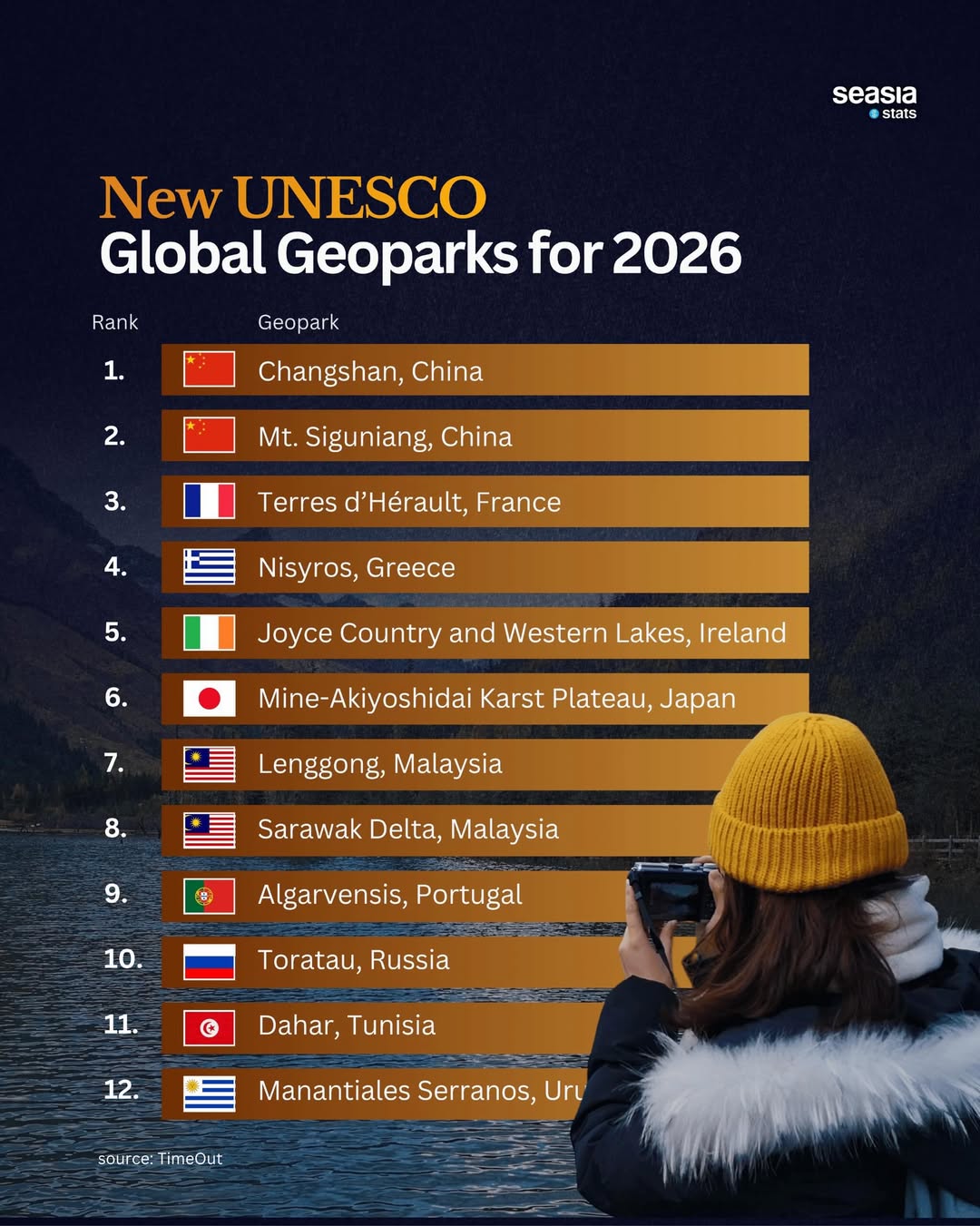
UNESCO continues to recognize some of the world’s most extraordinary geological landscapes through its Global Geoparks program. In 2026, twelve new UNESCO Global Geoparks were added to the international network, bringing the total number of geoparks worldwide to 241 across 51 countries.
These sites were selected not only for their geological importance, but also for their cultural heritage, biodiversity, and commitment to sustainable tourism and education.
China received two new geopark designations in 2026: Changshan and Mount Siguniang. Changshan is known for its rich fossil records and geological formations that reveal more than a billion years of Earth’s history.
Mount Siguniang, meanwhile, features dramatic alpine landscapes, glaciers, and towering mountain peaks that attract scientists and outdoor enthusiasts alike.
France also welcomed a new geopark with Terres d'Hérault, a region celebrated for its Mediterranean landscapes, volcanic formations, and historical villages.
Greece’s Nisyros Geopark stands out for its active volcanic system and spectacular caldera. Located in the Aegean Sea, the island contains hydrothermal craters and volcanic domes that make it one of Europe’s most fascinating volcanic environments.
Ireland’s Joyce Country and Western Lakes Geopark highlights ancient mountain-building processes, fjords, caves, and rich Irish-speaking cultural traditions.
In Japan, the Mine-Akiyoshidai Karst Plateau Geopark was recognized for its limestone plateau, cave systems, and fossil-rich geological record.
Malaysia gained two new UNESCO Global Geoparks: Lenggong and Sarawak Delta. Lenggong is internationally significant for both geology and archaeology, containing evidence of ancient volcanic activity and early human settlements.
The Sarawak Delta showcases tropical coastal ecosystems, river systems, and unique geological features shaped by Southeast Asia’s dynamic natural history.
Portugal’s Algarvensis Geopark was also added, highlighting the country’s limestone caves, fossil deposits, and scenic coastal geology.
Other newly recognized geoparks include Toratau in Russia, Dahar in Tunisia, and Manantiales Serranos in Uruguay.
Toratau preserves ancient reef mountains and caves in the Southern Ural region, while Dahar became Tunisia’s first UNESCO Global Geopark, featuring desert landscapes and geological formations linked to the breakup of the supercontinent Pangaea.
Uruguay’s Manantiales Serranos Geopark showcases rolling hills, springs, and ancient rock formations that reflect South America’s geological evolution.
These newly designated geoparks demonstrate UNESCO’s growing commitment to protecting Earth’s geological heritage while supporting local communities through education, conservation, and sustainable economic development. Together, they highlight the remarkable diversity of landscapes and geological history found across the globe.