

12 New UNESCO Global Geoparks in 2026
In 2026, UNESCO designated these 12 new geoparks around the world.

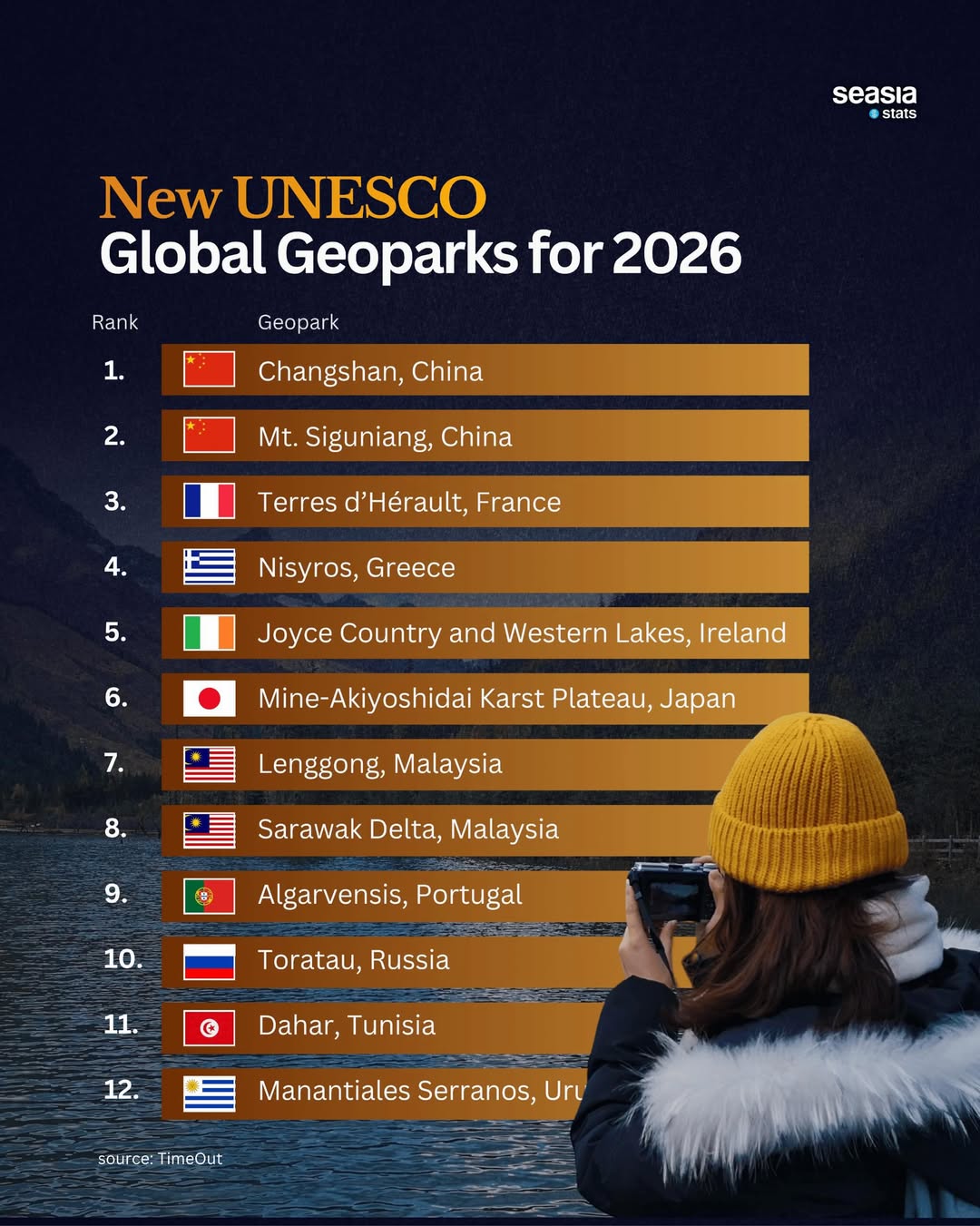
In April 2026, UNESCO officially designated 12 new UNESCO Global Geoparks, expanding its worldwide network to 241 geoparks across 51 countries. These sites were recognized for their outstanding geological heritage, scientific value, educational opportunities, and commitment to sustainable development and community engagement.
China welcomed two new additions. The Changshan UNESCO Global Geopark preserves more than a billion years of geological history, with exceptional fossil records and stratigraphic sequences that help scientists understand the evolution of early life.
The Mt. Siguniang UNESCO Global Geopark, located on the eastern edge of the Qinghai–Tibet Plateau, showcases dramatic granite peaks, complex tectonic structures, and evidence of continental collision processes.
In Europe, several remarkable landscapes joined the network. France’s Terres d’Hérault UNESCO Global Geopark reveals over 540 million years of Earth history through canyons, volcanic formations, and striking red-rock landscapes.
Greece’s Nisyros UNESCO Global Geopark highlights one of the youngest active volcanic systems in the Aegean Sea, featuring a well-preserved caldera and accessible hydrothermal craters.
Ireland’s Joyce Country and Western Lakes Global Geopark contains geological formations dating back 700 million years, including Ireland’s only fjord and extensive karst systems.
Japan’s Miné-Akiyoshidai Karst Plateau UNESCO Global Geopark is renowned for its vast limestone plateau, caves, and fossil-rich deposits that document ancient marine ecosystems and life after the Permian extinction.
Malaysia gained two geoparks: Lenggong UNESCO Global Geopark, known for its archaeological significance, meteorite-impact evidence, and volcanic deposits; and Sarawak Delta UNESCO Global Geopark, which records more than 250 million years of tectonic evolution while showcasing the cultural diversity of Borneo.
Portugal’s Algarvensis UNESCO Global Geopark presents a 330-million-year geological record, including traces of the 1755 Lisbon earthquake and extensive coastal environments. Russia’s Toratau UNESCO Global Geopark features ancient reef mountains and spectacular geological exposures in the Southern Urals.
Tunisia’s Dahar UNESCO Global Geopark, the country’s first UNESCO geopark, preserves evidence of the breakup of the supercontinent Pangaea. Uruguay’s Manantiales Serranos UNESCO Global Geopark highlights ancient rocks linked to the formation and fragmentation of supercontinents such as Rodinia and Gondwana.
Together, these 12 new geoparks demonstrate the extraordinary diversity of Earth’s geological heritage while supporting conservation, education, sustainable tourism, and local communities around the world.