

5 Countries to Send Troops Under International Stabilization Force (ISF)
In early 2026, a major international milestone emerged in efforts to stabilize Gaza: the formation of the International Stabilization Force (ISF).

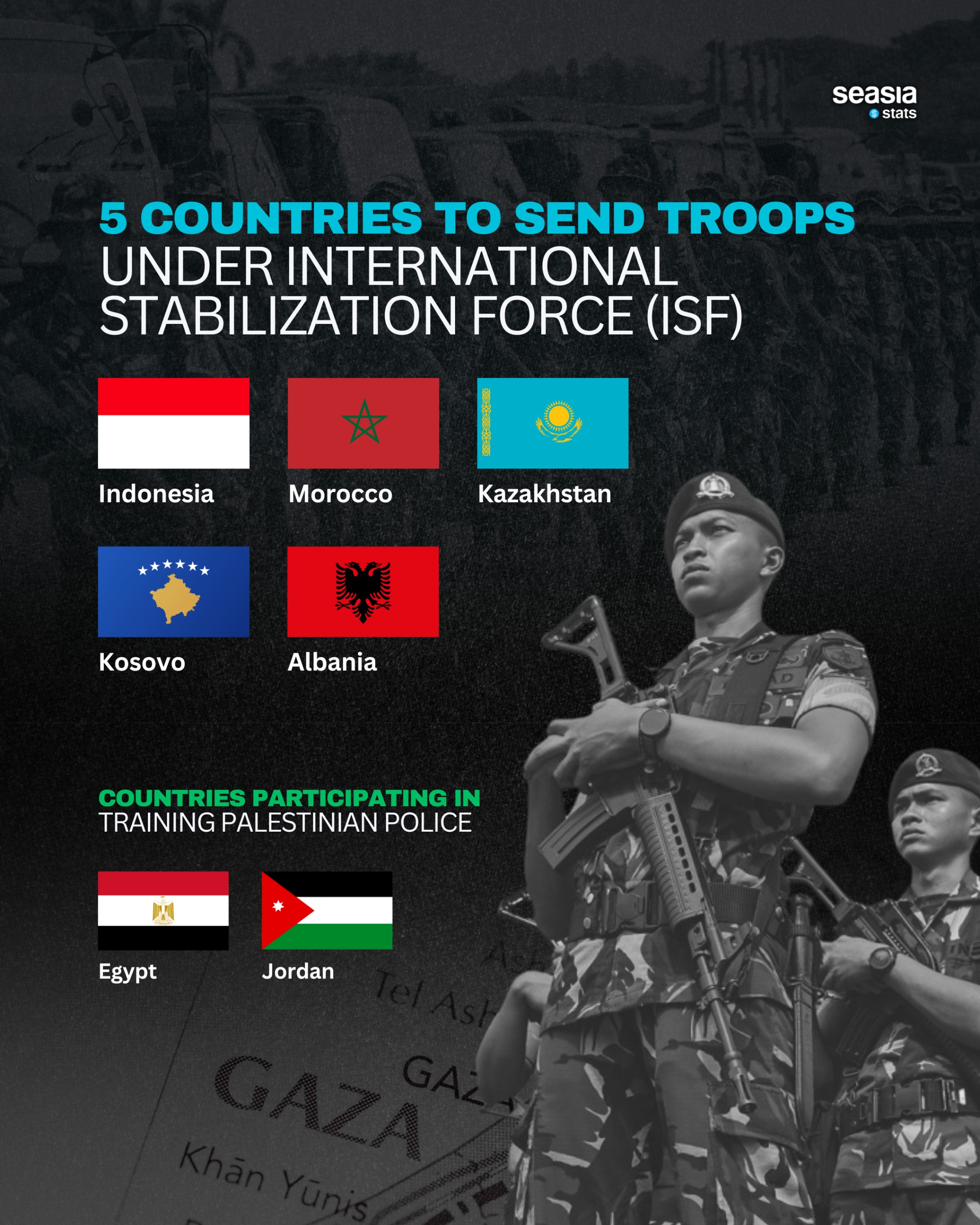
In early 2026, a major international milestone emerged in efforts to stabilize Gaza: the formation of the International Stabilization Force (ISF). Announced during the inaugural Board of Peace meeting in Washington, D.C., the mission brings together a coalition of nations committed to maintaining a ceasefire, protecting civilians, and supporting long-term reconstruction. The first five troop-contributing countries—Indonesia, Morocco, Kazakhstan, Kosovo, and Albania—represent a diverse alliance spanning Southeast Asia, Africa, Central Asia, and Europe.
The ISF’s creation reflects growing global consensus that a coordinated, neutral force is essential for restoring order and rebuilding trust in a region that has experienced years of conflict and humanitarian strain.
Indonesia’s Leadership Role in Peacekeeping
Indonesia has taken a leading position within the ISF, stepping forward as Deputy Commander under the overall leadership of U.S. Army General Jasper Jeffers. President Prabowo Subianto confirmed that Indonesia is prepared to deploy up to 8,000 personnel, marking one of the country’s most significant international peacekeeping commitments to date.
Indonesia’s involvement continues its long-standing tradition of contributing to global peacekeeping missions, particularly through United Nations operations in Lebanon, Congo, and Sudan. In Gaza, Indonesian troops are expected to focus on civilian protection, infrastructure stabilization, and humanitarian coordination—roles that align with the country’s diplomatic emphasis on peace and neutrality.
A Coalition of Diverse Contributors
The ISF is built on a coalition of partners, each bringing specialized capabilities. Morocco is contributing trained police and military personnel, while Kazakhstan is providing medical units to support civilian care and emergency response. Kosovo and Albania are also deploying specialized forces trained in post-conflict stabilization and policing.
This diversity of contributors highlights the international nature of the mission, combining military, medical, and civil-security expertise. Together, these countries aim to build a neutral force capable of maintaining stability while enabling humanitarian agencies to operate safely.
Building Local Security Capacity
Alongside troop deployments, Egypt and Jordan have committed to training a future Palestinian police force. This initiative is a critical component of the ISF’s long-term strategy, which envisions a transition from international security oversight to locally managed governance.
The goal is to develop approximately 12,000 trained Palestinian police officers who can gradually assume responsibility for internal security. This training program is designed to build trust with local communities and ensure that security operations remain sustainable after international forces withdraw.
A Phased Deployment Strategy
Initial ISF deployments are scheduled to begin in southern Gaza, particularly in Rafah, before expanding sector by sector across the Gaza Strip. The long-term plan outlines a force of around 20,000 international soldiers working alongside the newly trained police units.
The phased approach is intended to prevent security vacuums, stabilize key population centers, and ensure humanitarian corridors remain open for aid distribution and reconstruction projects.
Southeast Asia’s Expanding Peacekeeping Role
Indonesia’s leadership in the ISF reflects a broader trend of Southeast Asian countries playing more active roles in global peacekeeping. Nations like Malaysia, Thailand, and the Philippines have historically contributed personnel to UN missions, while Singapore and Vietnam have expanded their participation in medical and engineering support operations.
This growing involvement highlights ASEAN’s evolving role as a contributor to global stability, not only through diplomacy but also through active peacekeeping and humanitarian engagement.
Toward a More Stable Future
The International Stabilization Force represents a significant step toward rebuilding Gaza’s security and governance framework. By combining military stability with humanitarian support and local capacity-building, the ISF aims to create conditions for lasting peace.
While challenges remain, the collaboration of nations from different regions—including Southeast Asia—demonstrates a shared commitment to restoring stability and hope in one of the world’s most fragile conflict zones.