

Adult Obesity in Southeast Asia
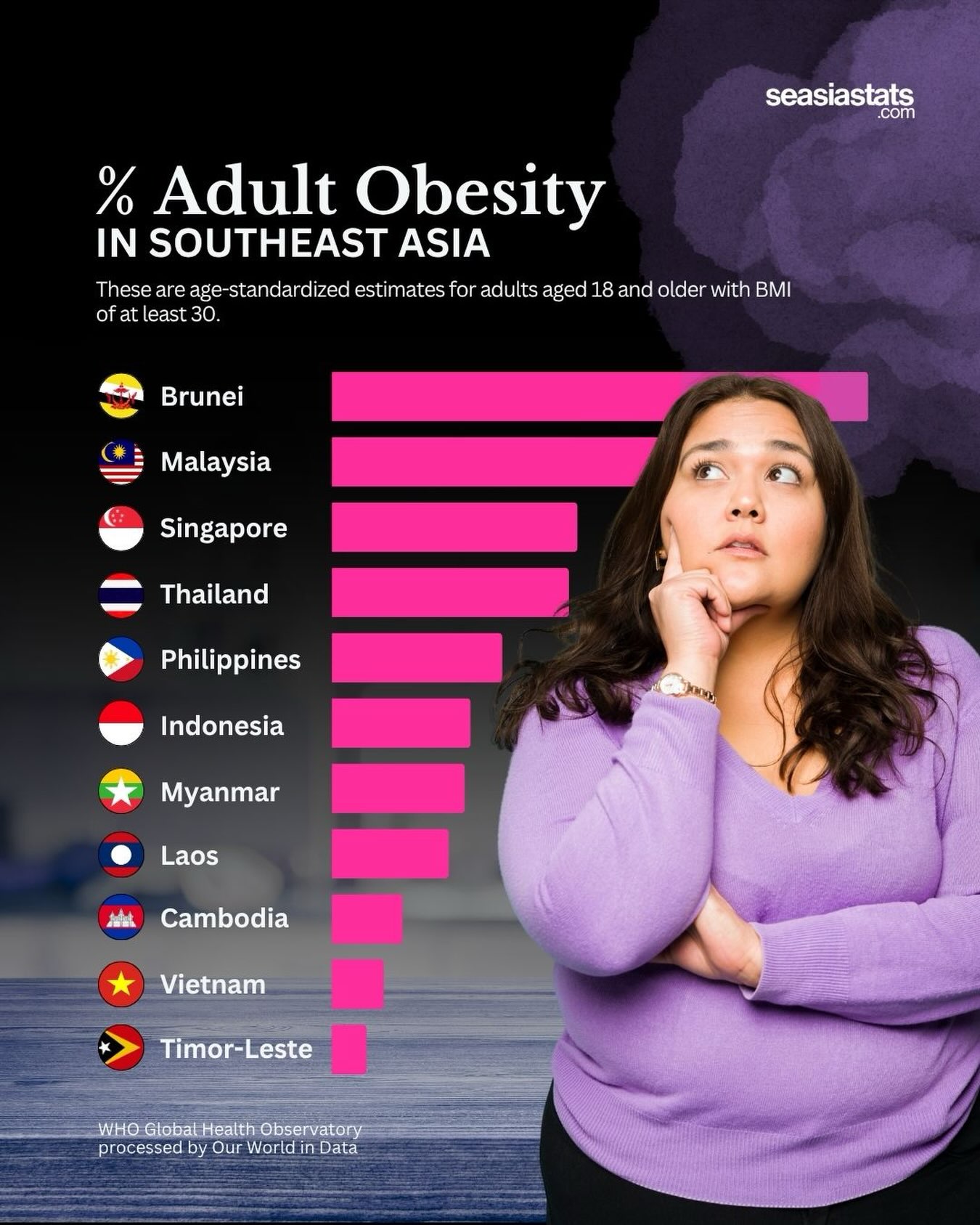
Brunei and Malaysia have the highest rates of adult obesity in Southeast Asia.

Obesity has become an increasingly important public health issue in Southeast Asia. As economies develop, lifestyles and eating habits are changing, with greater consumption of processed foods, sedentary lifestyles, and reduced physical activity contributing to rising obesity levels.
The World Health Organization (WHO) identifies obesity as a major risk factor for diseases such as type 2 diabetes, cardiovascular disease, hypertension, and some cancers. WHO defines adult obesity as having a body mass index (BMI) of 30 kg/m² or higher.
According to the figures provided for the 2016–2024 period, Brunei has the highest adult obesity percentage in Southeast Asia, at 28.2%. This is followed by Malaysia, where the figure is 19.7%.
These two countries stand considerably above most other countries in the region. WHO has also highlighted obesity as an increasing concern in Brunei, where a national STEPS survey conducted in 2015–2016 found that 28.2% of adults were obese.
Singapore and Thailand both have an adult obesity percentage of 11.6%, placing them in the middle of the regional ranking. The Philippines follows at 9.3%, while Indonesia has a figure of 6.9%.
Although these percentages are lower than those of Brunei and Malaysia, obesity remains an important health concern because even moderate levels can contribute to a significant number of people being at risk of obesity-related diseases.
Among the countries with lower reported percentages, Myanmar has 5.8%, followed by Laos at 5.6% and Cambodia at 3.8%. Vietnam has one of the lowest figures, at 1.7%, while Timor-Leste records the lowest percentage in the list, at 1.1%.
The differences between countries demonstrate that obesity is not distributed equally throughout Southeast Asia. Economic development, urbanization, food availability, cultural habits, physical activity, and healthcare policies can all influence obesity rates.
WHO notes that the region is experiencing a nutrition transition, in which traditional health challenges coexist with increasing problems of overweight and obesity.
Overall, these figures show that obesity is an important and growing health challenge across Southeast Asia. Countries with higher rates may need stronger prevention and treatment programs, while countries with lower rates can focus on preventing rapid increases.
Promoting healthier diets, regular physical activity, public awareness, and effective health policies can help Southeast Asian countries reduce the long-term impact of obesity.