

Amazing Tea Brands from Southeast Asia You Should Know About
Tea lovers, here are Southeast Asia's tea brands you should try next time.

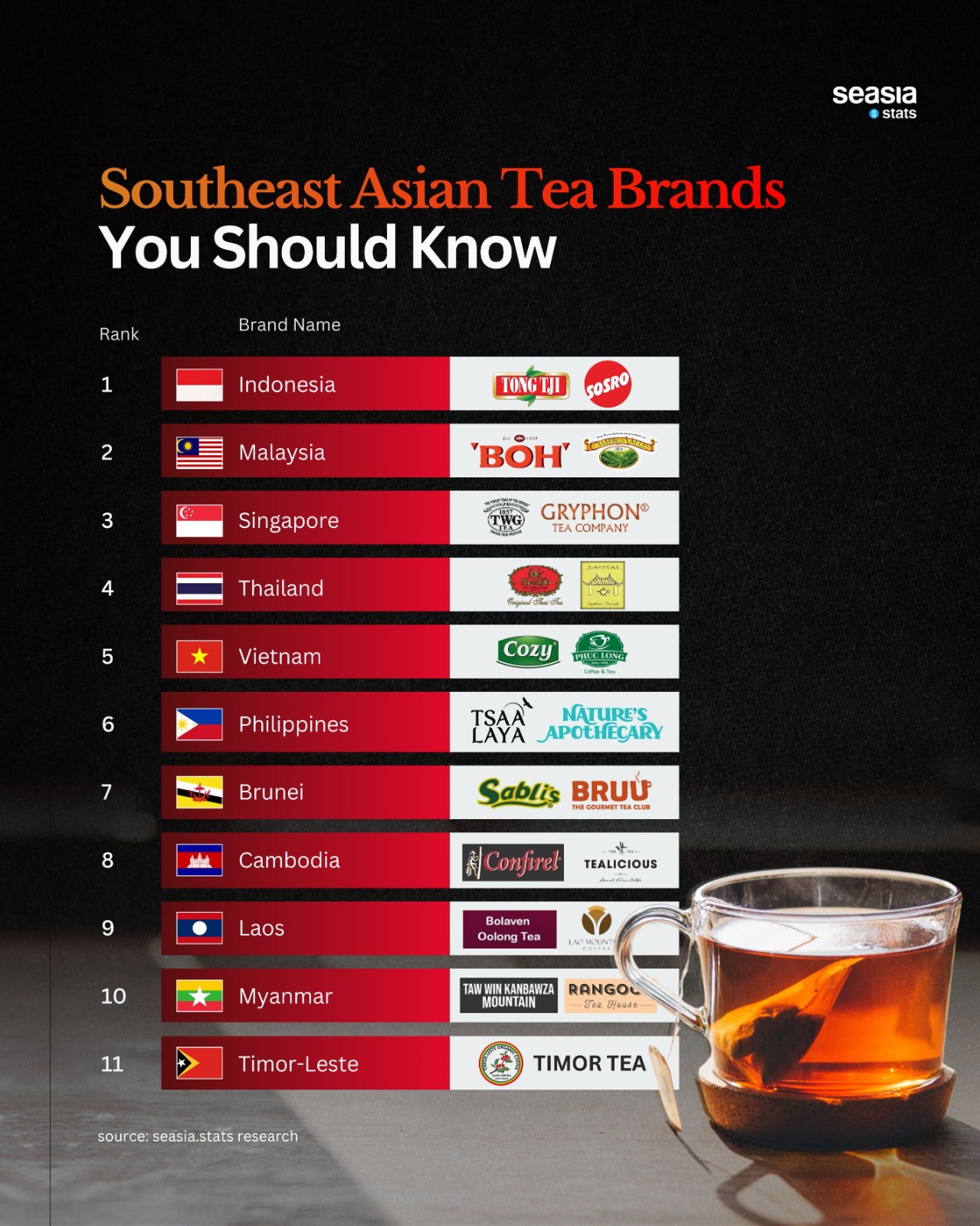
Southeast Asia has a rich tea culture shaped by colonial history, tropical agriculture, and local traditions. Across the region, many tea brands have become cultural icons while introducing Southeast Asian flavors to international audiences.
In Indonesia, Tong Tji and Sosro are among the country’s most recognizable tea producers. Tong Tji is known for its traditional jasmine tea blends, while Sosro popularized bottled ready-to-drink tea, making sweet jasmine tea a daily refreshment for millions of Indonesians.
Malaysia also holds an important place in regional tea production. BOH Tea, founded in the cool highlands of Cameron Highlands, is one of the country’s oldest and most famous tea brands.
Cameron Valley Tea complements Malaysia’s reputation with highland-grown teas that attract both tourists and tea enthusiasts. These brands highlight the country’s fertile mountain environment and British colonial tea heritage.
Singapore, despite its limited agricultural land, has developed a sophisticated tea market through premium lifestyle brands such as TWG Tea and Gryphon Tea Company. TWG is internationally recognized for luxury tea collections inspired by global traditions, while Gryphon focuses on contemporary blends that combine Asian ingredients with modern flavors.
Thailand’s tea culture is represented by ChaTraMue and Siam Tea. ChaTraMue is especially famous for Thai milk tea, a sweet orange-colored beverage enjoyed worldwide. Siam Tea promotes locally grown northern Thai teas, particularly from the mountainous Chiang Rai region.
Viet Nam has rapidly emerged as a major tea producer. Cozy Tea and Phuc Long are highly popular for their accessible green teas, milk teas, and café culture. Vietnamese tea traditions emphasize freshness and natural flavors, especially lotus and jasmine-infused varieties.
In the Philippines, Tsaa Laya and Nature’s Apothecary promote locally sourced herbal and wellness teas. Their products often incorporate indigenous plants and tropical ingredients, reflecting the country’s biodiversity and growing health-conscious market.
Smaller Southeast Asian nations also contribute unique tea identities. Brunei’s Sablis and Bruu focus on artisanal beverages and café experiences. Cambodia’s Confirel and Tealicious blend local herbs, spices, and modern packaging to introduce Cambodian flavors to broader audiences.
Laos offers distinctive mountain-grown teas through Bolaven Oolong Tea and Lao Mountain Tea, both benefiting from the fertile Bolaven Plateau.
Myanmar’s tea culture is deeply rooted in daily life. Taw Win Kanbawza and Rangoon Tea House celebrate Burmese tea traditions, including fermented tea leaves and sweet milk tea. Finally, Timor Tea from Timor-Leste represents one of the region’s oldest organic tea industries, cultivated in the country’s mountainous terrain.
Together, these brands demonstrate the diversity, creativity, and cultural richness of Southeast Asia’s tea industry.