

ASEAN Countries Ranked by Diabetes Prevalence Rate in 2024
Malaysia leads the diabetes prevalence rate with approximately one in five adults is affected by the disease.

Diabetes remains one of the fastest-growing health challenges across Southeast Asia, with millions of adults living with the chronic disease.
According to the International Diabetes Federation (IDF) in 2024, the prevalence of diabetes varies significantly among ASEAN member states, reflecting differences in lifestyle, demographics, healthcare systems, and public health policies.
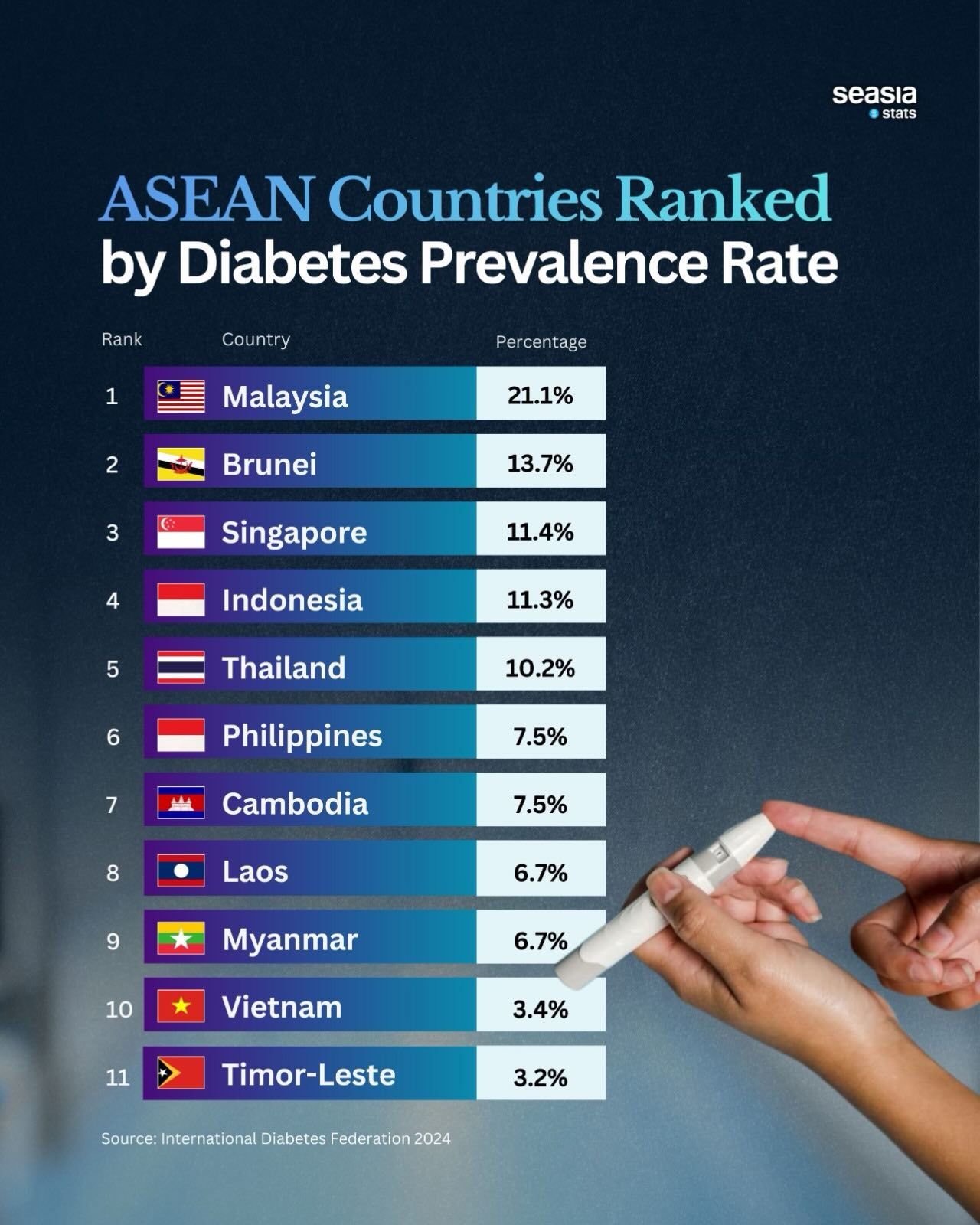
Malaysia records the highest diabetes prevalence rate in ASEAN at 21.1%, meaning that more than one in five adults is affected by the disease. The country has long struggled with high rates of obesity, physical inactivity, and unhealthy dietary habits, all of which contribute to the growing burden of diabetes.
Brunei ranks second with 13.7%, followed by Singapore at 11.4% and Indonesia at 11.3%. Despite differing population sizes and levels of economic development, these countries face similar challenges associated with urbanization, sedentary lifestyles, and increasing life expectancy.
Thailand ranks fifth with a diabetes prevalence rate of 10.2%, remaining above the regional average. The Philippines and Cambodia share sixth place, with both countries reporting a prevalence rate of 7.5%.
While lower than the rates seen in Malaysia and Brunei, diabetes continues to place increasing pressure on healthcare systems in both nations, particularly as non-communicable diseases become more common.
Laos and Myanmar are tied with diabetes prevalence rates of 6.7%. Both countries continue working to improve healthcare access, strengthen disease surveillance, and expand public awareness programs aimed at promoting healthier lifestyles and earlier diagnosis.
These efforts are especially important in rural communities, where access to medical services may be more limited.
Vietnam records one of the lowest diabetes prevalence rates in ASEAN at 3.4%, while Timor-Leste has the lowest rate in the region at 3.2%.
Although these figures are comparatively low, experts emphasize that rapid economic growth, changing diets, and increasing urbanization could contribute to rising diabetes cases in the coming years if preventive measures are not maintained.
The 2024 IDF rankings highlight that diabetes is a region-wide public health concern affecting countries at every stage of development. Whether in high-income economies such as Singapore and Brunei or emerging economies like Indonesia and Cambodia, lifestyle changes remain a major driver of the disease.
Strengthening prevention through healthier diets, regular physical activity, routine health screenings, and public education will be essential to reducing diabetes prevalence and improving long-term health outcomes across ASEAN in the years ahead.