

ASEAN Countries with the Largest Number of Population Aged 65 and Above
Thailand has the largest number of population aged 65 and more, followed by Singapore.

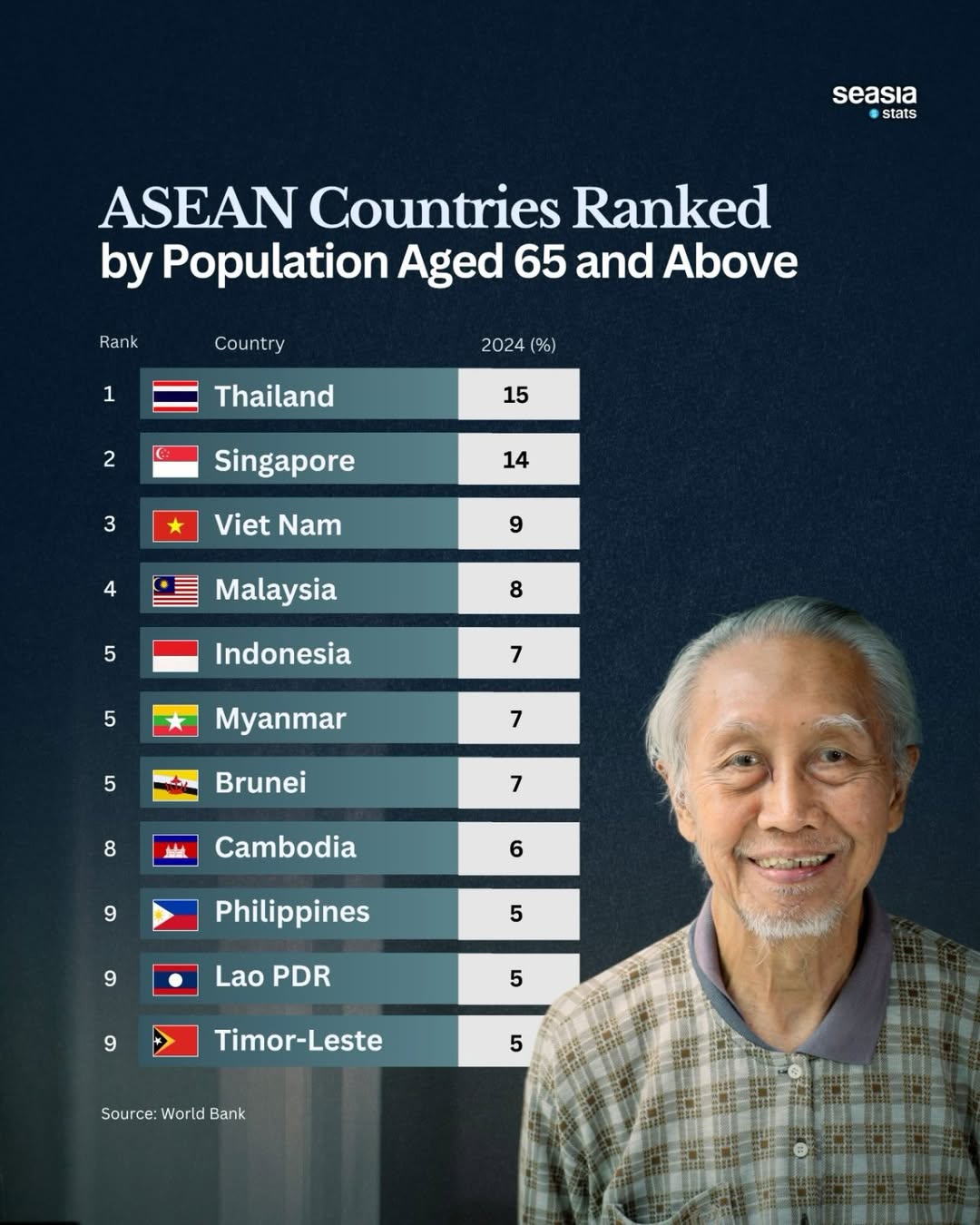
Southeast Asia is undergoing a significant demographic transformation as life expectancy rises and birth rates decline across many countries. As a result, the proportion of people aged 65 and above is increasing throughout the ASEAN region, creating new opportunities and challenges for governments, businesses, and healthcare systems.
Data for 2024 shows considerable variation among ASEAN member states in the share of elderly residents within their populations.
Thailand has the highest proportion of people aged 65 and above in ASEAN, with seniors accounting for 15% of the population. The country has experienced one of the region's fastest demographic transitions, driven by declining fertility rates and longer life expectancy. Thailand is increasingly focused on policies related to healthcare, retirement security, and elderly care.
Singapore ranks second with 14% of its population aged 65 and above. As one of Asia's most developed economies, Singapore has long anticipated the effects of an aging society and has implemented comprehensive measures to address healthcare, housing, and workforce challenges associated with population aging.
Vietnam occupies third place with 9%. Although still relatively young compared with many developed countries, Vietnam's aging population is growing rapidly as economic development and improved healthcare contribute to longer lifespans.
Malaysia follows with 8% of its population aged 65 and above. The country is gradually transitioning toward an older demographic profile, prompting greater attention to healthcare infrastructure and social support systems.
Indonesia, ASEAN's most populous nation, records 7% of its population in the 65-and-over category. Despite its relatively youthful overall population, the number of elderly Indonesians continues to rise significantly due to the country's large population base.
Myanmar and Brunei also report 7%, reflecting similar demographic patterns. While their circumstances differ, both countries are beginning to experience the social and economic implications of population aging.
Cambodia ranks next with 6%. Although still maintaining a relatively young population structure, improvements in healthcare and living standards are gradually increasing the share of older citizens.
The Philippines, Laos, and Timor-Leste each report 5% of their populations aged 65 and above, the lowest proportions in ASEAN. These countries continue to benefit from comparatively young populations and higher fertility rates than many of their regional neighbors.
The rankings illustrate the diverse demographic landscape across Southeast Asia. While some countries are already managing the realities of aging societies, others remain in earlier stages of demographic transition.
As life expectancy continues to improve throughout the region, addressing the needs of older populations will become an increasingly important priority for ASEAN governments and policymakers in the years ahead.