

Asian Countries That Smile and Laugh the Most
The people from these countries love to smile and laugh every day.

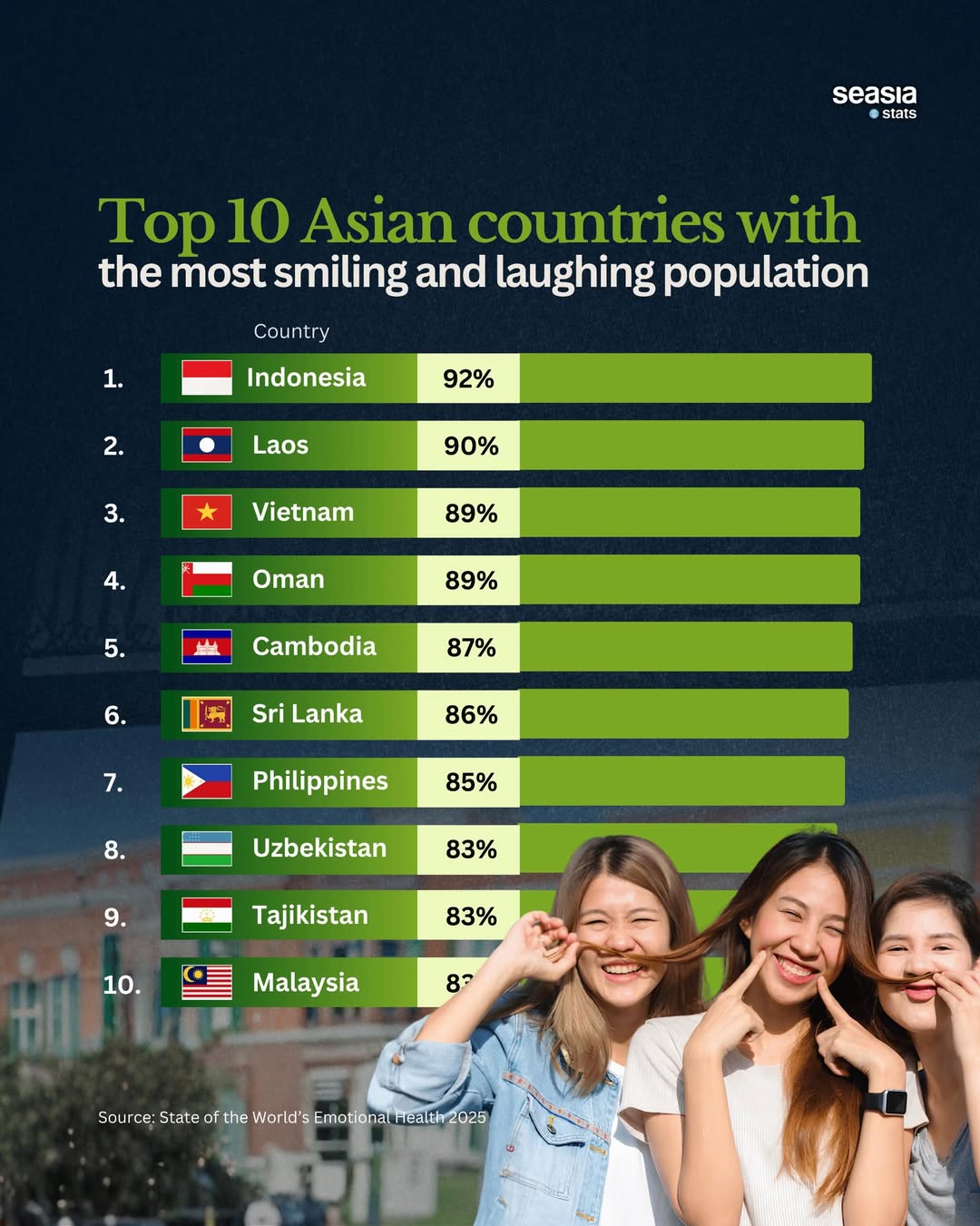
Smiling and laughter are universal expressions of happiness and positive social interaction. According to survey data by State of the World's Emotional Health, several Asian countries stand out for their cheerful outlook on life.
These nations demonstrate how culture, community, and daily experiences can contribute to a more positive emotional environment.
Leading the ranking is Indonesia, where an impressive 92% of respondents reported smiling or laughing frequently. Known for its warm hospitality, strong family bonds, and vibrant social culture, Indonesia consistently ranks among the friendliest countries in the world. The high percentage suggests that positive social connections play an important role in everyday life.
In second place is Laos with 90%, reflecting the country's relaxed lifestyle and close-knit communities. The emphasis on simplicity, family values, and social harmony may contribute to the positive emotions experienced by many of its citizens.
Vietnam and Oman share third place with 89%. Vietnam's rapid economic growth has been accompanied by strong community relationships and cultural traditions that encourage social interaction. Oman, meanwhile, is renowned for its welcoming culture and strong sense of hospitality, which may help foster positive daily experiences.
Cambodia ranks fifth at 87%. Despite its challenging history, the country has shown remarkable resilience and optimism. Strong family networks and community support continue to be important aspects of Cambodian society.
Sri Lanka follows with 86%, while the Philippines records 85%. Both countries are known for their friendly populations and strong emphasis on family relationships. In the Philippines, a cheerful attitude is often considered a defining national characteristic, helping people maintain optimism even during difficult times.
Uzbekistan, Tajikistan, and Malaysia each record 83%, tying for the final positions in the top ten. The Central Asian nations of Uzbekistan and Tajikistan are recognized for their traditions of hospitality and strong communal values.
Malaysia, meanwhile, benefits from a multicultural society where family gatherings, festivals, and community events are important parts of everyday life.
These rankings highlight that happiness is not determined solely by economic wealth. Social relationships, cultural traditions, family support, and community engagement can significantly influence people's daily emotional experiences.
While each country has its own unique circumstances, they share a common characteristic: a strong culture of human connection and positivity.
Ultimately, the prevalence of smiling and laughter across these nations serves as a reminder that happiness often comes from meaningful relationships and a supportive social environment rather than material success alone.