

Asian Countries with Longest Railroad
Asia is home to some of the world's most extensive and vital railroad networks, serving as key facilitators of transportation, trade, and regional integration.

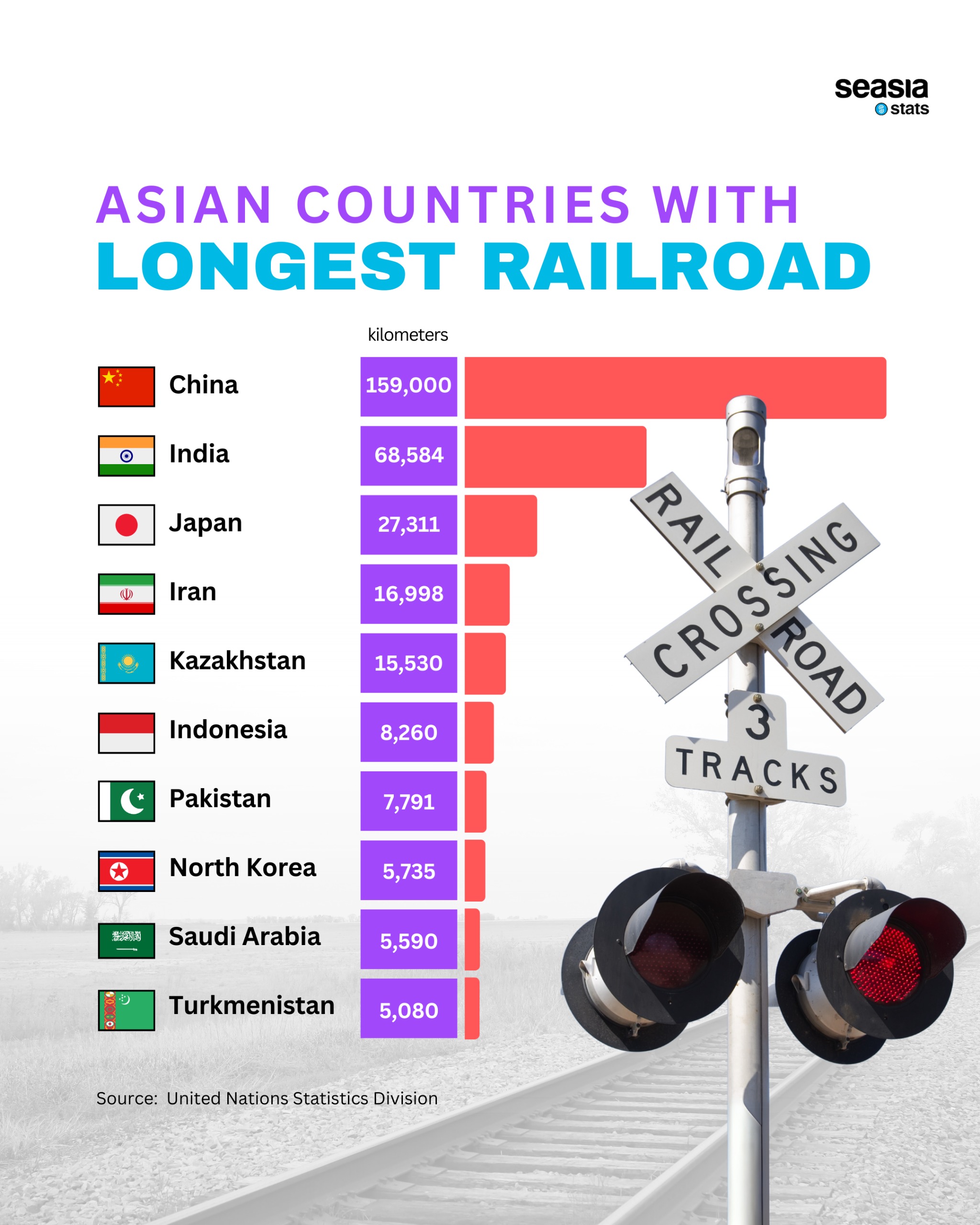
Asia is home to some of the world's most extensive and vital railroad networks, serving as key facilitators of transportation, trade, and regional integration.
Leaders in Rail Infrastructure
-
China
- Railway Length: 159,000 kilometers
As the undisputed leader, China's expansive rail network supports its role as a global economic powerhouse. Its high-speed rail system, the largest in the world, has revolutionized travel and trade across the country.
- Railway Length: 159,000 kilometers
-
India
- Railway Length: 68,584 kilometers
India's railways form the backbone of its transportation system, connecting remote regions with urban centers and serving millions daily. The network is vital for freight transport, supporting India's agricultural and industrial sectors.
- Railway Length: 68,584 kilometers
-
Japan
- Railway Length: 27,311 kilometers
Known for its efficiency and technological advancements, Japan's rail network includes the iconic Shinkansen, setting global standards for high-speed rail.
- Railway Length: 27,311 kilometers
Other Noteworthy Rail Networks
-
Iran
With its strategic location, Iran's rail system connects Asia to Europe, facilitating international trade. -
Kazakhstan
As a landlocked nation, Kazakhstan relies heavily on its rail network to transport goods across its vast territory and link to neighboring countries. -
Indonesia
Despite its archipelagic geography, Indonesia has developed 8,260 kilometers of railways, primarily on its major islands like Java and Sumatra. This infrastructure supports domestic connectivity and economic activities.
The Role of Rail in Asia's Growth
Railways are more than just a mode of transportation—they are lifelines for economic growth and regional connectivity. These networks:
- Facilitate Trade: Rail systems enable efficient movement of goods, supporting industries and export activities.
- Promote Accessibility: They connect remote and rural areas to urban centers, enhancing access to markets and services.
- Support Sustainability: Rail transport is a more environmentally friendly alternative to road and air travel, aligning with global sustainability goals.
As Asia continues to grow, investments in rail infrastructure will remain critical to fostering economic development and enhancing regional integration.