

Asian Countries with the Highest Percentage of Baldness in Men
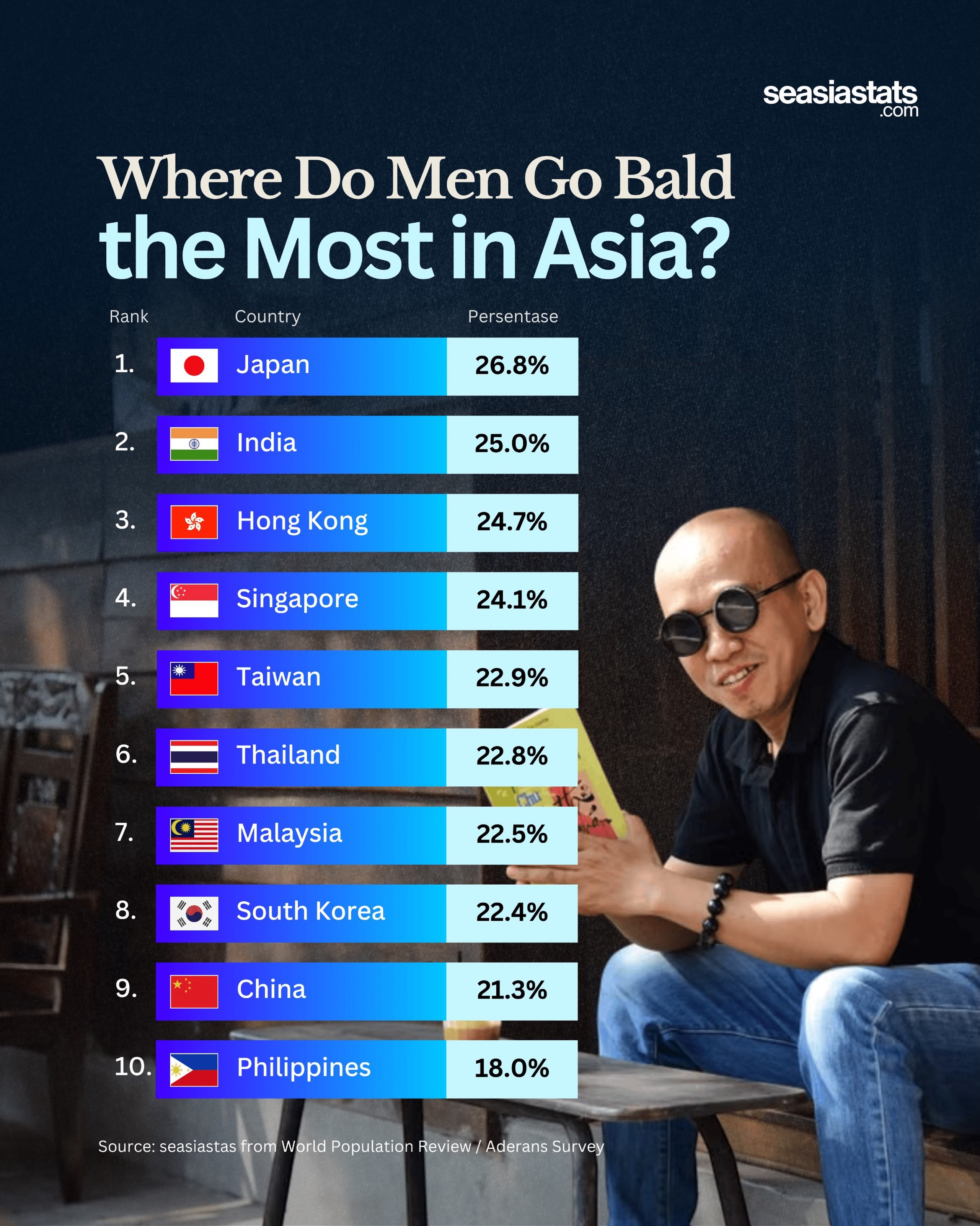
Japan has the highest rate of male pattern baldness in Asia with 26.8%.

Male pattern baldness is a common condition affecting men worldwide, and Asia is home to several countries and regions with notable rates of male hair loss.
According to the figures provided by World Population Review, Japan ranks first in Asia, with 26.8% of men experiencing baldness. This means that more than one in four men are affected, making Japan the leading location on the list.
India follows in second place, with 25.0%, demonstrating that male baldness is also prevalent in South Asia. Hong Kong ranks third, with 24.7%, while Singapore takes fourth place at 24.1%. These figures indicate that nearly one-quarter of men in these locations experience baldness, according to the reported statistics.
Taiwan occupies fifth place, with 22.9%, followed closely by Thailand at 22.8%. Malaysia ranks seventh, with 22.5%, while South Korea comes eighth at 22.4%.
The differences among these four locations are relatively small, suggesting that their reported percentages are closely grouped. Although the figures vary slightly, all four have more than one-fifth of men experiencing baldness.
China ranks ninth on the list, with 21.3% of men affected. Meanwhile, the Philippines completes the top 10, recording 18.0%, the lowest percentage among the locations included. Despite ranking last, the figure indicates that male baldness remains a notable concern among Filipino men.
Male pattern baldness, medically known as androgenetic alopecia, is commonly associated with genetics and hormonal sensitivity. It typically develops gradually, resulting in a receding hairline, thinning hair around the crown, or both.
Age can also influence the likelihood of experiencing hair loss, although the condition can begin in younger adulthood. Other medical conditions and certain medications may contribute to hair loss as well.
However, these percentages should be interpreted carefully because differences in data collection, population characteristics, and research methods can affect comparisons between countries and regions. The figures alone do not establish why baldness rates differ across Asia, nor do they demonstrate that nationality determines an individual's likelihood of losing hair.
These figures highlight the widespread occurrence of male baldness across Asia and emphasize the importance of understanding its causes rather than relying on national rankings alone.