

Asian Countries with Universal Health Care
Across Asia, many countries are making sure their citizens are protected by universal health care.

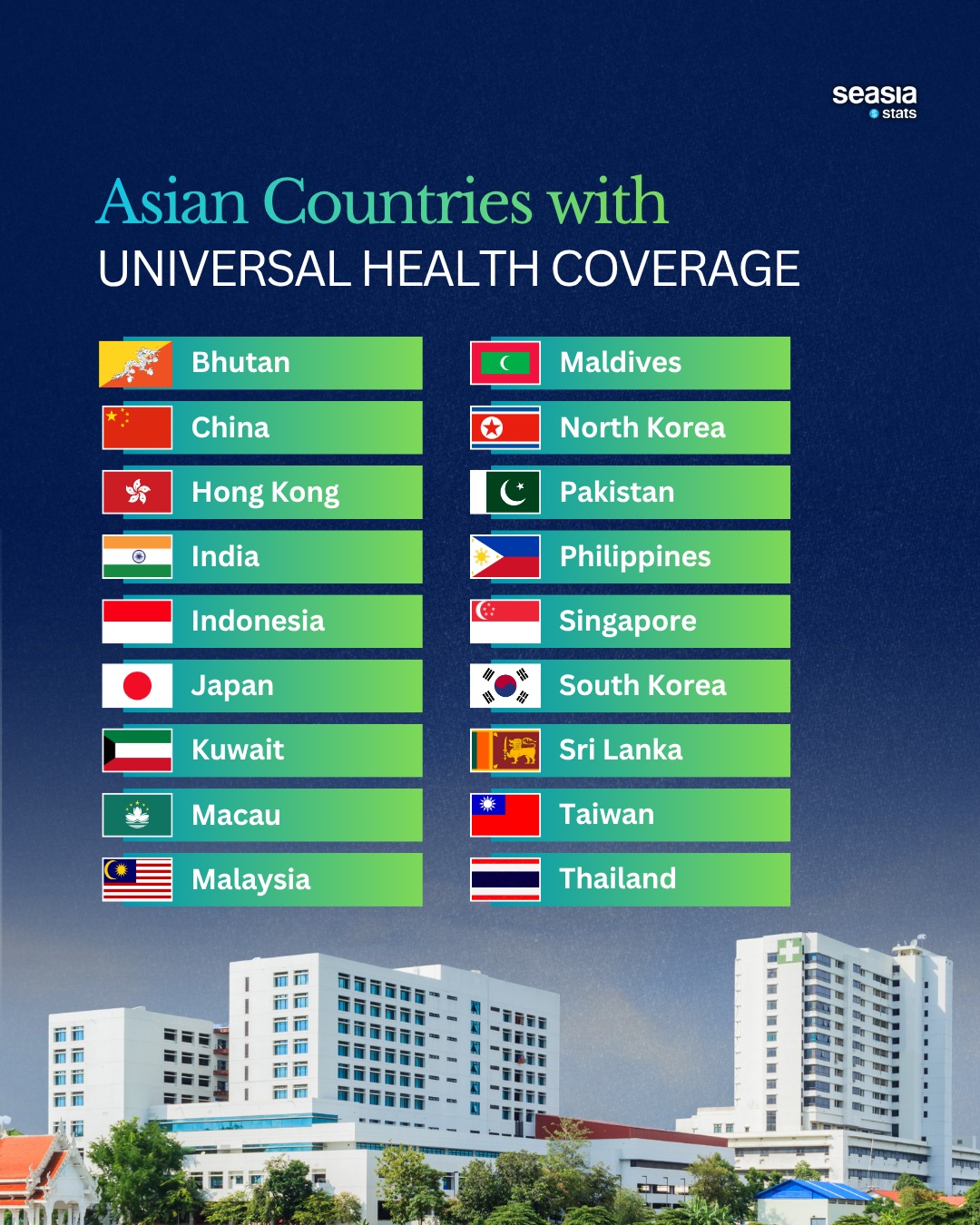
Across Asia, a diverse group of countries has adopted universal health care coverage (UHC), aiming to ensure that all citizens can access essential health services without suffering financial hardship. While the structure and effectiveness of these systems vary widely, the shared commitment reflects a regional recognition of health as a fundamental right.
Countries such as Japan, South Korea, and Taiwan are often highlighted as leading examples of effective UHC systems. Japan’s model combines employer-based and community-based insurance, achieving high-quality care and long life expectancy.
Similarly, South Korea operates a single-payer system that covers nearly the entire population, while Taiwan’s national health insurance program is praised for its efficiency, accessibility, and use of digital technology.
Southeast Asian nations including Thailand, Indonesia, Malaysia, and the Philippines have made significant strides toward expanding coverage. Thailand’s Universal Coverage Scheme, introduced in the early 2000s, is widely regarded as a success, dramatically reducing out-of-pocket expenses.
Indonesia’s Jaminan Kesehatan Nasional (JKN) is one of the world’s largest single-payer systems, though it still faces challenges in funding and service quality. Malaysia provides heavily subsidized public health care alongside a growing private sector, while the Philippines continues to expand coverage through its national insurance program.
In South Asia, countries like India, Sri Lanka, Pakistan, Bhutan, and the Maldives show varied progress. Sri Lanka stands out for its strong public health system and positive health outcomes despite limited resources. India has launched ambitious programs such as Ayushman Bharat to extend coverage to hundreds of millions, though disparities remain.
Bhutan and the Maldives provide free or highly subsidized care to their populations, reflecting strong government commitment despite small economies. Pakistan continues to expand insurance-based initiatives, though access remains uneven.
In East Asia, China and its special administrative regions, Hong Kong and Macau, operate distinct systems. China has achieved near-universal insurance coverage through a mix of rural and urban schemes, although inequalities persist. Hong Kong and Macau maintain government-funded systems with high standards of care.
Other nations such as Singapore and Kuwait combine public funding with private sector participation, ensuring broad access while maintaining efficiency. Even countries with more restrictive political systems, such as North Korea, officially provide universal health care, though actual service quality is difficult to assess.
Overall, Asia’s experience with universal health care illustrates that there is no single model for success. Each country adapts its approach based on economic capacity, governance, and population needs, but the overarching goal remains the same: equitable access to health services for all.