

Asia's Oldest National Anthems Still Sung Today
Japan's Kimigayo is the oldest national anthem in Asia, officially adopted in 1880.

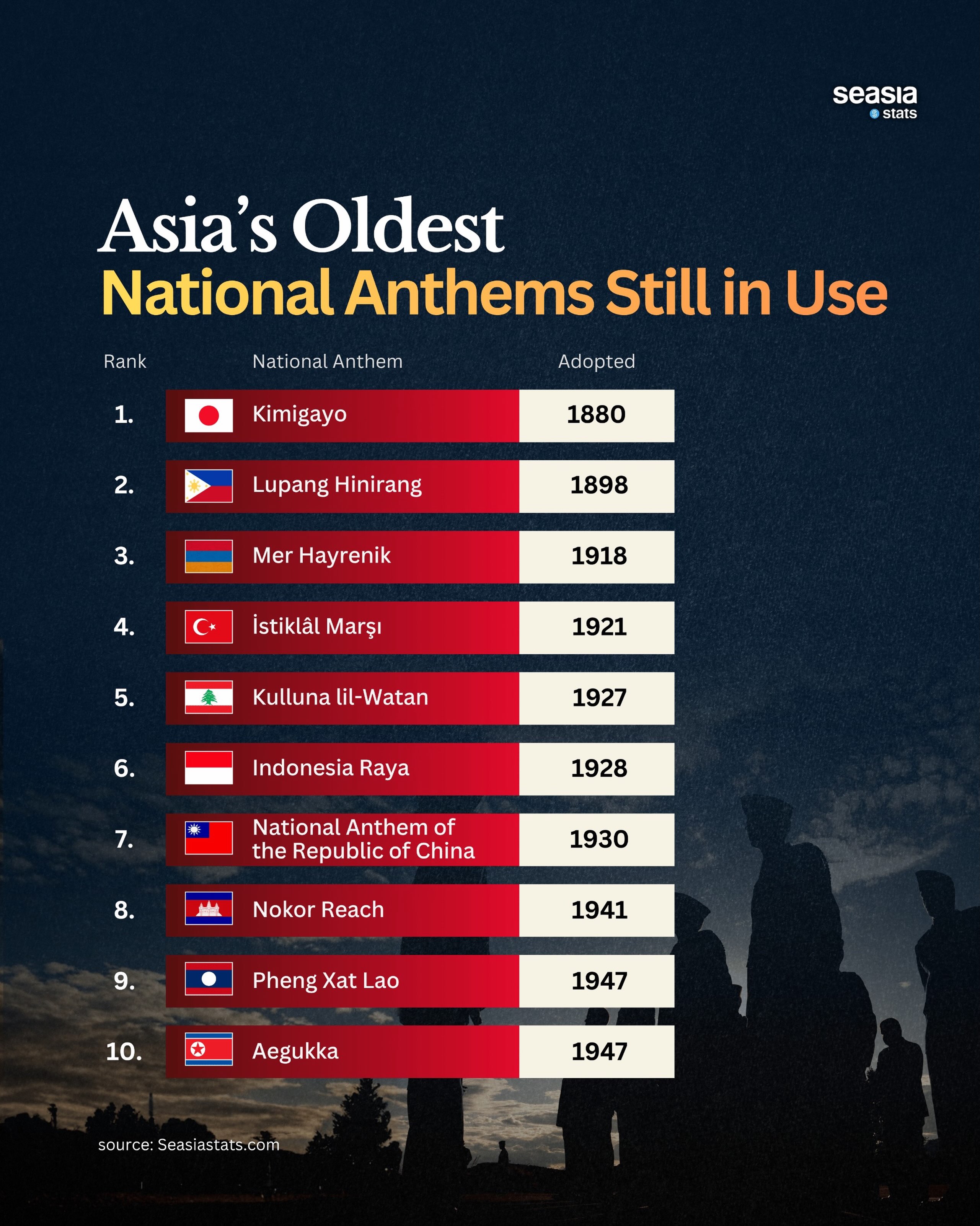
National anthems are powerful symbols of a country's identity, history, and national pride. Across Asia, many of these patriotic songs have accompanied important moments in each nation's development and continue to be performed at official ceremonies, sporting events, and national celebrations.
The oldest national anthems in Asia still sung today reflect the rich historical heritage of the continent.
The oldest national anthem in Asia is Japan's "Kimigayo," which was officially adopted in 1880. Although its lyrics date back more than a thousand years, the anthem's official adoption in the late nineteenth century made it the continent's earliest national anthem still in use today.
The Philippines follows with "Lupang Hinirang," officially adopted in 1898 during the country's struggle for independence. Originally composed as an instrumental march, it later received Filipino lyrics and has since become a lasting symbol of patriotism.
Armenia's "Mer Hayrenik" was officially adopted in 1918 following the establishment of the First Republic of Armenia. Despite periods of political change, the anthem remains an enduring expression of Armenian national identity.
Turkey adopted "İstiklâl Marşı" (The Independence March) in 1921 during the Turkish War of Independence. Its stirring lyrics celebrate freedom, sacrifice, and the determination of the Turkish people.
In 1927, Lebanon officially adopted "Kulluna lil-Watan" ("All of Us, for Our Country"). The anthem emphasizes national unity and loyalty, reflecting the country's diverse cultural and religious heritage.
Indonesia's "Indonesia Raya" became the national anthem in 1928, when it was first introduced during the historic Youth Pledge. It later gained official status after Indonesian independence and continues to symbolize national unity across the archipelago.
The National Anthem of the Republic of China, used in Taiwan, was officially adopted in 1930. It remains an important national symbol and is performed during official state occasions.
Cambodia's "Nokor Reach" was adopted in 1941. Celebrating the nation's history and monarchy, it has remained a prominent part of Cambodia's national identity through decades of political change.
The final two entries were both officially adopted in 1947. Laos selected "Pheng Xat Lao," while North Korea adopted "Aegukka." Both continue to be performed as the official national anthems of their respective countries.
These historic anthems have endured for decades, preserving the traditions, aspirations, and values of their nations. They continue to unite citizens, commemorate important historical events, and remind each generation of the enduring significance of national identity across Asia.