

Asia's Oldest Restaurants
Established in 1153, Ma Yu Ching's Bucket Chicken House is the oldest restaurant in Asia.

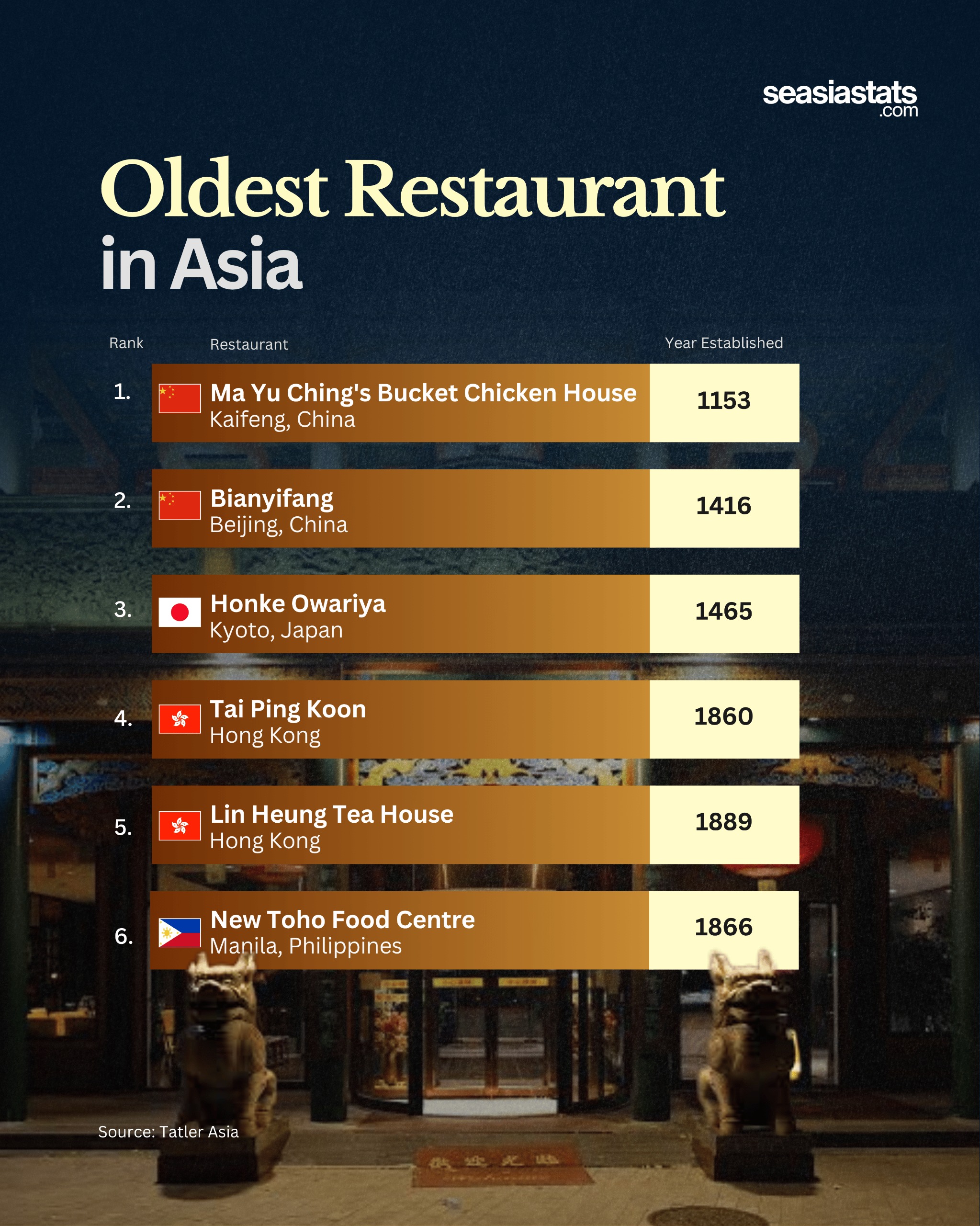
Asia is home to some of the world's oldest restaurants, where centuries-old culinary traditions continue to bring people together through food. Beyond serving delicious meals, these establishments preserve cultural heritage, historical stories, and traditional recipes that have survived generations. According to Tatler Asia, six remarkable restaurants stand out for their extraordinary longevity, with histories dating back hundreds of years.
The oldest on the list is Ma Yu Ching's Bucket Chicken House in Kaifeng, China, established in 1153 during the Jin Dynasty. Famous for its signature bucket chicken, the restaurant has maintained its reputation through generations. Its traditional cooking method involves slowly simmering chicken with spices, creating a distinctive flavour. In 2007, its bucket chicken was recognised as part of Henan Province's intangible cultural heritage.
Another historic Chinese establishment is Bianyifang, founded in Beijing in 1416 during the Ming Dynasty. It is particularly famous for its Peking duck, prepared using a traditional closed-oven roasting technique that produces crispy skin and tender meat. Its long-standing culinary reputation has made it a favourite among locals and distinguished visitors.
In Kyoto, Japan, Honke Owariya has been serving customers since 1465. Originally established as a confectionery shop, it eventually became renowned for its handmade soba noodles during the 18th century. With more than five centuries of history, it remains an important part of Kyoto's culinary heritage.
Moving to Hong Kong, Tai Ping Koon was established in 1860 in Guangzhou before expanding to Hong Kong in 1938. It is celebrated for its distinctive fusion of Chinese and Western cuisine, particularly its famous Swiss chicken wings and baked soufflés.
Another Hong Kong favourite is Lin Heung Tea House, which traces its origins to 1889 in Guangzhou as a traditional wedding pastry shop. Known for its classic Cantonese dim sum, bamboo steamers, and traditional tea-house atmosphere, it represents an enduring part of Chinese dining culture. Its Hong Kong branch has a separate history, opening in 1927.
Completing the list is New Toho Food Centre in Binondo, Manila, Philippines, which traces its establishment to 1866. Originally known as Toho Antigua Panciteria, it is celebrated for its Chinese-Filipino cuisine, including pancit Canton and lumpiang Shanghai. However, its founding date remains debated, with some historical records suggesting 1888 instead.
These six restaurants demonstrate how food can preserve history, identity, and tradition. Their remarkable stories remind us that a restaurant can be much more than a place to eat, it can be a living symbol of Asia's rich culinary heritage.