

Asia’s Top Cultural Powerhouses in 2025
Thailand is the most powerful cultural powerhouse in Asia for 2025.

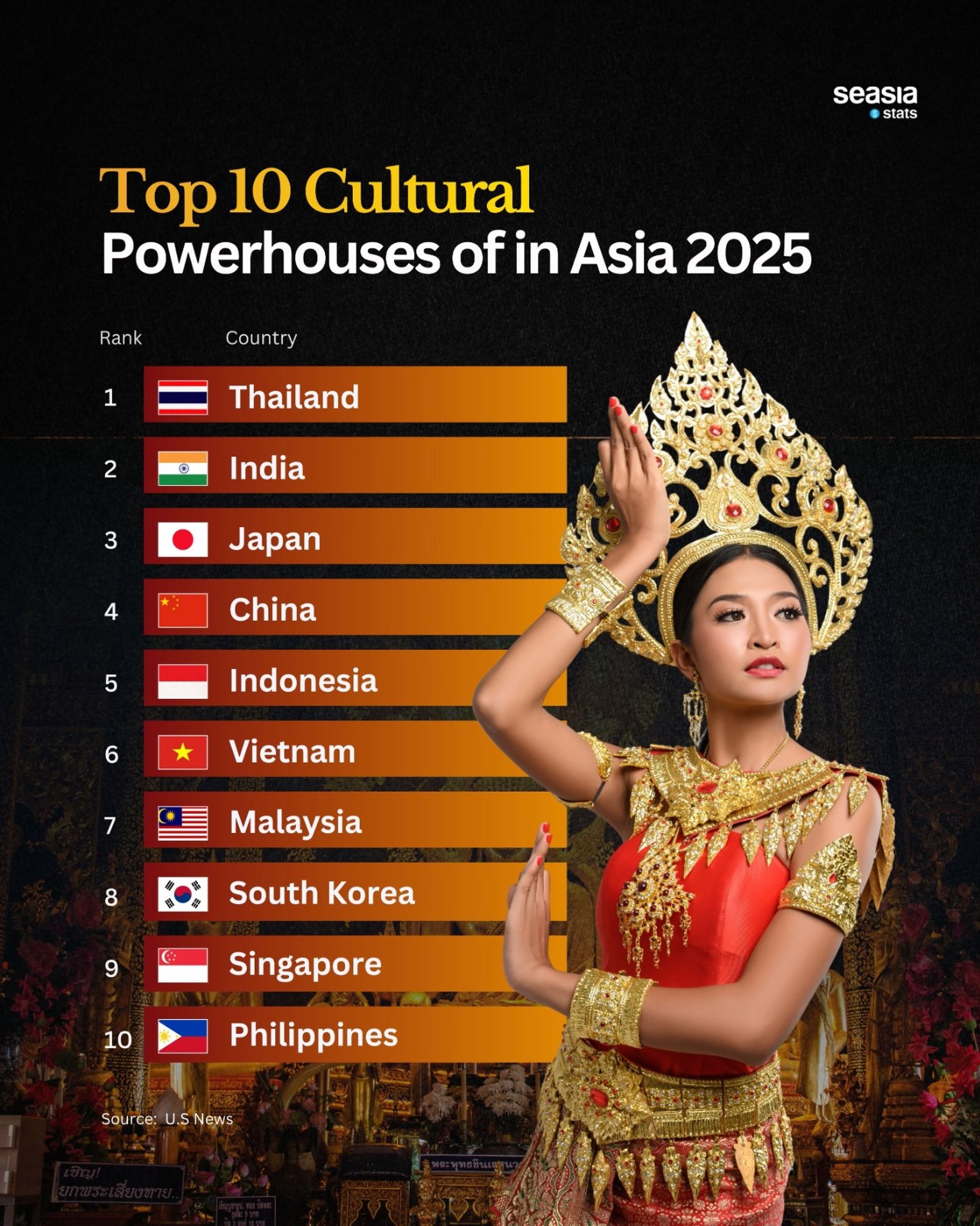
Asia is home to some of the world’s oldest civilizations, most dynamic creative industries, and most influential cultural traditions. According to the 2025 U.S. News Best Countries rankings, ten Asian nations stand out as cultural powerhouses.
The ranking reflects the growing ability of these countries to shape global perceptions through heritage, cuisine, arts, entertainment, traditions, and cultural exports.
Thailand takes the top position, combining centuries-old Buddhist traditions, ornate temples, colorful festivals, traditional arts, and internationally celebrated cuisine with a vibrant modern culture. Its tourism industry has also helped make Thai culture one of Asia’s most recognizable worldwide.
India, ranked second, draws its cultural influence from thousands of years of history and extraordinary diversity. Bollywood, classical dance and music, literature, cuisine, religious traditions, and numerous regional cultures have given India a powerful cultural identity that reaches far beyond its borders.
Japan ranks third, uniquely blending ancient traditions with modern creativity. From tea ceremonies, temples, and traditional crafts to anime, manga, fashion, gaming, and contemporary design, Japan has created a cultural presence that resonates across generations.
China, in fourth place, possesses an immense historical legacy, from its philosophy and cuisine to calligraphy, architecture, festivals, and traditional arts. Its contemporary cultural influence is also expanding through technology, entertainment, and global brands.
Indonesia, fifth on the list, offers remarkable cultural diversity across thousands of islands. Batik, wayang, gamelan music, traditional dance, cuisine, and indigenous customs contribute to its distinctive global identity.
The remaining five countries demonstrate the breadth of Asian cultural influence. Vietnam is celebrated for its cuisine, traditional áo dài, architecture, and historical heritage. Malaysia stands out for its multicultural blend of Malay, Chinese, Indian, and indigenous traditions.
South Korea has transformed its cultural influence through the global popularity of K-pop, Korean dramas, film, fashion, and food. Recent assessments likewise place South Korea among Asia’s leading cultural influencers.
Singapore combines Chinese, Malay, Indian, and Western influences into a distinctive multicultural identity, while its cuisine and international outlook enhance its cultural reach. Finally, the Philippines contributes a lively cultural presence through music, cinema, cuisine, festivals, and its deep connections with communities around the world.
Together, these ten countries demonstrate that Asia’s cultural power is remarkably diverse. From ancient heritage to contemporary pop culture, they continue to shape how the world experiences and understands Asia.