

Asia's Top Cultural Powerhouses
Thailand is the biggest cultural powerhouse of Asia in 2025.

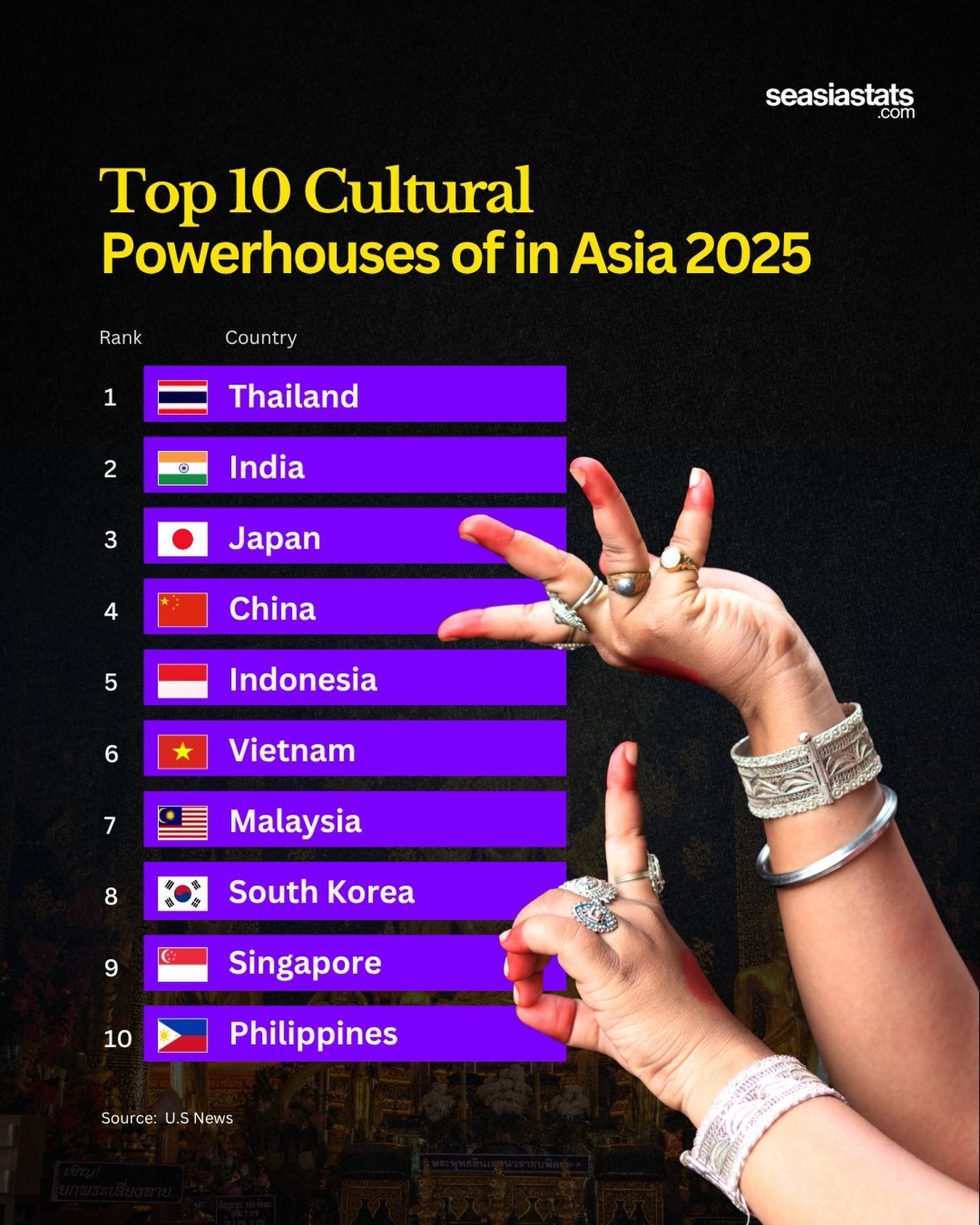
Culture continues to be one of the strongest forms of global soft power, influencing the way countries are viewed through their traditions, creative arts, food, entertainment, and historical heritage. According to the U.S. News 2025 Best Countries rankings for cultural influence, several Asian nations stand among the world's most prominent cultural powers.
Thailand tops the list, supported by its distinctive heritage, internationally popular cuisine, colorful festivals, and well-established tourism sector. Its Buddhist temples, traditional crafts, performing arts, contemporary entertainment, and renowned hospitality have helped make Thailand a highly recognizable cultural presence worldwide.
India comes in second, reflecting the enormous influence of a civilization shaped by thousands of years of history.
Indian culture has spread internationally through religion, literature, food, music, dance, and cinema, particularly through the globally recognized Bollywood film industry. Its extraordinary cultural and regional diversity further strengthens its international appeal.
Japan ranks third, successfully blending centuries-old traditions with modern creativity and innovation.
Japanese culture has gained a huge following around the world through anime, manga, video games, fashion, cuisine, and technology. Meanwhile, traditional customs, architecture, and cultural practices continue to play an important role in Japan's international identity.
China occupies fourth place, drawing upon the legacy of one of the world's oldest civilizations. Its cultural influence is rooted in history, philosophy, traditional arts, cuisine, and literature, while its presence in film and digital media has continued to grow. This cultural reach has developed alongside China's expanding global economic role.
Indonesia and Vietnam rank fifth and sixth respectively. Indonesia's cultural prominence is closely connected to the remarkable variety found across its thousands of islands, including numerous languages, ethnic communities, and traditions.
Vietnam's international cultural presence is strengthened by its distinctive cuisine, long history, traditional customs, and increasingly visible cultural identity.
Malaysia takes seventh place, reflecting the country's distinctive combination of Malay, Chinese, Indian, and indigenous cultural influences. South Korea follows in eighth, with K-pop, television dramas, cinema, beauty, fashion, and other elements of the Korean Wave, or Hallyu, driving its growing international cultural presence.
Singapore ranks ninth, demonstrating how a relatively small country can have significant cultural influence. Its multicultural population, diverse food scene, and position as an international meeting point contribute to its global cultural reputation.
The Philippines completes the top ten, drawing attention through its music, arts, hospitality, traditions, and strong cultural ties with Filipino communities worldwide.
These ten nations highlight the extraordinary variety of Asian culture and its growing international reach. Their traditions and creative industries cross national boundaries, influencing global tastes, encouraging artistic exchange, and creating stronger connections between societies.