

Beef Consumption in Southeast Asia, 2020
In 2020, Myanmar emerged as the undisputed leader in beef and bovine meat consumption across Southeast Asia, a testament to its unique culinary preferences and

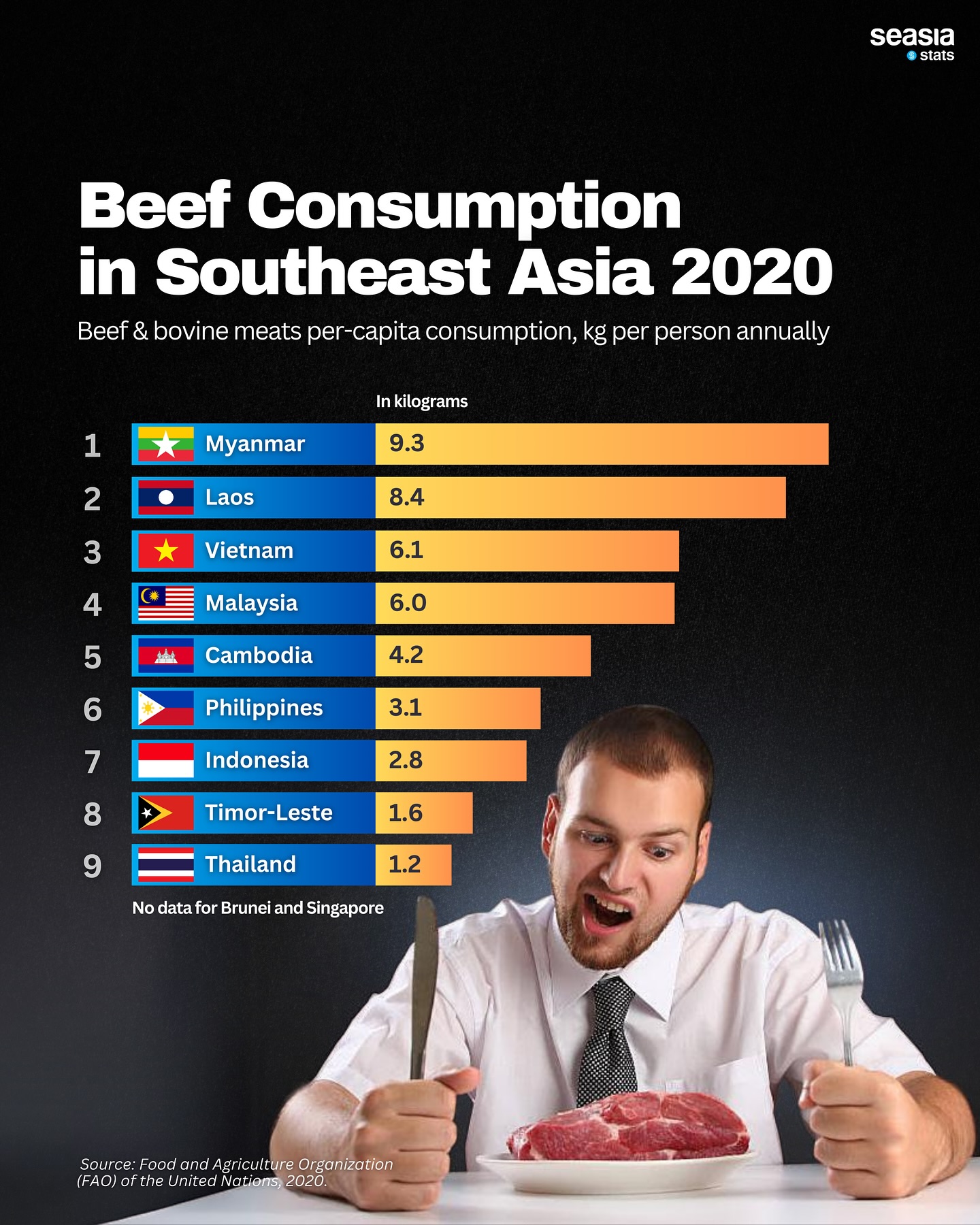
In 2020, Myanmar emerged as the undisputed leader in beef and bovine meat consumption across Southeast Asia, a testament to its unique culinary preferences and dietary habits. According to meticulous data gathered by the Food and Agriculture Organization (FAO) of the United Nations, Myanmar claimed the top spot with an impressive per capita consumption of 9.3 kilograms of beef and bovine meats annually.
This figure not only illustrates Myanmar's robust appetite for these protein-rich delicacies but also underscores the significant role they play in the nation's gastronomic landscape. From traditional dishes to modern culinary creations, beef and bovine meats hold a cherished place on Myanmar's dining tables, reflecting a rich tapestry of flavors deeply rooted in its cultural heritage.
Trailing behind Myanmar in this carnivorous race is Laos, securing second place with a per capita consumption of 8.4 kilograms. Despite its smaller population compared to neighboring countries, Laos showcases a remarkable affinity for beef and bovine meats, contributing to the vibrant tapestry of Southeast Asian cuisine.
Meanwhile, Vietnam clinches the third position with a respectable per capita consumption of 6.1 kilograms. Despite its bustling street food culture and diverse culinary offerings, Vietnam's consumption figures portray a slightly lower reliance on beef and bovine meats compared to its regional counterparts.
The data not only sheds light on consumption patterns but also provides insight into the dietary preferences and cultural nuances prevalent across the Southeast Asian region. Myanmar's dominance in this domain underscores the importance of beef and bovine meats in shaping its culinary identity while highlighting the diversity that enriches the region's gastronomic landscape.