

Belief in Spells, Curses, and Fortune-Telling Across Asia
The belief in spells, curses, and fortune-telling is still prominent in Asia with Malaysia leading.

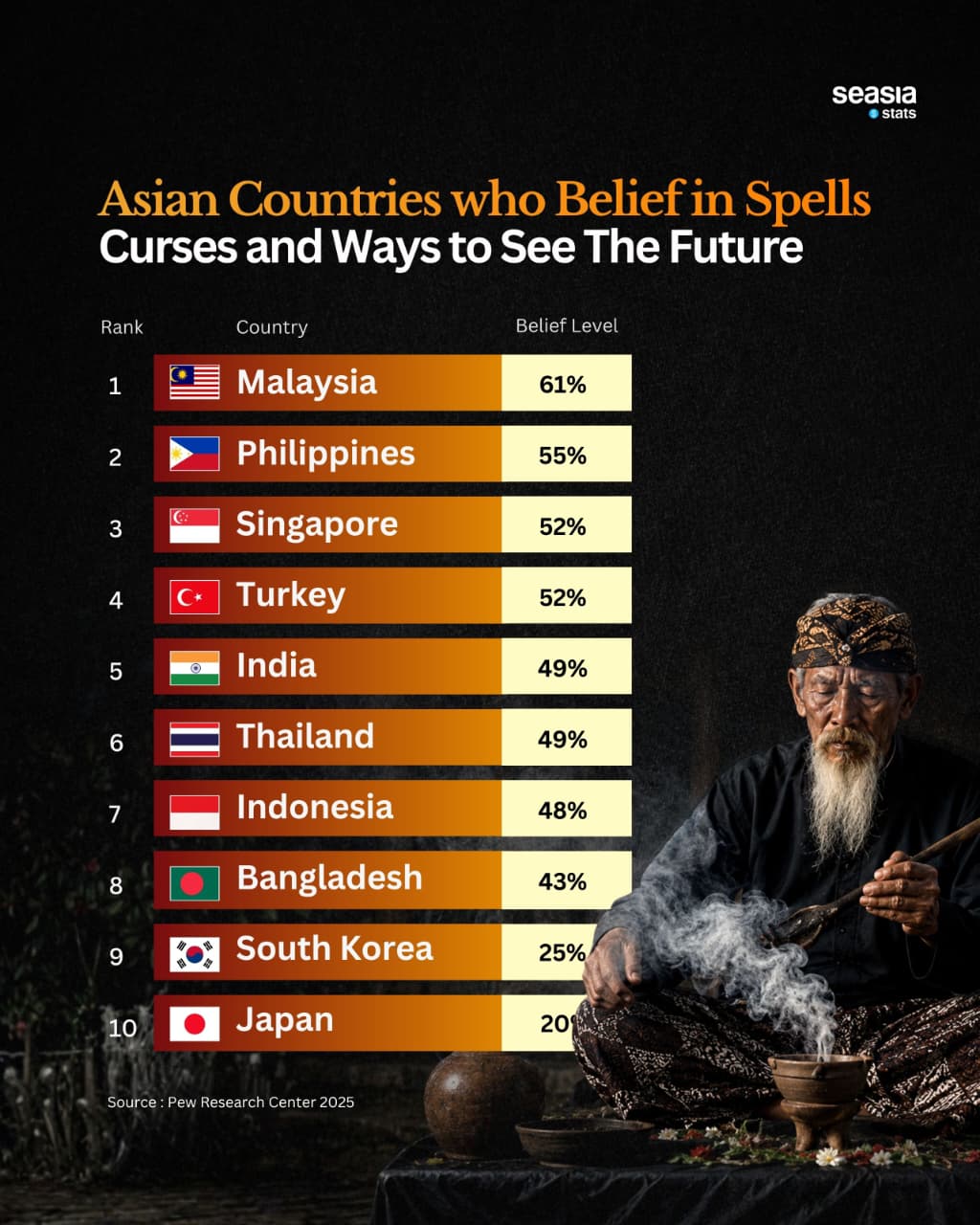
Belief in supernatural practices such as spells, curses, and methods of predicting the future remains widespread across many parts of Asia, even as societies become increasingly urbanized and technologically advanced.
According to research by the Pew Research Center, significant portions of the population in several Asian countries say they believe in practices related to magic, curses, or fortune-telling. These beliefs often coexist with major religious traditions and cultural customs, reflecting the region’s rich and diverse spiritual heritage.
Among the countries surveyed, Malaysia recorded the highest level of belief, with 61% of respondents saying they believe in spells, curses, or ways to see the future. Traditional healers, spiritual practitioners, and folk beliefs continue to play an important role in many communities, often existing alongside modern religious practices.
The Philippines ranked second at 55%. Belief in supernatural forces has long been embedded in Filipino folklore and cultural traditions. Stories involving spirits, curses, and mystical abilities remain popular, while fortune-telling and spiritual guidance continue to attract interest among many people.
Singapore and Turkey both recorded 52%, demonstrating that belief in supernatural practices is not limited to rural or less-developed societies. Despite being highly modernized economies, both countries retain cultural traditions and spiritual practices that influence how some people view the unseen world.
India and Thailand each registered 49%. In India, a wide variety of religious and cultural traditions contribute to beliefs in astrology, spiritual rituals, and supernatural influences. Thailand similarly has a long history of beliefs involving protective charms, spiritual ceremonies, and fortune-telling, many of which are integrated into everyday life.
Indonesia followed closely with 48%, while Bangladesh recorded 43%. In both countries, traditional beliefs often blend with religious practices and local customs. Many communities continue to consult spiritual figures or seek guidance through practices believed to reveal future events or provide protection from harm.
Further down the list are South Korea and Japan, where belief levels were considerably lower. South Korea recorded 25%, while Japan stood at 20%. Although both countries are highly developed and technologically advanced, elements of traditional spirituality remain visible through practices such as fortune-telling, ancestral rituals, and visits to religious sites.
The findings illustrate that belief in spells, curses, and fortune-telling remains a notable part of cultural life across Asia.
While the degree of belief varies significantly from country to country, the survey highlights how traditional worldviews continue to coexist with modern education, scientific advancement, and economic development. These enduring beliefs offer insight into the diverse ways people seek meaning, guidance, and understanding of the uncertainties of life.