

Books Read per Year in Asia
Indians read the most books in Asia annually.

Reading remains an important part of education, personal development, and cultural life across Asia. From the enormous population of India to the technologically advanced societies of East Asia, reading habits vary according to educational systems, access to books, digital platforms, and individual interests.
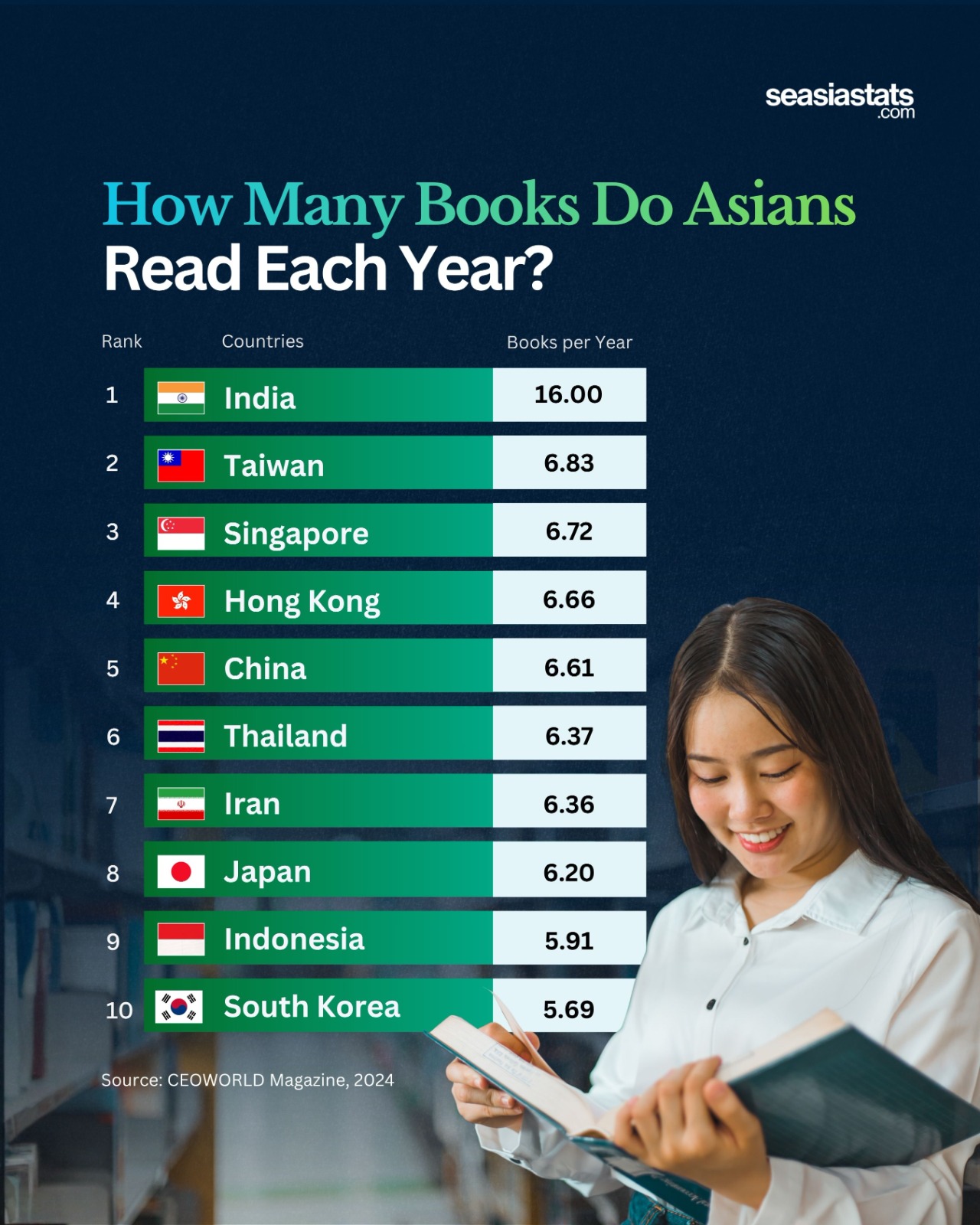
According to CEOWORLD Magazine’s 2024 ranking, several Asian countries and territories demonstrate notable levels of annual book consumption, with India leading the list by a considerable margin.
India ranks first, with an average of 16 books per person per year. This figure places the country well ahead of the other Asian entries in the ranking.
India's extensive literary traditions, diverse publishing industry, and large population of students and competitive examination candidates contribute to a significant reading culture. Books in multiple languages serve educational, professional, and recreational purposes throughout the country.
Taiwan takes second place, with an average of 6.83 books annually. Its strong educational environment and developed publishing market support a broad range of reading interests.
Singapore follows closely in third place, recording 6.72 books per year. The city-state's emphasis on education, multilingualism, and access to public libraries provides an environment conducive to reading.
Hong Kong ranks fourth, with 6.66 books annually, narrowly ahead of mainland China, which records 6.61 books per year. Both have substantial publishing markets and diverse reading communities.
In China, digital reading platforms have also become an important part of the wider literary landscape, allowing readers to access books through smartphones and other electronic devices.
Thailand occupies sixth place with an average of 6.37 books per year, followed closely by Iran at 6.36. These figures illustrate the continued importance of reading across different cultural and linguistic environments. Although the countries have distinct literary traditions, books remain a medium for education, information, and entertainment.
Japan ranks eighth, with 6.20 books annually. Its established publishing industry, extensive bookstore networks, and popular manga culture contribute to a varied reading environment.
Indonesia follows in ninth place, averaging 5.91 books per year. With a large and diverse population, Indonesia has opportunities to expand reading participation through libraries, schools, community literacy programs, and digital publishing.
South Korea completes the top ten, with an average of 5.69 books annually. Its advanced digital infrastructure and strong educational culture support access to both printed and electronic publications.
Overall, the 2024 ranking highlights the diversity of reading habits across Asia. India's leading figure stands out, while the remaining entries cluster between approximately five and seven books annually.
However, these numbers should be interpreted cautiously because survey methods, definitions of reading, and the distinction between printed and digital books can influence results. Ultimately, encouraging affordable access to books, stronger literacy programs, and welcoming reading spaces can help communities across Asia develop lasting reading habits.