

Countries Named After Historical Figures
There are twelve unique countries across the world named after people.

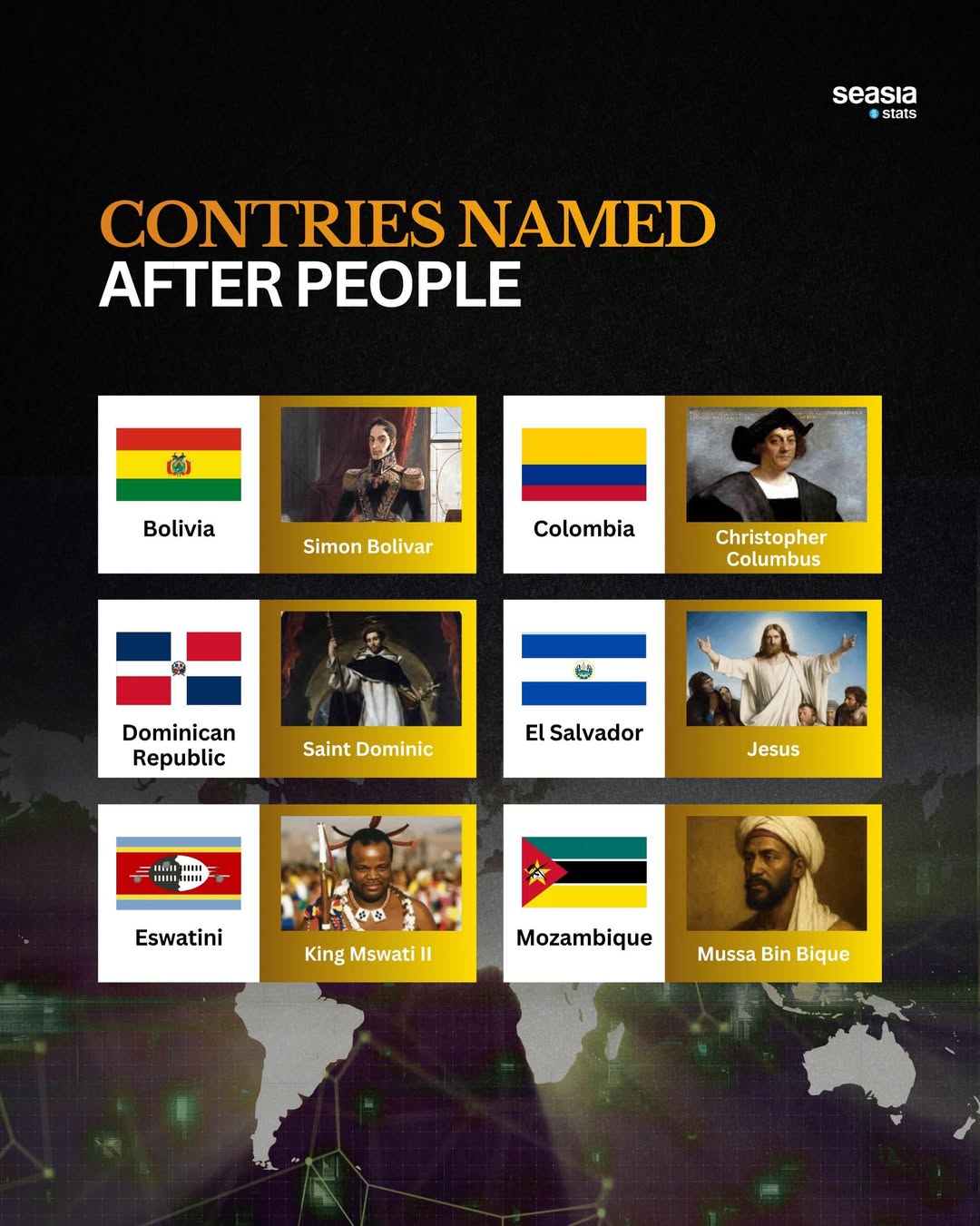
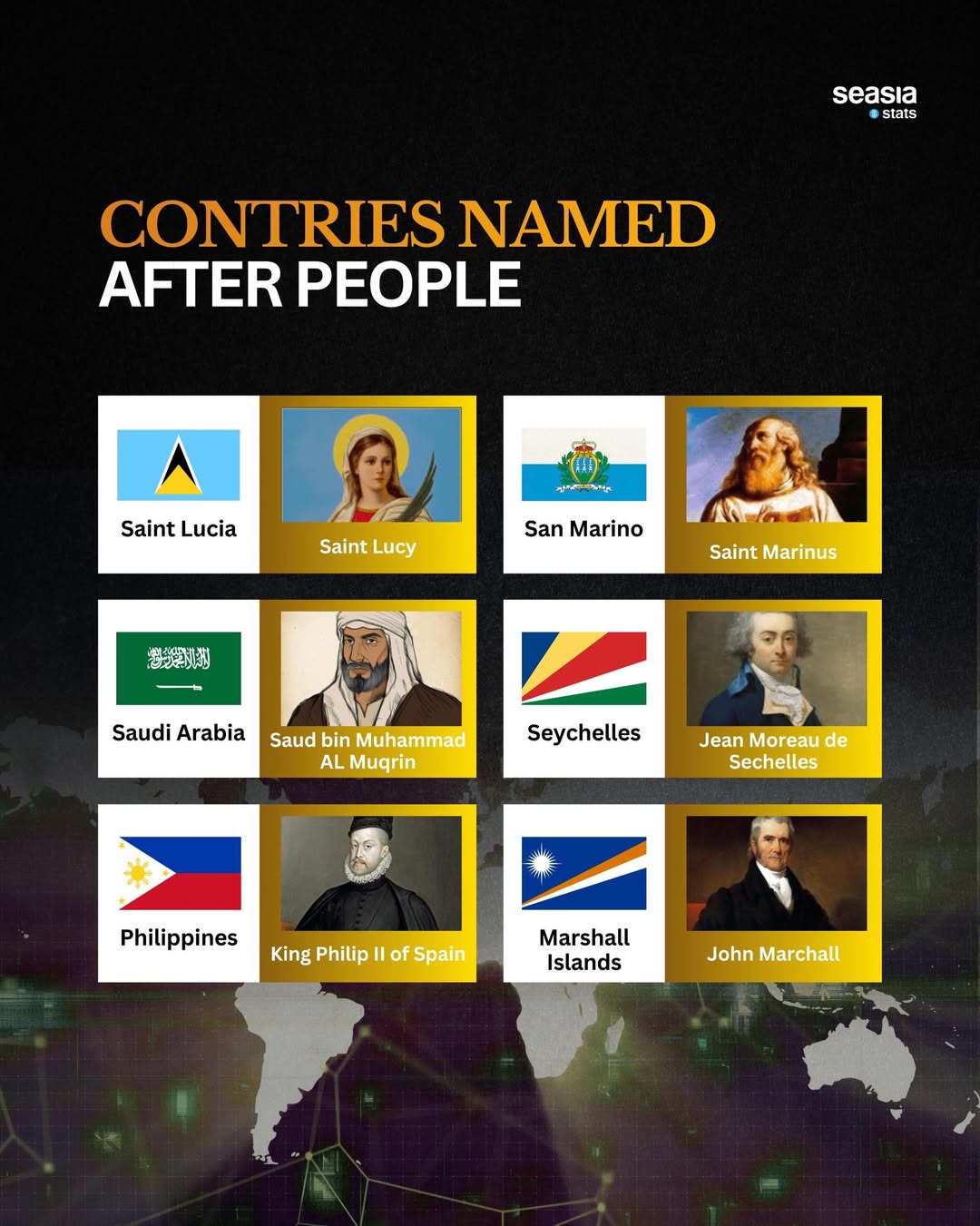
Many countries around the world derive their names from influential historical figures, religious personalities, saints, explorers, or royal leaders. These names reflect centuries of history, colonization, religion, and cultural identity that continue to shape modern nations today.
One of the best-known examples is Bolivia, named after the South American revolutionary Simón Bolívar. Bolívar played a crucial role in liberating several Latin American nations from Spanish colonial rule during the early nineteenth century. The country adopted his name in honor of his leadership and vision for independence.
Similarly, Colombia was named after explorer Christopher Columbus, whose voyages across the Atlantic opened the Americas to European colonization. Although Columbus never visited present-day Colombia, his legacy influenced the naming of the country.
Religion has also inspired several national names. Dominican Republic takes its name from Saint Dominic, while El Salvador translates to “The Savior,” referring to Jesus Christ. In the Caribbean, Saint Lucia honors Saint Lucy, one of the few countries in the world named after a woman.
In Europe, San Marino was named after Saint Marinus, a Christian stonemason who established the small republic during the fourth century. The country is considered one of the oldest surviving republics in the world.
African nations also preserve historical namesakes. Eswatini derives its modern name from Mswati II, one of the country’s most respected monarchs. Mozambique is believed to be named after Arab trader Mussa bin Bique.
In the Middle East, Saudi Arabia was named after the ruling House of Saud, descended from Saud bin Muhammad Al Muqrin. Meanwhile, the island nation of Seychelles honors French official Jean Moreau de Séchelles.
In Asia, the Philippines was named after Philip II of Spain during Spanish colonization. Finally, the Marshall Islands commemorates British explorer John Marshall, who visited the Pacific islands in the eighteenth century.
These country names demonstrate how historical figures continue to leave a lasting mark on global geography and national identity.