

Countries Where Online Shoppers Still Prefer Paying with Cash
More than 20% of online shoppers in the Philippines still prefer paying with cash, the most in the world.

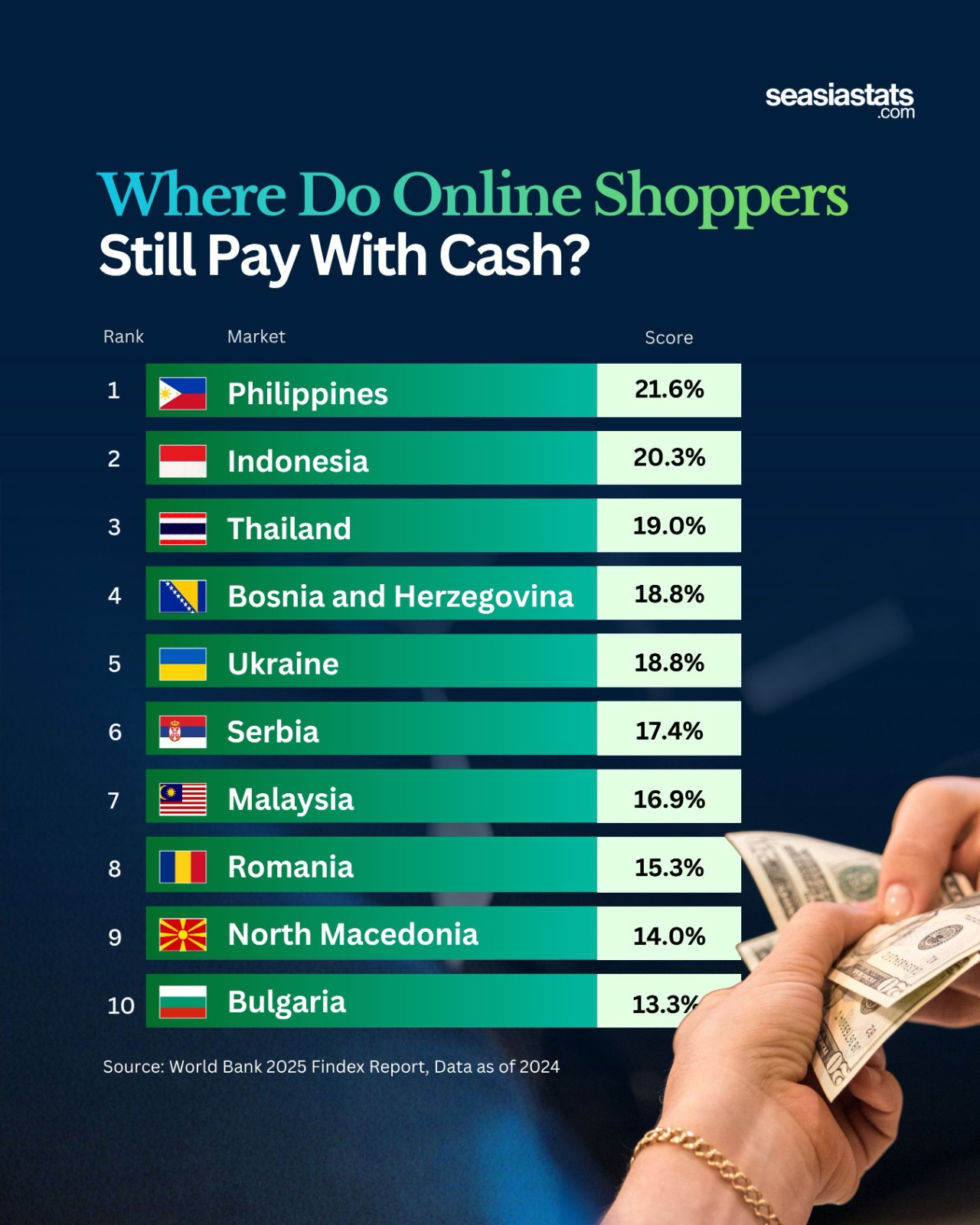
Despite the rapid growth of digital payments and e-commerce worldwide, cash remains an important payment method for online shoppers in several countries. According to the World Bank’s 2025 Global Findex Report, a notable share of consumers in certain economies continue to pay for online purchases using cash, highlighting the uneven transition toward a fully digital economy.
The Philippines ranks first among the countries with the highest percentages of online shoppers still paying with cash, at 21.6%. This means that more than one in five online shoppers in the country continue to rely on cash when purchasing goods or services online. Indonesia follows closely in second place, with 20.3%, reflecting the continued popularity of cash-based transactions despite the country's rapidly expanding digital economy and growing adoption of e-wallets and mobile banking.
Thailand takes third place, with 19.0% of online shoppers still using cash for their purchases. Meanwhile, Bosnia and Herzegovina and Ukraine share fourth place, both recording 18.8%. Their figures demonstrate that cash continues to play a considerable role in online commerce across parts of Eastern and Southeastern Europe.
Serbia ranks next, with 17.4%, followed by Malaysia at 16.9%. Although Malaysia has a well-developed digital payment ecosystem, the figures indicate that cash remains relevant among a segment of its online shopping population. Romania occupies eighth place, with 15.3%, while North Macedonia follows with 14.0%.Completing the top ten is Bulgaria, where 13.3% of online shoppers still pay with cash. Although this is the lowest percentage among the ten countries listed, it still represents a meaningful proportion of consumers who have yet to fully transition to digital payment methods when shopping online.
These figures reveal an interesting contrast in the global digital economy. While online shopping is increasingly associated with cashless transactions, consumer payment habits remain influenced by factors such as trust, financial inclusion, access to banking services, digital literacy, and established shopping practices. Cash-on-delivery services may also provide shoppers with a sense of security, particularly when they prefer to pay only after receiving their orders.
Ultimately, the continued use of cash among online shoppers shows that the growth of e-commerce does not automatically mean the disappearance of traditional payment methods. Even as digital finance advances, cash remains an important part of the online shopping experience in many countries.