

Countries who view language as requirement for true nationality
The perception that language is essential to national identity remains strong in many parts of the world. Topping the list is Bangladesh, where 84% of responden

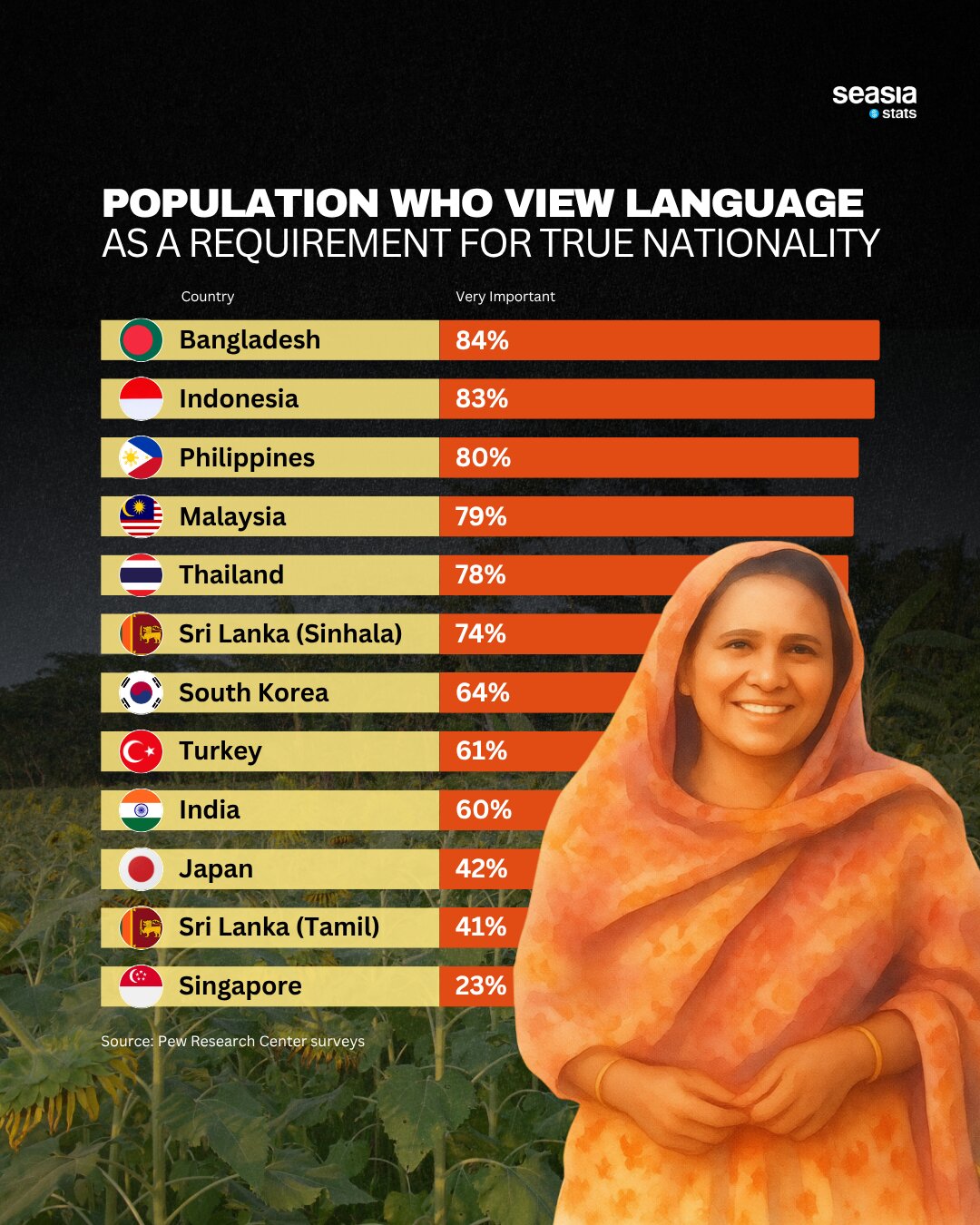
The perception that language is essential to national identity remains strong in many parts of the world. Topping the list is Bangladesh, where 84% of respondents consider language a very important requirement for true nationality. Close behind is Indonesia at 83%, followed by the Philippines at 80%. These top three countries highlight how deeply language is intertwined with cultural identity, history, and a shared sense of belonging among citizens.
Across Asia, similar sentiments persist, with countries like Malaysia (79%) and Thailand (78%) also ranking highly. In contrast, more linguistically diverse or globalized societies tend to show lower percentages, such as Japan (42%) and Singapore (23%). These differences reflect varying national narratives—some rooted in linguistic unity, others shaped by multiculturalism and the coexistence of multiple languages in everyday life.
In Southeast Asia, major urban centers illustrate this dynamic clearly. Cities like Jakarta, Manila, and Kuala Lumpur show how national languages remain central to identity even amid rapid globalization. At the same time, highly internationalized hubs like Singapore demonstrate a more flexible approach, where multiple languages coexist and identity is less tied to a single linguistic tradition. This contrast underscores how Southeast Asia balances strong cultural roots with increasing global connectivity.