

Countries with population over 100 million
In 2026, global population patterns tell a powerful story about where humanity lives, works, and grows.

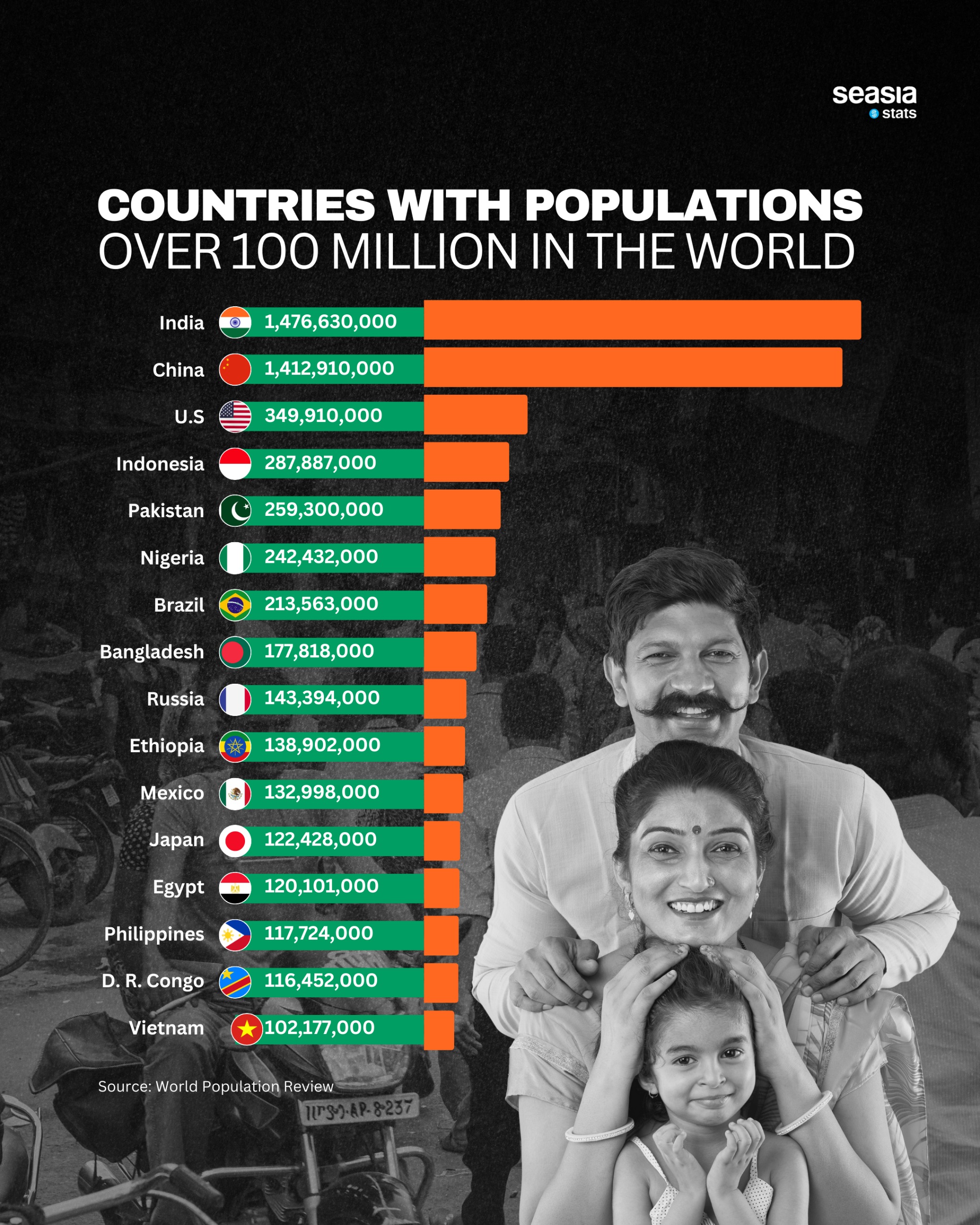
In 2026, global population patterns tell a powerful story about where humanity lives, works, and grows. Just sixteen countries now have populations exceeding 100 million people, and together they represent well over half of the world’s inhabitants. From vast Asian nations to fast-growing African states, these demographic giants increasingly shape global economics, culture, labor markets, and geopolitics.
Asia at the Center of Global Population
Asia dominates the top of the list. India has officially become the world’s most populous country, with an estimated 1.47 billion people. A young demographic profile, rising urbanization, and declining—but still positive—fertility rates continue to fuel India’s population momentum.
Close behind is China, with approximately 1.41 billion people. While China remains a demographic heavyweight, it is also entering a new era marked by population aging and long-term decline, reshaping its workforce and social policies.
The only non-Asian country in the top three is the United States, home to about 349 million people. Unlike many developed nations, U.S. population growth remains supported by immigration and relatively higher fertility rates.
Southeast Asia’s Demographic Powerhouses
Southeast Asia plays an outsized role among the world’s most populous nations. Indonesia ranks fourth globally with nearly 288 million people, making it the largest population in the ASEAN region. Indonesia’s steady growth is driven by domestic consumption, a growing middle class, and expanding urban centers like Jakarta and Surabaya.
The Philippines follows with around 118 million people, distinguished by one of the youngest populations in Asia. High birth rates and a globally connected workforce—especially through overseas employment—continue to shape its demographic profile.
Meanwhile, Vietnam recently crossed the 100 million mark, joining the global demographic elite. Vietnam’s population growth has slowed compared to earlier decades, but its large, increasingly skilled workforce remains a key driver of its economic rise.
The 200-Million Club and Beyond
Beyond Asia, several countries exceed 200 million people. Pakistan has roughly 259 million residents, while Nigeriafollows closely at 242 million, making it Africa’s most populous nation and one of the fastest-growing globally.
In Latin America, Brazil stands out with 213 million people, anchoring the region’s demographic and economic influence.
Completing the Global Top 16
The remaining countries over the 100-million threshold reflect a wide geographic spread: Bangladesh, Russia, Ethiopia, Mexico, Japan, Egypt, and the Democratic Republic of the Congo.
Why These Numbers Matter
Population size influences everything—from economic growth and military power to climate impact and global consumption. As Southeast Asian nations like Indonesia, the Philippines, and Vietnam continue to grow and urbanize, their demographic weight will increasingly shape regional stability and global trends. In a world edging toward 8.2 billion people, these population giants are not just statistics—they are the engines of the future.