

Countries with the Best Healthcare Systems in the World
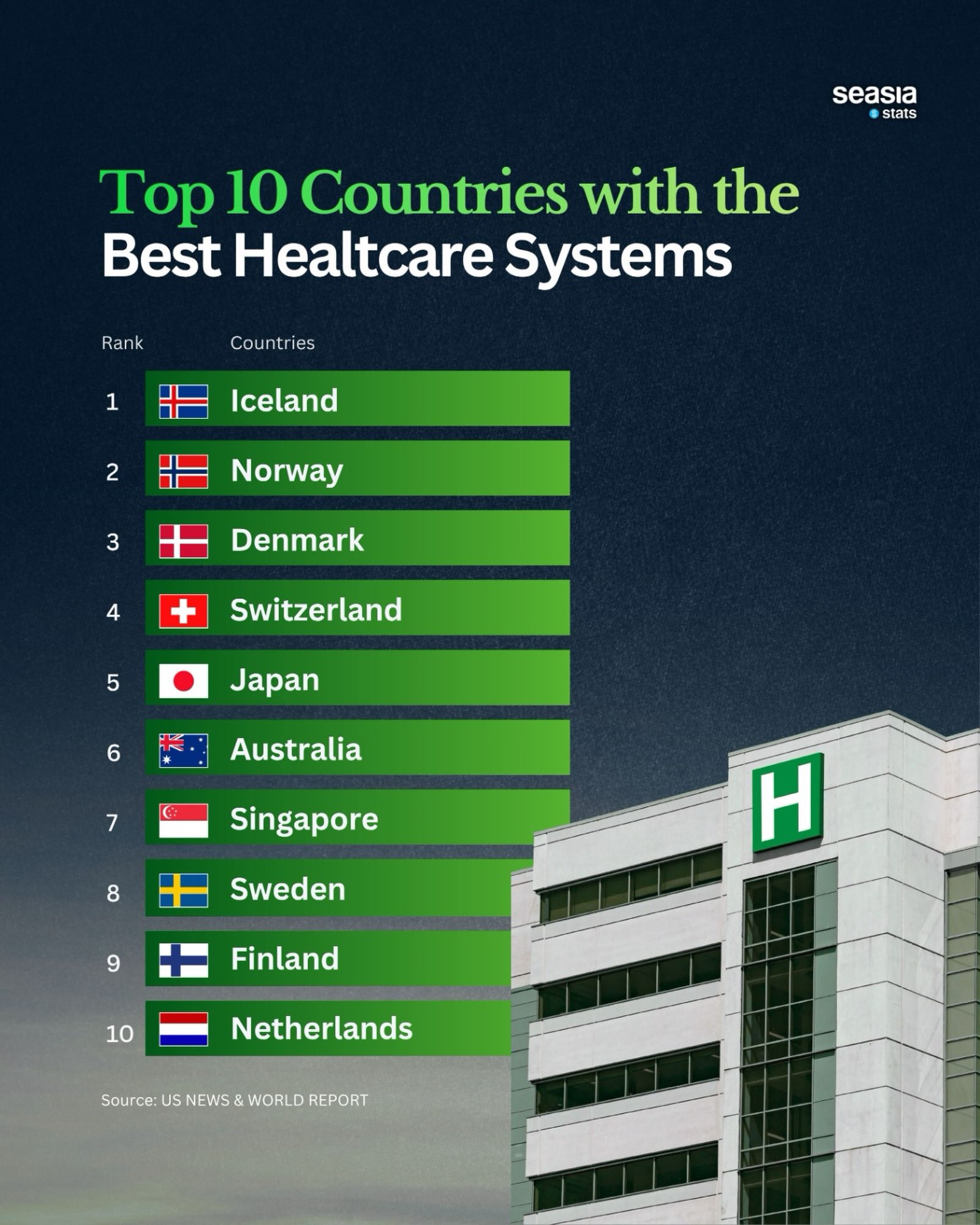
Nordic countries are dominating the list of the best healthcare worldwide.

Access to high-quality healthcare is one of the most important factors influencing a nation's quality of life.
According to U.S. News & World Report, the countries with the best healthcare systems for 2026 are recognized for their excellent medical services, advanced technology, skilled healthcare professionals, and strong public health policies.
Leading the ranking is Iceland, whose healthcare system is known for its universal coverage, highly trained medical workforce, and strong emphasis on preventive care. Despite its relatively small population, Iceland consistently achieves outstanding health outcomes and one of the highest life expectancies in the world.
Norway and Denmark follow closely behind. Both Nordic nations operate tax-funded universal healthcare systems that ensure residents have access to affordable, high-quality medical services. Their focus on public health, early intervention, and patient-centered care has earned them international recognition.
Switzerland ranks fourth, combining mandatory health insurance with a network of world-class hospitals and medical specialists. The country's healthcare system is renowned for its innovation, efficiency, and consistently high standards of care.
Japan, in fifth place, has long been admired for providing universal healthcare while maintaining relatively low medical costs. The country's advanced medical technology, accessible healthcare services, and emphasis on preventive medicine contribute to one of the world's longest life expectancies.
Australia and Singapore also stand out for their exceptional healthcare systems. Australia offers universal healthcare through Medicare while complementing it with a strong private sector.
Singapore, meanwhile, has developed one of the world's most efficient healthcare models by combining government support, compulsory health savings, and personal responsibility.
The final three countries in the top ten are Sweden, Finland, and the Netherlands. Sweden's publicly funded healthcare system prioritizes equal access and comprehensive care for all residents. Finland is recognized for its strong primary healthcare network, community-based services, and excellent maternal and child health programs.
Rounding out the list, the Netherlands has earned a reputation for balancing universal access with competition among private insurers. Dutch patients benefit from high-quality hospitals, short waiting times for many services, and a healthcare system that consistently ranks among Europe's best.
Although each country has developed its own unique approach, all ten share common strengths: broad healthcare access, significant investment in medical innovation, well-trained healthcare professionals, and a commitment to improving public health.
Their success demonstrates that effective healthcare systems play a crucial role in enhancing both the well-being of individuals and the long-term prosperity of society.