

Countries with the Largest Gen Z Populations
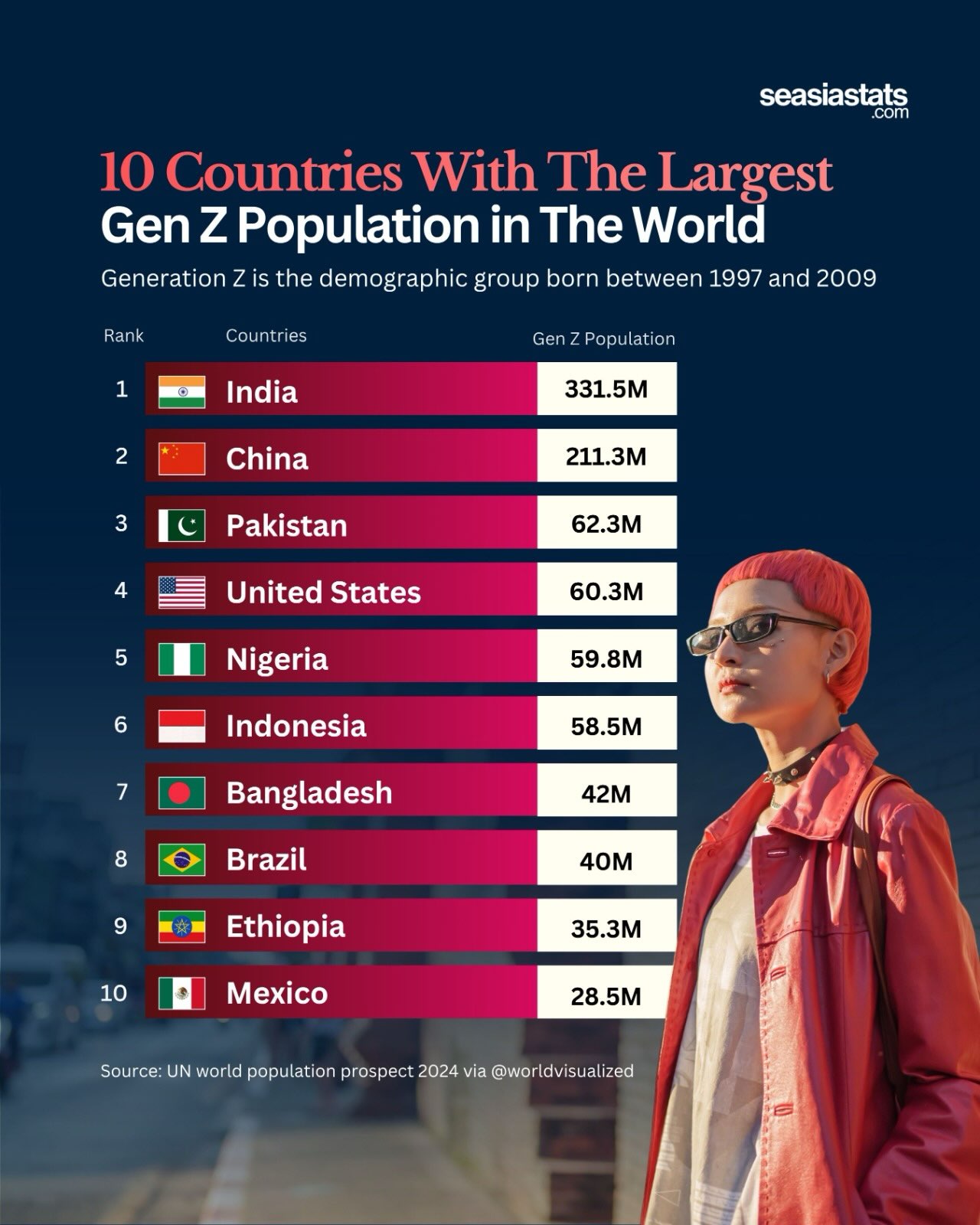
India has the most Gen Z population in the world with approximately 331.5 million.

Generation Z, commonly known as Gen Z, represents one of the most influential demographic groups in the world. Born between 1997 and 2009 under the definition used for these figures, this generation is reshaping consumer behavior, digital culture, education, employment, and economic development.
According to estimates based on the United Nations' World Population Prospects 2024, several countries have particularly large Gen Z populations, with India and China occupying the top two positions.
Leading the ranking is India, with approximately 331.5 million Gen Z individuals. Its enormous young population makes India an important market for technology, entertainment, education, fashion, and digital services. The country also benefits from a growing internet economy and an increasingly connected younger generation.
In second place is China, with 211.3 million Gen Z individuals. China's younger population plays an important role in shaping digital commerce, social media, gaming, technology, and modern consumer trends. Despite its declining overall population, China remains home to one of the world's largest younger generations.
Pakistan ranks third with 62.3 million, followed by the United States with 60.3 million. Meanwhile, Nigeria occupies fifth place with 59.8 million, making it Africa's largest Gen Z population among the countries listed. These figures highlight the growing demographic importance of South Asia, North America, and Africa.
The ranking continues with Bangladesh, which has approximately 42 million Gen Z individuals, followed by Brazil with 40 million. Both countries have substantial young populations that contribute to their consumer markets, cultural industries, and future workforces.
Meanwhile, Ethiopia records approximately 35.3 million Gen Z individuals, reflecting Africa's significant youth demographic. Finally, Mexico completes the top nine with approximately 28.5 million.
Overall, these figures demonstrate the importance of Gen Z in shaping the future of the global economy. With large concentrations of young people in Asia, Africa, and the Americas, businesses and governments must increasingly consider their needs, preferences, and opportunities.
From digital innovation to employment creation, Gen Z will remain a major force influencing the world's social and economic development.