

Countries with the Most Islands
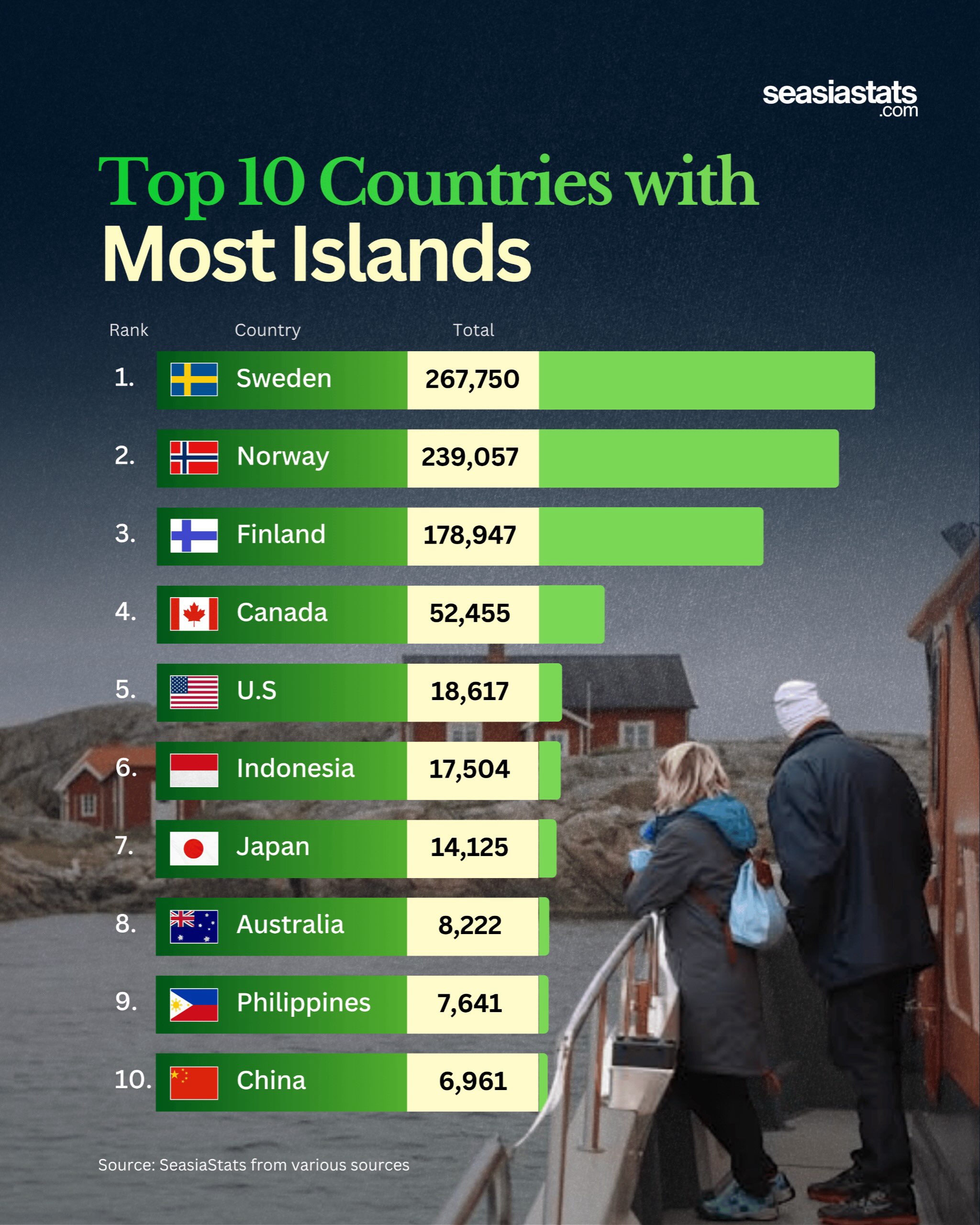
Three Nordic countries, Sweden, Norway, and Finland have the most islands in the world.

Across the world, islands create some of the most beautiful and fascinating landscapes, from quiet, forest-covered shores to tropical paradises surrounded by crystal-clear waters.
While many people associate islands with sunny beaches and vacation destinations, some countries have so many islands that they number in the thousands or even hundreds of thousands. Interestingly, the countries with the most islands are not all located in tropical regions.
Sweden takes the top spot, with an incredible 267,750 islands. Located in Northern Europe, the country is famous for its stunning archipelagos, particularly around Stockholm. Many of its islands are small and uninhabited, offering peaceful natural scenery, while others are home to communities and holiday cottages.
Following closely behind is Norway, with 239,057 islands. Its dramatic coastline, steep mountains, and deep fjords create spectacular surroundings. Norway's islands are known for their breathtaking scenery, traditional fishing villages, and opportunities to experience nature.
Finland ranks third, with 178,947 islands. Besides its famous lakes and forests, Finland has a remarkable archipelago along the Baltic Sea. These islands provide habitats for wildlife and offer residents and visitors places to enjoy boating, fishing, and summer retreats.
Moving across the Atlantic, Canada ranks fourth, with 52,455 islands. Its enormous coastline stretches along three oceans, encompassing remote Arctic islands, rugged coastal landscapes, and forested islands rich in wildlife.
The United States comes fifth, with 18,617 islands. From the tropical islands of Hawaii to the remote islands of Alaska, the country offers an extraordinary variety of island environments, each with its own natural beauty and character.
Indonesia ranks sixth, with 17,504 islands. Located in Southeast Asia, this vast archipelago is renowned for its tropical beaches, volcanic landscapes, colorful marine life, and cultural diversity. Its islands play a vital role in the country's identity and economy.
Japan follows in seventh place, with 14,125 islands. Although its four main islands are the most widely recognized, thousands of smaller islands surround the country, creating beautiful coastlines and distinctive regional cultures.
Australia ranks eighth, with 8,222 islands. Beyond its vast mainland, the country features numerous offshore islands with unique wildlife, pristine beaches, and valuable ecosystems.
The Philippines takes ninth place, with 7,641 islands. Famous for its turquoise waters, coral reefs, and white-sand beaches, it is a popular destination for travelers seeking tropical scenery.
Finally, China ranks tenth, with 6,961 islands, adding to its diverse coastal landscapes and maritime heritage.
Together, these countries demonstrate how islands shape geography, culture, tourism, and biodiversity, reminding us of the remarkable variety of landscapes found across our planet.