

Countries with the Most Smokers
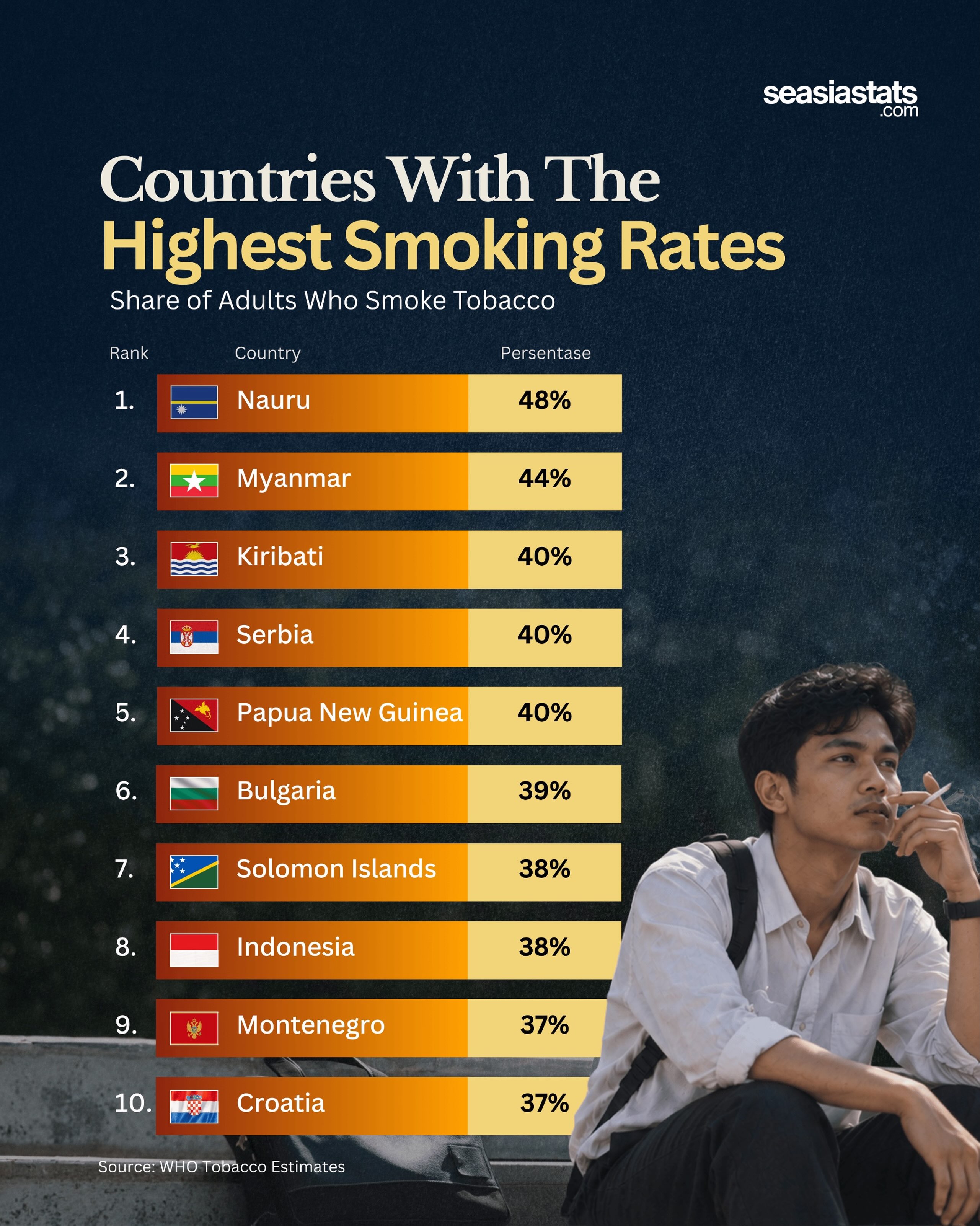
Nauru has the highest smoking rate in the world according to WHO Tobacco Estimates.

Smoking remains a major public health challenge worldwide, contributing to numerous diseases and premature deaths.
According to WHO Tobacco Estimates, several countries report particularly high smoking rates, highlighting the ongoing need for effective tobacco control measures, public awareness campaigns, and stronger health policies.
Nauru tops the ranking with 48%, making it the country with the highest reported smoking rate among the ten nations listed. This small Pacific island nation faces significant public health challenges associated with tobacco consumption, emphasizing the importance of prevention programs and access to smoking cessation support.
Myanmar ranks second, with 44% of its population identified as smokers according to the reported figures. Tobacco use remains an important health concern in the country, where continued efforts to promote awareness and reduce tobacco consumption are essential.
Kiribati takes third place with a smoking rate of 40%. Like several other Pacific island nations, Kiribati faces challenges in addressing tobacco use and its potential long-term effects on public health.
Serbia also records a rate of 40%, placing it alongside Kiribati in the ranking. Smoking has long been a public health concern in parts of southeastern Europe, making tobacco prevention and cessation initiatives important priorities.
Papua New Guinea shares fourth place with Serbia and Kiribati, reporting a smoking rate of 40%. The country's position highlights the need for continued tobacco control efforts and greater awareness of the health risks associated with smoking.
Bulgaria ranks sixth, with 39% of its population reported as smokers. The figure underscores the continuing challenge of reducing tobacco consumption in parts of Europe and the importance of strengthening preventive health measures.
The Solomon Islands follows with a smoking rate of 38%. This Pacific island nation faces similar tobacco-related public health concerns, reinforcing the value of accessible education and smoking cessation services.
Indonesia also records 38%, placing it alongside the Solomon Islands. As one of the world's most populous countries, Indonesia faces a substantial public health challenge in reducing tobacco use and limiting its impact on individuals, families, and communities.
Montenegro ranks ninth with a smoking rate of 37%. Its position reflects the continuing prevalence of smoking in parts of the Balkan region, where tobacco control remains an important public health priority.
Croatia completes the top ten, also recording 37%. The country's inclusion highlights the persistent challenge of tobacco consumption across several European nations.
Overall, these figures illustrate the global scale of smoking and the importance of comprehensive tobacco control strategies.
Governments can help reduce smoking rates through public education, taxation, smoke-free policies, advertising restrictions, and accessible cessation programs. Sustained efforts are essential to protect public health and reduce the long-term burden of tobacco-related diseases.