

Cross-Border QR Payment Linkages Across ASEAN Countries
The strength of partnership among ASEAN countries is clearly shown by these cross-border QR payment linkages.

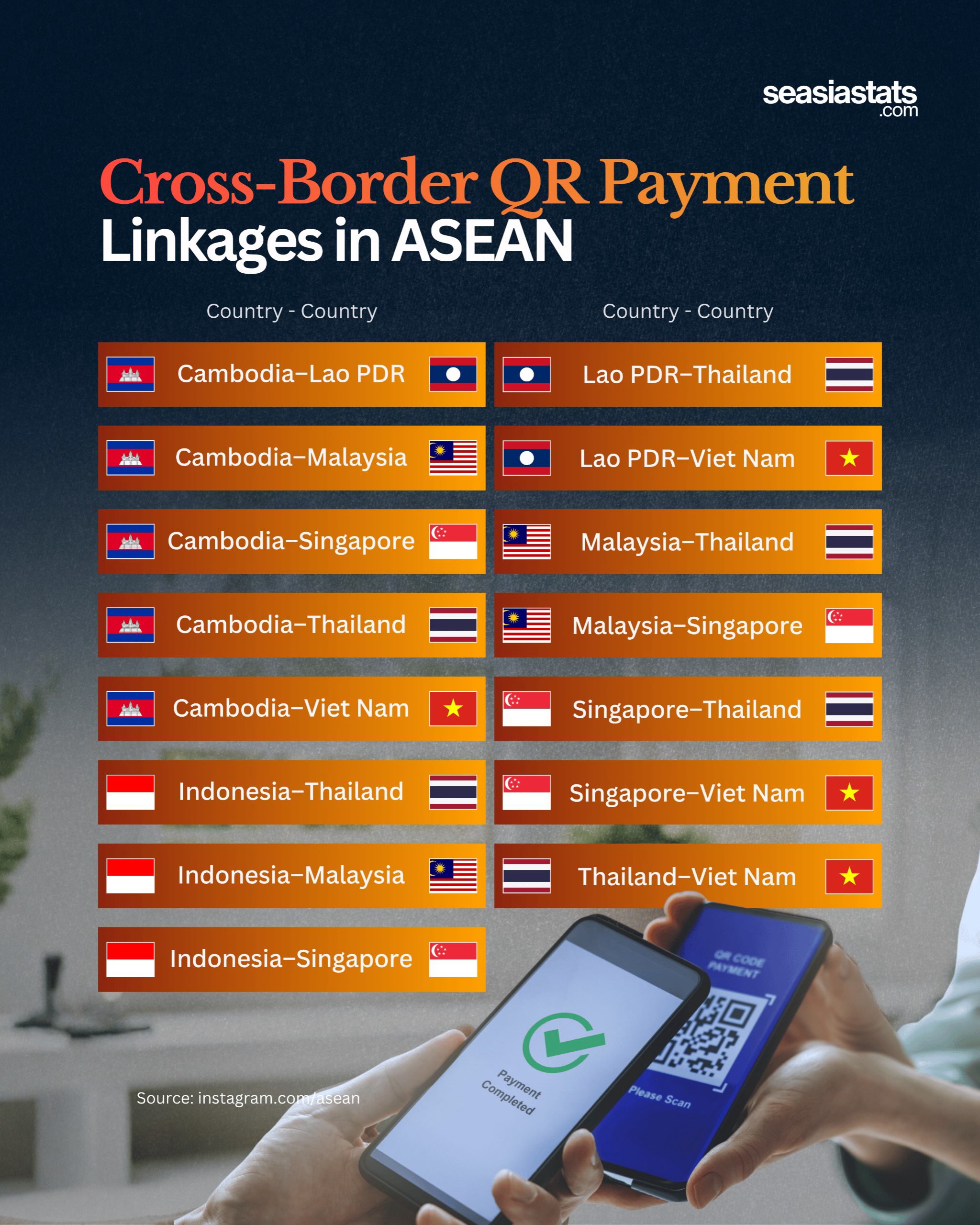
Southeast Asia is making significant progress toward building a more integrated digital payment ecosystem through cross-border Quick Response (QR) code payment linkages.
These initiatives allow consumers and tourists to make payments overseas using their domestic mobile banking applications or participating digital wallets, reducing the need to carry cash or exchange currencies.
Across the region, 15 bilateral connections involving Cambodia, Indonesia, Laos, Malaysia, Singapore, Thailand, and Vietnam illustrate the growing commitment to financial connectivity and digital economic integration.
Cambodia has established QR payment connections with five regional partners: Laos, Malaysia, Singapore, Thailand, and Vietnam. Through its KHQR and Bakong payment systems, Cambodia is expanding opportunities for cashless transactions among international visitors and local merchants.
The Cambodia-Laos linkage was completed in both directions in December 2025, while Cambodia-Singapore connectivity expanded through launches in November 2025 and March 2026.
Indonesia has developed cross-border QR payment linkages with Thailand, Malaysia, and Singapore through its Quick Response Code Indonesian Standard (QRIS). These connections enable Indonesian travelers to pay participating merchants abroad while supporting foreign visitors making purchases in Indonesia.
Laos has also strengthened its regional payment network through connections with Thailand and Vietnam. These initiatives are particularly important for facilitating tourism, trade, and economic activities among neighboring countries.
Malaysia maintains QR payment connections with Thailand and Singapore through its DuitNow QR infrastructure. Meanwhile, Singapore has established connections with Thailand and Vietnam, in addition to its linkages with Cambodia, Indonesia, and Malaysia.
The Singapore-Vietnam QR payment service officially launched in July 2026, further expanding the region's digital payment network.
Thailand is another important regional hub, with cross-border QR payment connections involving Cambodia, Indonesia, Laos, Malaysia, Singapore, and Vietnam. Its PromptPay infrastructure plays an important role in connecting national payment systems and facilitating convenient retail transactions.
Overall, these 15 bilateral connections demonstrate Southeast Asia's commitment to developing a more seamless, efficient, and inclusive payment environment.
Beyond improving convenience for travelers, cross-border QR payments can benefit small and medium-sized enterprises by expanding access to international customers and reducing barriers to digital transactions.
As regional cooperation continues, greater interoperability, wider merchant acceptance, stronger security, and improved transaction efficiency will be essential. These developments could bring Southeast Asia closer to realizing a connected digital economy, supporting tourism, trade, financial inclusion, and long-term regional economic growth.