

Crunch Nation: Southeast Asia’s Love Affair With Deep-Fried Food
If there is one sound that unites Southeast Asia’s streets, it’s the unmistakable crackle of food hitting hot oil.

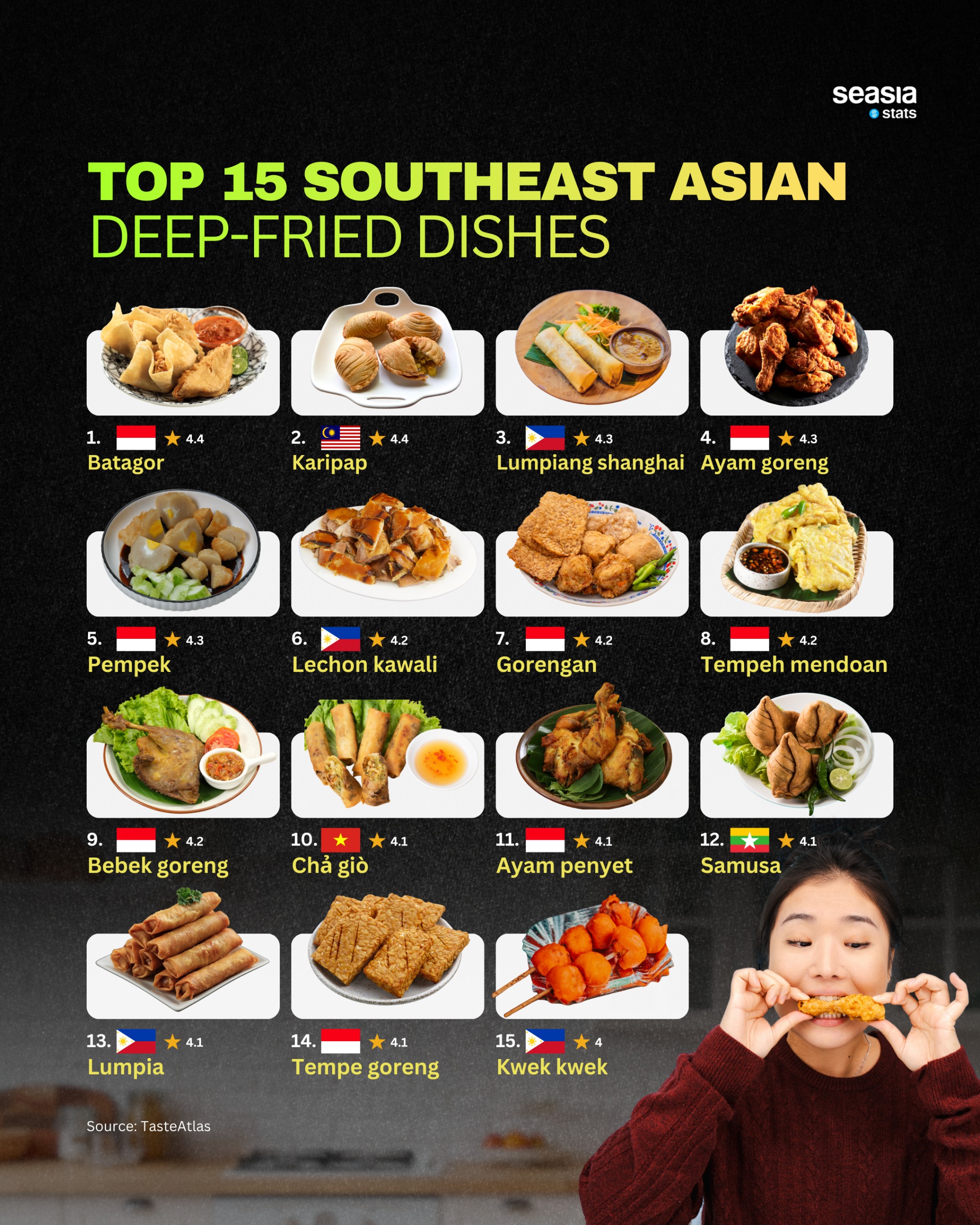
If there is one sound that unites Southeast Asia’s streets, it’s the unmistakable crackle of food hitting hot oil. From bustling night markets to roadside carts and family kitchens, deep-frying is more than a cooking method—it’s a cultural language. According to TasteAtlas rankings, Southeast Asia boasts some of the world’s most beloved fried dishes, blending bold spices, clever textures, and irresistible crunch.
The Top Five: Street Food Royalty
Leading the list is Batagor from Indonesia, earning an impressive 4.4-star rating. Short for bakso tahu goreng, this Bandung specialty combines fried fish dumplings and tofu, drenched in rich peanut sauce and sweet soy. It’s a street-food icon that perfectly captures Indonesia’s love of savory-sweet balance.
Tied at the top is Karipap from Malaysia, another 4.4-star favorite. These flaky, deep-fried pastry pockets filled with spiced potatoes, chicken, or sardines are a staple at Malaysian bakeries and pasar malam (night markets). Their popularity reflects Malaysia’s blend of Indian, Malay, and colonial culinary influences.
From the Philippines comes Lumpiang Shanghai (4.3 stars), bite-sized spring rolls filled with minced pork and vegetables. Often served at celebrations, these crispy rolls are as much about nostalgia as flavor.
Indonesia claims two more top-five spots with Ayam goreng (4.3 stars)—golden fried chicken seasoned with garlic, coriander, and galangal—and Pempek (4.3 stars), Palembang’s famous fried fishcakes served with tangy vinegar sauce.
Middle Rankings: Comfort Food Classics
Ranked 6th to 10th, the list leans heavily into comfort food. The Philippines’ Lechon kawali (4.2 stars) features deep-fried pork belly with shatteringly crisp skin, often dipped in liver sauce or vinegar.
Indonesia dominates this tier with Gorengan (4.2 stars), a catch-all term for assorted fritters sold everywhere from school gates to office streets—banana, tempeh, tofu, and vegetables all get their turn in hot oil.
Also featured are Tempeh mendoan (4.2 stars), lightly battered and fried tempeh from Central Java; Bebek goreng (4.2 stars), deep-fried duck known for its intense seasoning; and Vietnam’s Chả giò (4.1 stars), crisp spring rolls served with fresh herbs and fish sauce.
The Final Five: Regional Flavor Bombs
Rounding out the top 15 are dishes that highlight Southeast Asia’s diversity. Indonesia’s Ayam penyet (4.1 stars) pairs fried chicken with fiery sambal, smashed tableside for maximum flavor absorption.
From Myanmar comes Samusa (4.1 stars), the local cousin of the Indian samosa, typically smaller, crispier, and widely sold as street snacks. Indonesia appears again with Lumpia and Tempe goreng (both 4.1 stars), reinforcing the country’s deep love affair with fried soy and spring rolls.
Completing the list is the Philippines’ playful street snack Kwek kwek (4 stars)—bright orange, batter-fried quail eggs served with vinegar or sweet-spicy sauce.
Why Southeast Asia Fries So Well
Deep-frying thrives in Southeast Asia for practical and cultural reasons. It preserves food in humid climates, delivers fast cooking for street vendors, and enhances bold spice profiles. Countries like Indonesia, Malaysia, the Philippines, Vietnam, and Myanmar have elevated frying into an art form—balancing crunch, aroma, and heat.
From peanut sauces to sambal and vinegar dips, these dishes prove that in Southeast Asia, fried food isn’t just indulgence—it’s identity, history, and everyday joy served hot.