

Culinary Contributions from Asia Countries to the world
he world’s culinary vocabulary is deeply rooted in the diverse traditions of Asia, where specific dishes have transcended borders to become universal symbols

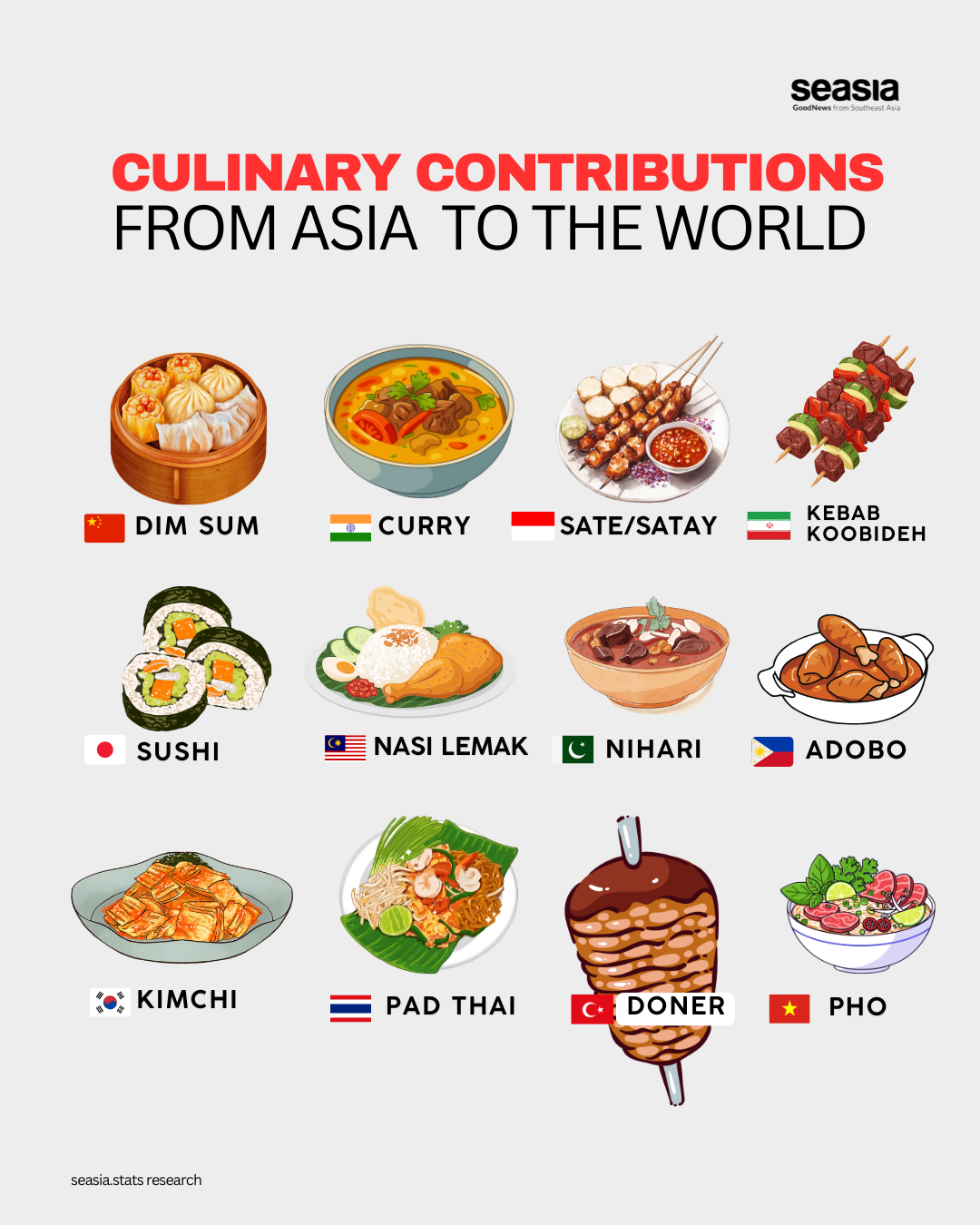
The world’s culinary vocabulary is deeply rooted in the diverse traditions of Asia, where specific dishes have transcended borders to become universal symbols of flavor and technique. Grilling remains one of the most significant exports, with Iran’s Kebab Koobideh and Turkey’s Doner representing two distinct evolutions of fire-cooked meat. While the Persian tradition perfected the flat metal skewer, the Turkish Doner revolutionized street food with the vertical rotisserie. Indonesia’s Sate further expanded this category by introducing the global palate to complex spice pastes and peanut-based sauces.
East Asian contributions focus on the meticulous balance of ingredients and preservation. Japan’s Sushi transformed vinegared rice into a global standard for culinary precision, while China’s Dim Sum popularized the social experience of small-plate dining. South Korea’s Kimchi has had a massive modern impact, moving fermentation from a traditional necessity to a global health and flavor trend. These dishes act as cultural anchors, providing a shared linguistic and sensory experience that is recognized in nearly every corner of the globe.
The boldest aromatic profiles come from South and Southeast Asia, where spices and acidity define the national plate. India’s Curry and Pakistan’s Nihari showcase the depth of slow-cooked, spice-layered stews, while the tropical profiles of Thailand’s Pad Thai and Vietnam’s Pho highlight the balance of fresh herbs with sweet and sour notes. The Philippines’ Adobo and Malaysia’s Nasi Lemak further demonstrate how vinegar-based braising and coconut-milk infusions have created world-renowned comfort foods. Together, these dishes represent a historical legacy of trade and tradition that continues to shape the modern global kitchen.