

Daily Workplace Anger in Southeast Asia, 2024
In 2024, Myanmar recorded the highest level of daily workplace anger in Southeast Asia, with 31% of workers expressing frustration at their jobs, according to G

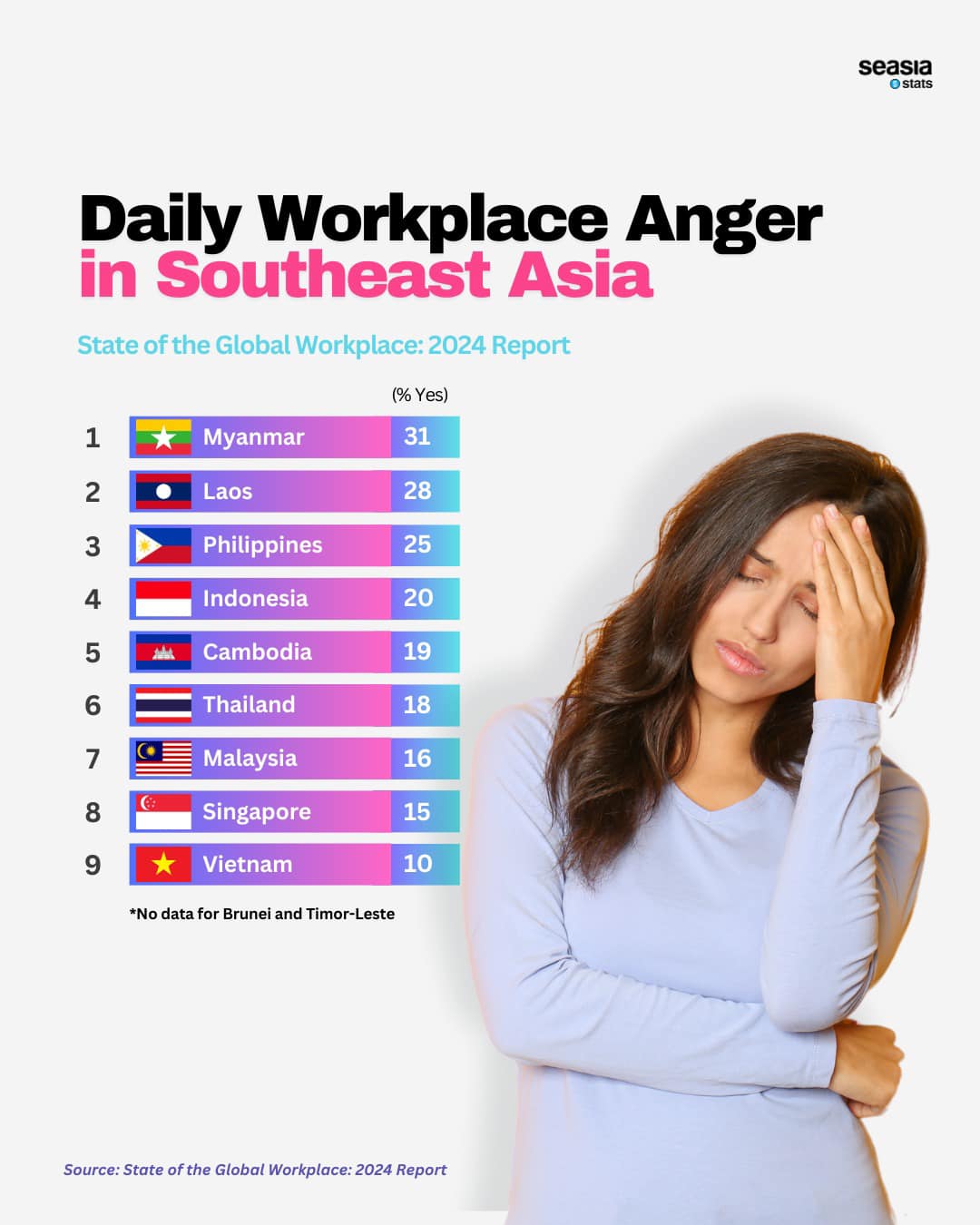
In 2024, Myanmar recorded the highest level of daily workplace anger in Southeast Asia, with 31% of workers expressing frustration at their jobs, according to Gallup's "State of the Global Workplace: 2024 Report." This figure highlights significant dissatisfaction among workers, reflecting the economic and political challenges the country continues to face. The high anger level may indicate deeper issues related to workplace conditions, economic instability, and possibly strained employer-employee relationships.
On the opposite end of the spectrum, Viet Nam had the lowest reported levels of daily workplace anger, with only 10% of workers expressing discontent. This suggests a relatively more positive work environment compared to other Southeast Asian countries, with higher levels of job satisfaction and engagement. Viet Nam’s growing economy and stability could be contributing factors to the lower levels of frustration among its workforce.
Southeast Asia’s Varying Levels of Workplace Anger
Other countries in the region displayed varying levels of workplace anger. Following Myanmar, Laos (28%) and the Philippines (25%) also reported higher levels of worker anger. These figures suggest that workers in these nations face similar challenges in their work environments, potentially linked to economic pressures and working conditions. In Indonesia, the workplace anger level stood at 20%, while Cambodia (19%) and Thailand (18%) showed moderate levels of discontent.
Malaysia (16%) and Singapore (15%) reported lower levels of daily worker anger compared to their regional counterparts. These countries are known for relatively more stable work environments and economies, possibly contributing to lower levels of dissatisfaction. However, these figures still indicate that a significant portion of workers experience frustration in their daily jobs.
Broader Workplace Trends in 2024
The "State of the Global Workplace: 2024 Report" provides not just statistics on anger, but also insights into broader workplace trends, including job satisfaction, employee engagement, productivity, and the challenges faced by organizations. Countries with higher levels of workplace anger may experience lower levels of productivity, higher employee turnover, and difficulty in maintaining employee engagement. Addressing these issues through improved workplace policies, better communication, and support systems could help reduce anger levels and enhance productivity across the region.
On the other hand, countries with lower levels of anger, such as Viet Nam and Singapore, may enjoy more stable work environments and higher productivity levels. These nations can serve as models for other countries in the region by promoting practices that increase employee satisfaction and reduce workplace stress.
Conclusion
In Southeast Asia, workplace anger levels vary significantly, reflecting the unique economic, political, and social challenges faced by each country. Myanmar’s workforce struggles with the highest anger levels, while Viet Nam reports the lowest. Understanding and addressing these challenges will be key to improving the workplace environment and ensuring a more productive, engaged workforce across the region.