

Energy transition ranking for ASEAN, 2025
ASEAN’s energy transition progress in 2025 shows a competitive race toward cleaner and more resilient power systems, with Malaysia, Vietnam, and Thailand emer

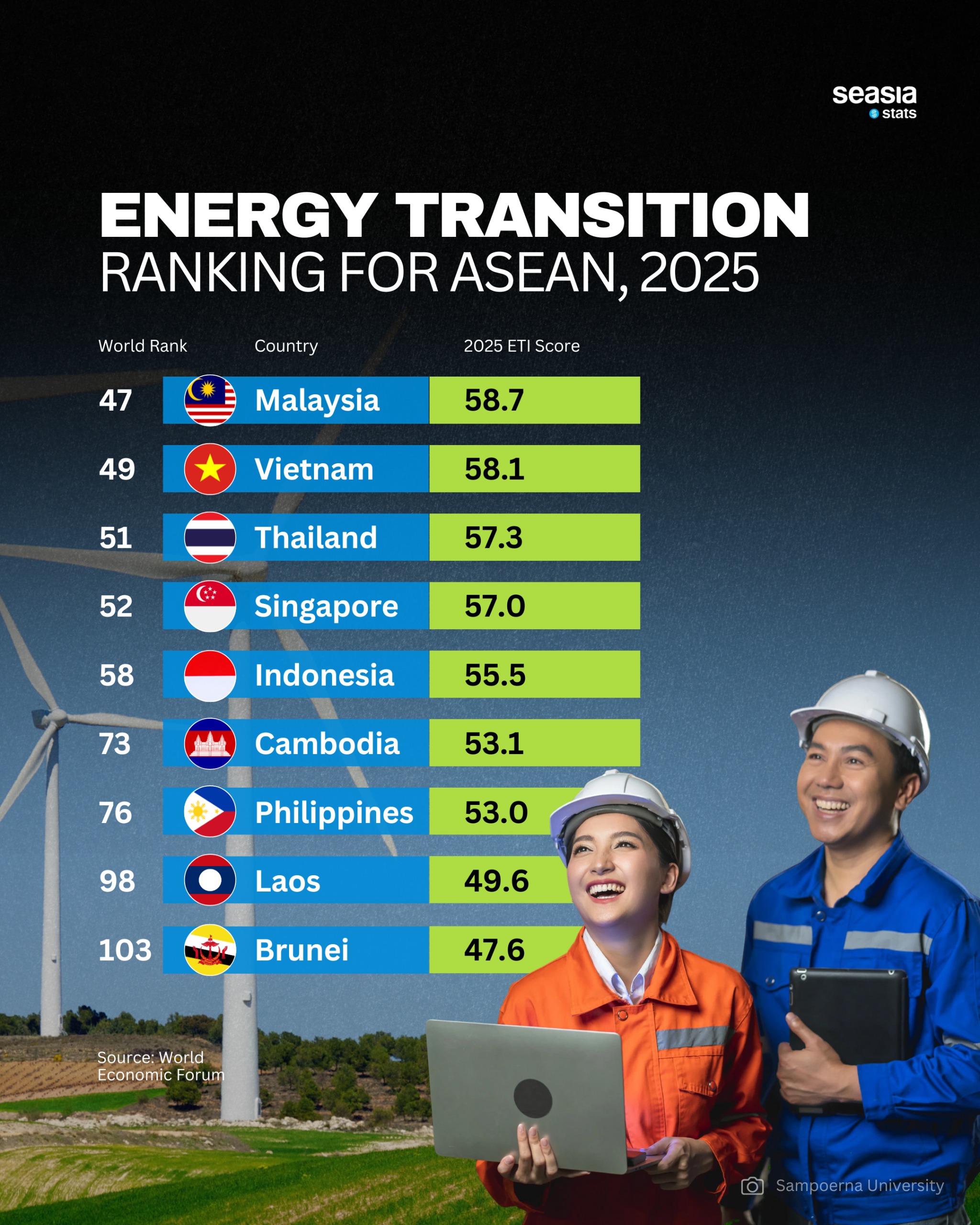
ASEAN’s energy transition progress in 2025 shows a competitive race toward cleaner and more resilient power systems, with Malaysia, Vietnam, and Thailand emerging as the region’s top performers. Malaysia leads ASEAN at 47th globally with an Energy Transition Index (ETI) score of 58.7, reflecting steady advances in renewable deployment, grid reliability, and policy consistency.
Close behind is Vietnam, ranked 49th with a score of 58.1, driven by rapid growth in solar and wind capacity over the past decade. Thailand takes third place regionally at 51st globally with a 57.3 score, supported by diversified energy sources and gradual decarbonization efforts.
Just outside the top three, Singapore and Indonesia remain important players. Singapore’s strong regulatory framework and innovation ecosystem place it 52nd globally (57.0), while Indonesia ranks 58th (55.5) as it balances energy security with the challenge of transitioning away from coal.
These rankings underline how policy direction, investment climate, and infrastructure readiness strongly influence each country’s pace of transition.
Further down the list, countries such as Cambodia, the Philippines, Laos, and Brunei highlight the uneven nature of ASEAN’s energy shift. While their ETI scores are lower, they also signal significant room for growth—particularly through renewables, regional power integration, and international financing.
Overall, the 2025 rankings show that ASEAN’s energy transition is moving forward, led by Malaysia, Vietnam, and Thailand, but with clear gaps that will shape the region’s sustainable energy future.