

Estimated Population of Komodo Dragons in the Wild in 2024
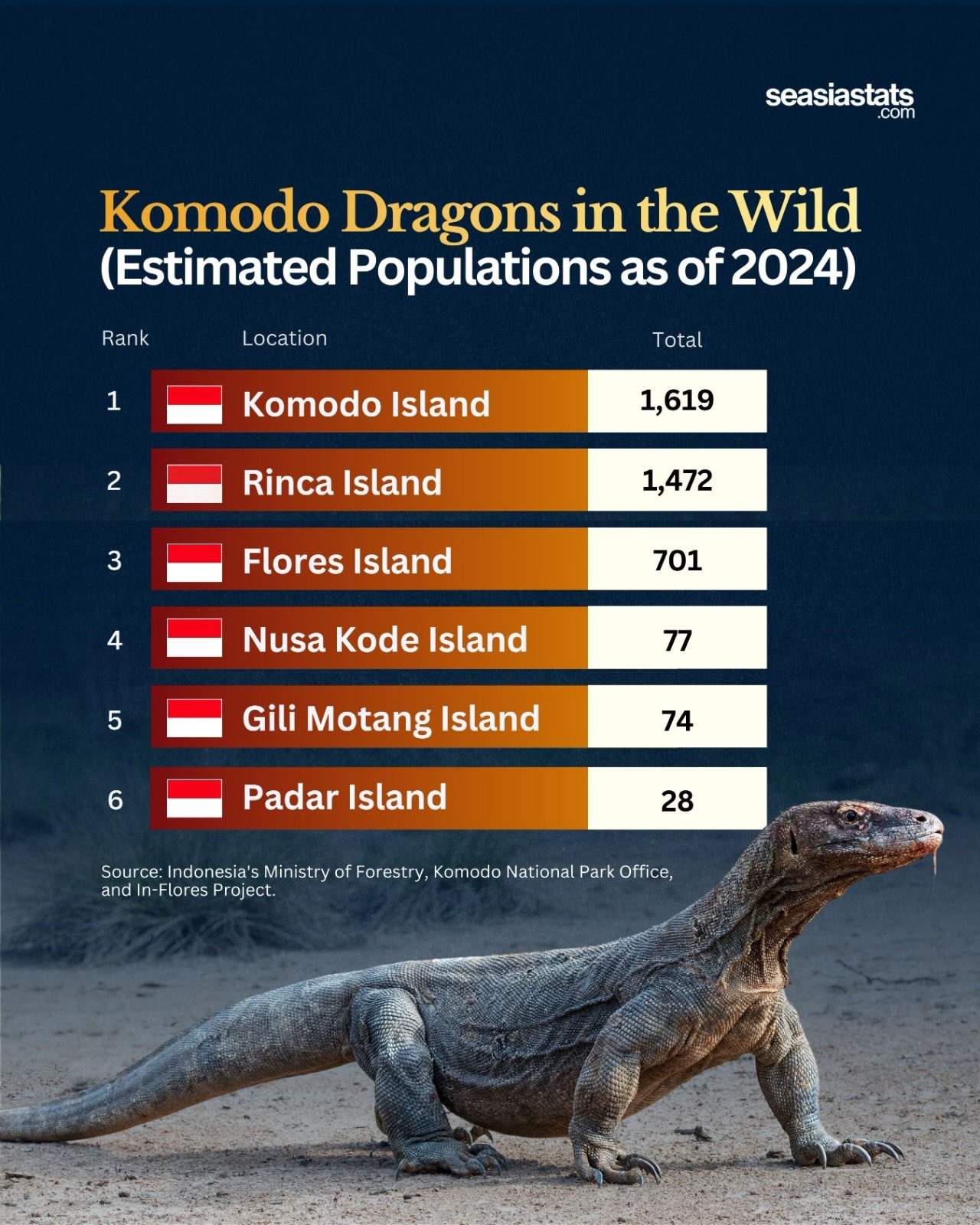
Komodo Island holds the most Komodo dragon individuals with 1,619 as of 2024.

The Komodo dragon (Varanus komodoensis), the largest living lizard in the world, is an iconic reptile native to several islands in Indonesia. These remarkable animals inhabit a limited geographical range, primarily within the Lesser Sunda Islands, including Komodo, Rinca, Flores, Nusa Kode, Gili Motang, and Padar.
Their populations are distributed unevenly across these islands, reflecting differences in habitat conditions, food availability, and environmental factors. Based on the estimated population figures for 2024, a total of approximately 3,971 Komodo dragons live in the wild across these six islands.
Komodo Island holds the largest estimated population, with approximately 1,619 individuals. As one of the most well-known habitats of the species, the island provides a suitable environment for Komodo dragons, with a combination of tropical savanna, forests, and coastal areas. Its relatively large population makes Komodo Island an important stronghold for the long-term survival of this endangered reptile.
Rinca Island follows closely, with an estimated population of 1,472 Komodo dragons. The island represents another major habitat and conservation area for the species. Together, Komodo and Rinca Islands account for approximately 3,091 individuals, representing the vast majority of the estimated wild population in 2024. This highlights the significant role these two islands play in maintaining the global population of Komodo dragons.
Meanwhile, Flores Island supports an estimated population of 701 individuals. Unlike Komodo and Rinca, which are widely recognized as the main habitats of the species, Flores has a more fragmented distribution of suitable habitats. Nevertheless, it remains an important area for Komodo dragon conservation, particularly because human activities and changes in land use can affect the availability and quality of its natural habitat.
The remaining populations are considerably smaller. Nusa Kode Island is estimated to have 77 Komodo dragons, while Gili Motang Island supports approximately 74 individuals. These relatively small populations make both islands important conservation priorities, as limited population sizes may increase their vulnerability to environmental disturbances and other threats.
Padar Island has the smallest estimated population, with only 28 Komodo dragons in 2024. Despite its low number, the island remains significant in understanding the species' distribution and conservation history.
Overall, these estimates demonstrate that Komodo dragon populations are concentrated mainly on Komodo and Rinca Islands, while smaller populations survive across other islands. Protecting their habitats, maintaining healthy prey populations, and minimizing human disturbances are essential to ensuring the continued survival of this extraordinary species in the wild.