

Europe and Asia Are Leading the Electric Car Transition
The transition to electric cars is being led by countries in Europe and Asia with Norway as the ultimate leader.

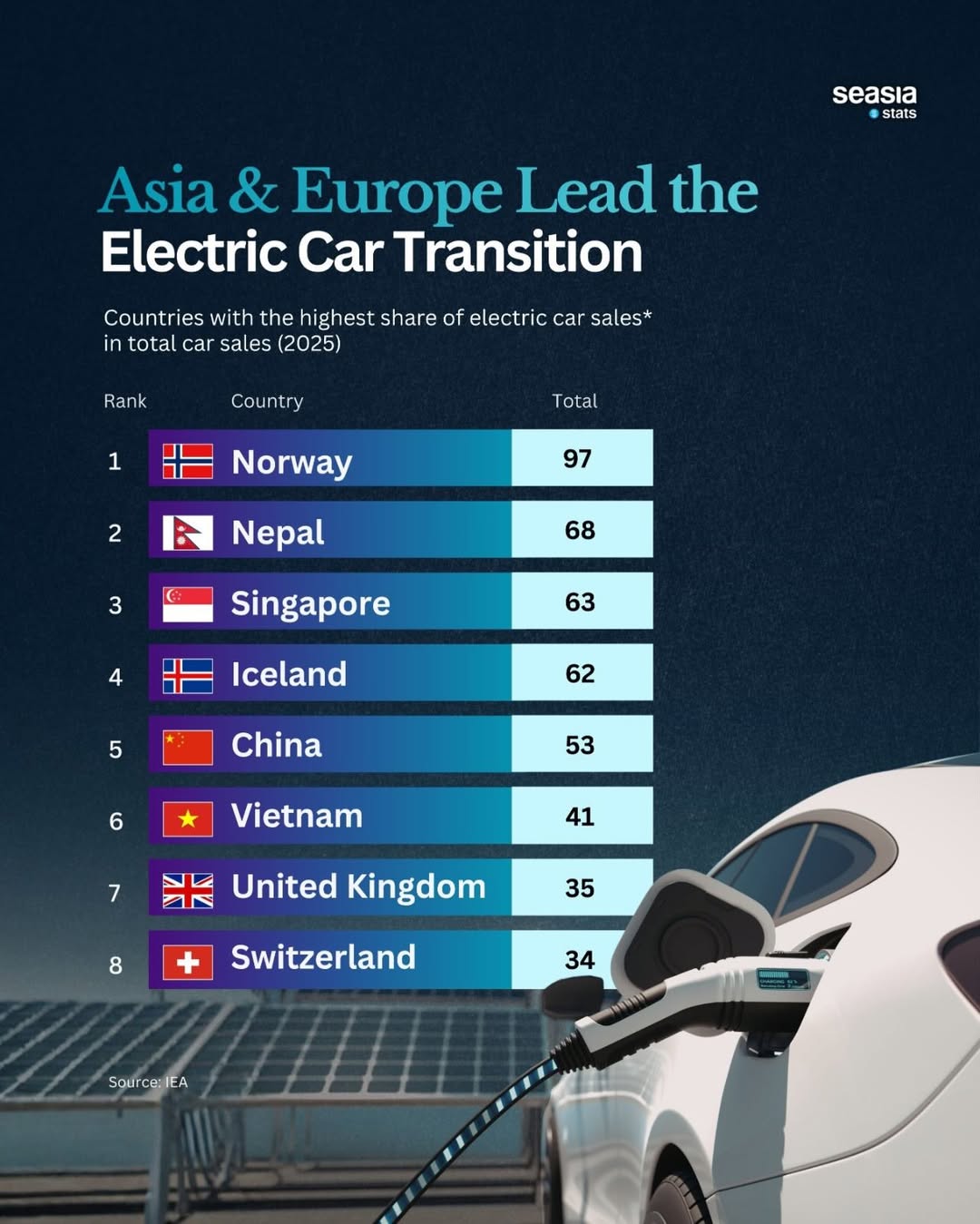
The global transition to electric vehicles (EVs) continues to accelerate, with several countries achieving remarkable levels of electric car adoption.
By 2025, a growing number of nations have seen electric vehicles account for a substantial share of total new car sales, reflecting advances in technology, government incentives, charging infrastructure, and increasing consumer awareness of environmental issues.
Norway remains the undisputed world leader in electric vehicle adoption. In 2025, electric cars account for an extraordinary 97% of all new car sales.
Norway's success is largely attributed to decades of supportive government policies, including tax exemptions, reduced toll fees, and extensive charging networks. The country has become a model for other nations seeking to transition away from fossil-fuel-powered transportation.
Nepal ranks second with 68% of total car sales being electric. This impressive achievement has been driven by favorable import policies, growing environmental awareness, and the economic advantages of electric vehicles compared to traditional fuel-powered cars.
Nepal's rapid adoption demonstrates that developing nations can also play a leading role in the global EV revolution.
Singapore follows closely with 63% of new car sales being electric. The city-state has invested heavily in charging infrastructure and has implemented policies aimed at reducing carbon emissions from transportation. As a result, electric vehicles have become increasingly attractive to consumers and businesses alike.
Iceland records a 62% electric vehicle sales share, supported by abundant renewable energy resources and strong environmental commitments. The country's clean electricity supply makes electric vehicles an especially sustainable transportation option.
China, the world's largest automobile market, reaches a significant milestone with electric vehicles accounting for 53% of new car sales. Massive investments in manufacturing, battery technology, and charging infrastructure have helped China become both the largest producer and consumer of electric vehicles globally.
Vietnam has emerged as a rising force in electric mobility, with EVs making up 41% of total car sales. Domestic manufacturers, government support, and growing consumer interest have contributed to the country's rapid progress.
In Europe, the United Kingdom records a 35% electric vehicle share, reflecting continued growth in consumer demand and expanding charging networks. Switzerland follows closely with 34%, benefiting from strong environmental policies and high levels of technological adoption.
These figures highlight the growing momentum behind electric transportation worldwide. As battery costs decline and charging infrastructure expands, electric vehicles are becoming increasingly accessible. The experiences of these leading countries demonstrate that the shift toward cleaner mobility is no longer a future possibility but an ongoing global transformation.