

Foreign Languages Southeast Asians Want to Learn the Most
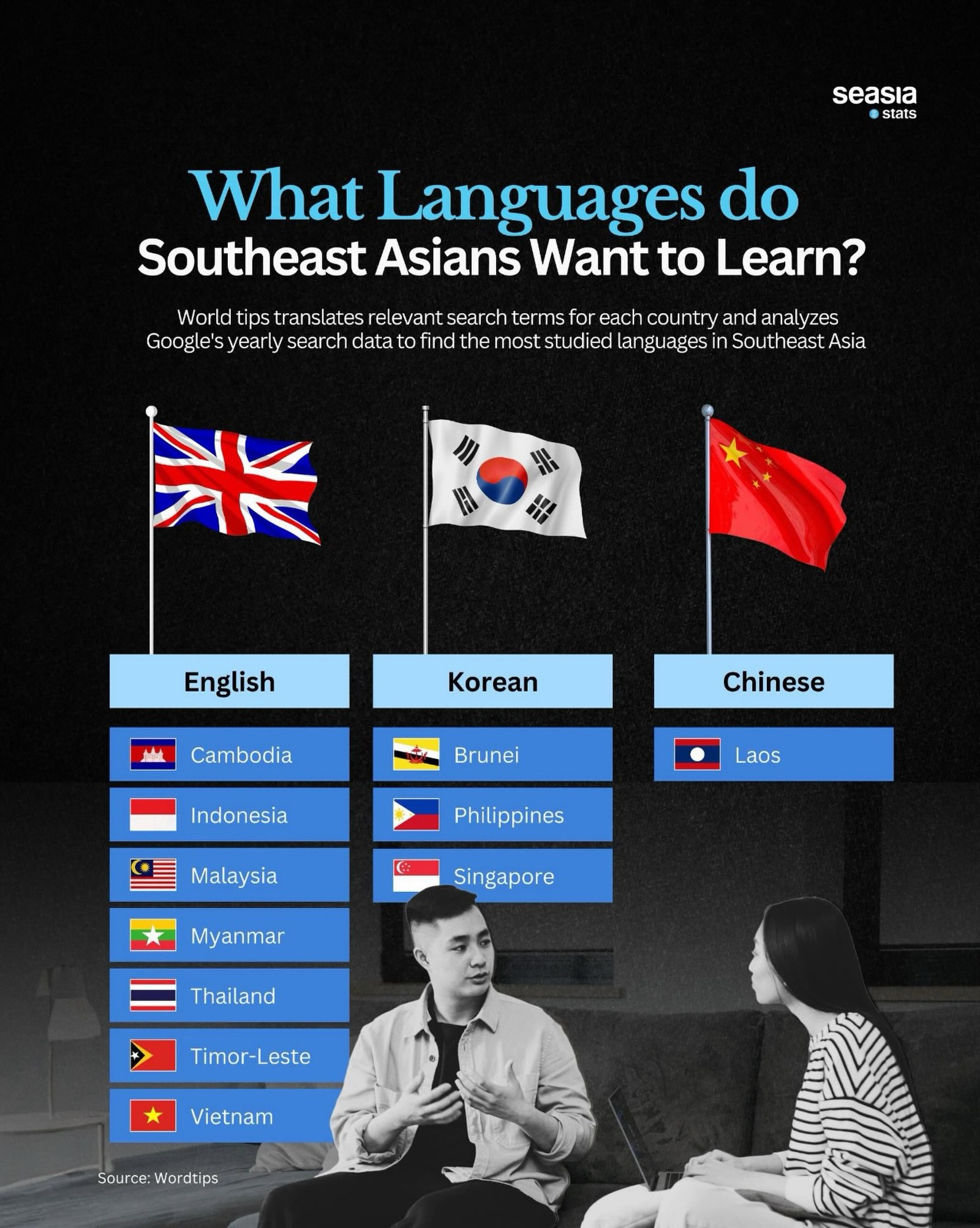
English, Korean, and Chinese are the most popular foreign languages in Southeast Asia.

Southeast Asia is one of the world's most culturally and linguistically diverse regions, with hundreds of languages spoken across its eleven countries.
As globalization, international trade, tourism, education, and digital communication continue to expand, many people in the region are choosing to learn foreign languages that can provide greater opportunities. While preferences differ from country to country, English, Korean, and Chinese stand out as the most sought-after foreign languages.
English is the most popular foreign language in the majority of Southeast Asian countries. It is the leading choice for people in Cambodia, Indonesia, Malaysia, Myanmar, Thailand, Timor-Leste, and Vietnam.
English serves as the international language of business, science, higher education, diplomacy, and tourism. For many Southeast Asians, proficiency in English opens doors to better employment, overseas study, and communication with people from around the world.
As a result, schools, universities, and language centers throughout these countries continue to invest heavily in English-language education.
In contrast, Korean has become the most desired foreign language in Brunei, the Philippines, and Singapore. The growing popularity of Korean is closely linked to the global influence of South Korea through K-pop, Korean dramas, films, fashion, beauty products, and technology.
Beyond entertainment, South Korea is also an important economic partner for many Southeast Asian countries, creating opportunities for employment, business, and academic exchange. As interest in Korean culture continues to rise, more people are enrolling in Korean language courses to strengthen both personal and professional connections.
Meanwhile, Chinese is the most popular foreign language to learn in Laos. China's close geographic proximity and strong economic ties with Laos have increased the demand for Mandarin Chinese.
Trade, infrastructure development, tourism, and investment between the two countries have encouraged many Laotians to study Chinese in order to improve career prospects and facilitate cross-border communication.
These language preferences reflect each country's unique economic relationships, cultural influences, and educational priorities. Although English remains the dominant choice across most of Southeast Asia, the increasing popularity of Korean and Chinese demonstrates the region's evolving connections with major Asian economies and cultures.
Overall, the languages Southeast Asians choose to learn highlight the importance of international communication in today's interconnected world.
Whether for education, employment, travel, or cultural appreciation, learning English, Korean, or Chinese provides valuable skills that help individuals broaden their opportunities and participate more actively in the global community.