

Happiness Ranking in Southeast Asia, 2024
In Southeast Asian countries, the importance of happiness ranking holds significant implications for both policymakers and individuals alike. As nations strive

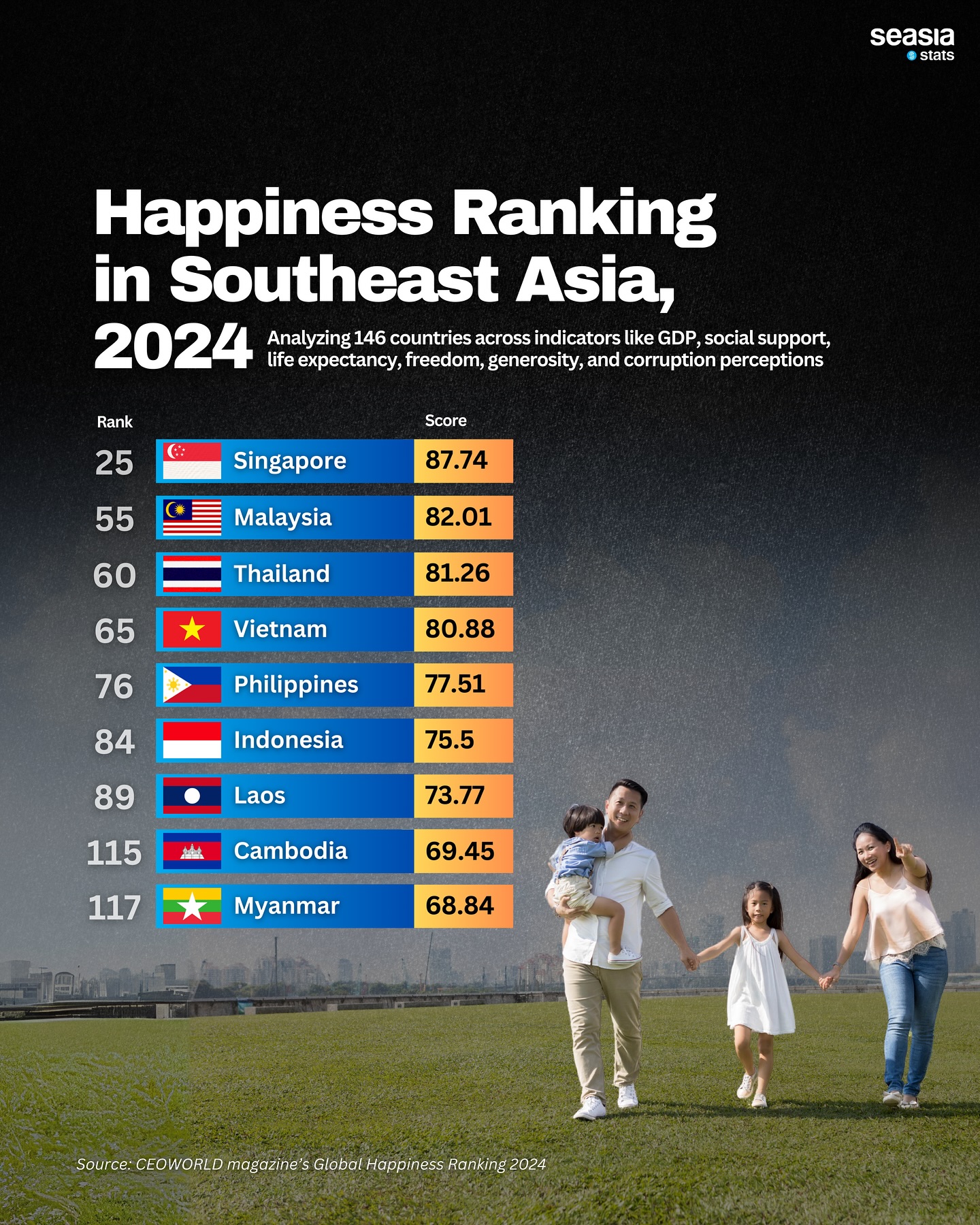
In Southeast Asian countries, the importance of happiness ranking holds significant implications for both policymakers and individuals alike. As nations strive for economic development and social progress, measuring happiness provides valuable insights into the overall well-being of their citizens.
For policymakers, understanding happiness rankings offers a holistic view of societal progress beyond traditional economic indicators. By considering factors such as social support, freedom, and perceived corruption, governments can tailor policies to enhance citizens' quality of life and foster a more inclusive and equitable society.
Moreover, in a region marked by cultural diversity and varying levels of economic development, happiness rankings serve as a vital tool for identifying disparities and addressing underlying issues. By pinpointing areas of improvement, governments can implement targeted interventions to uplift marginalized communities and promote social cohesion.
On an individual level, awareness of happiness rankings encourages people to prioritize holistic well-being over material wealth. It prompts reflection on personal values, relationships, and mental health, ultimately leading to a more fulfilling life. Additionally, it empowers individuals to advocate for societal changes that prioritize happiness and well-being as fundamental human rights.
In essence, the importance of happiness ranking in Southeast Asian countries lies in its ability to shape policies, foster societal progress, and promote individual well-being. By embracing a holistic approach to development, nations can create environments where happiness thrives, enriching the lives of their citizens and fostering sustainable prosperity for generations to come.