

How Asian Countries Think AI Will Impact Jobs
As artificial intelligence (AI) becomes more widespread, many people report using it regularly in their daily lives. While AI offers significant benefits, there

As artificial intelligence (AI) becomes more widespread, many people report using it regularly in their daily lives. While AI offers significant benefits, there is growing concern about its impact on job roles and potential displacement of workers.
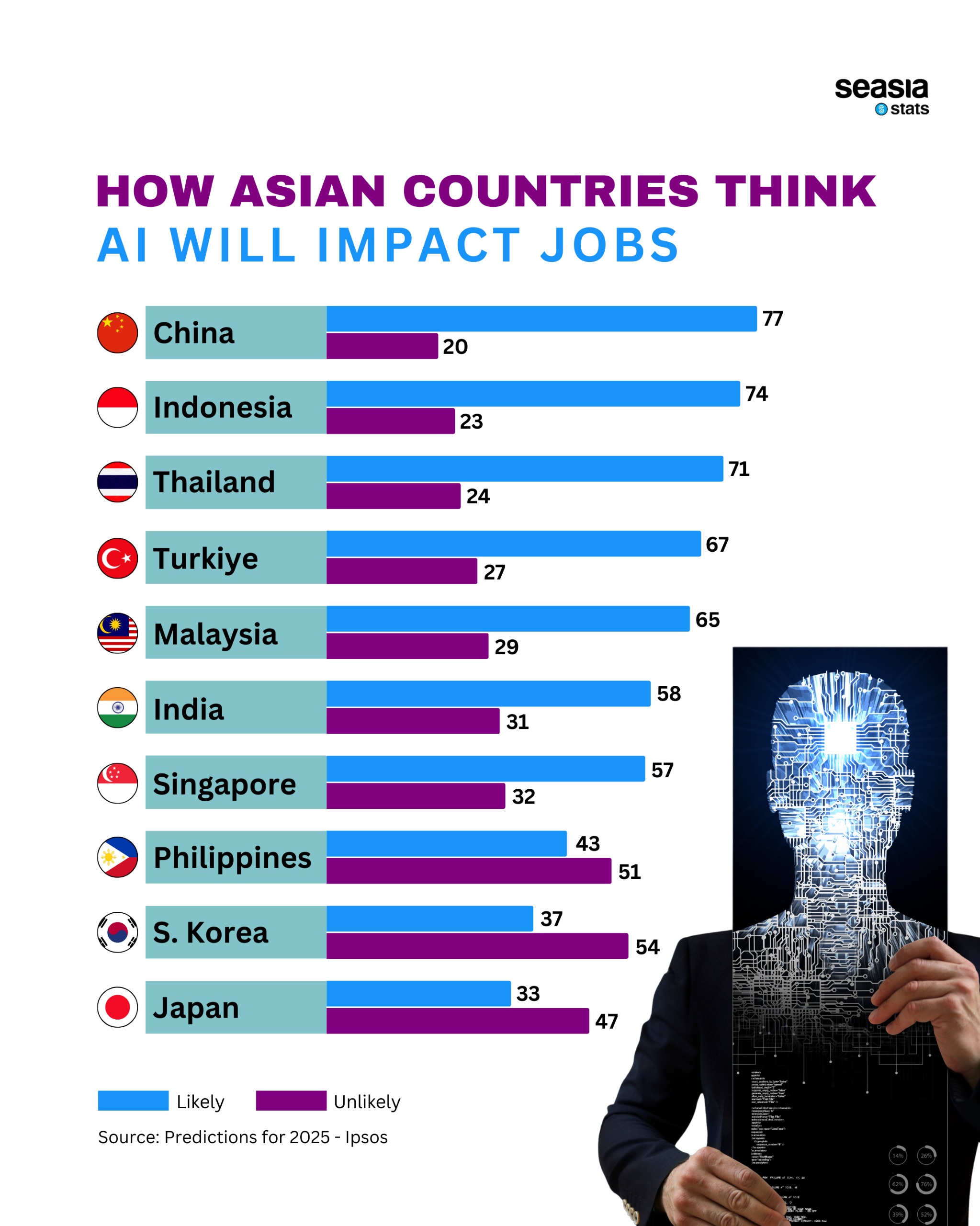
A recent Ipsos survey sought to understand global attitudes toward AI’s effect on job creation, asking individuals whether they believe AI will generate numerous new jobs in their country.
Survey Methodology
The Ipsos survey was conducted across 33 countries between October 25 and November 8, 2024. A total of 23,721 adults aged 18 and older participated in the study.
Chinese Show the Highest Optimism
Among all surveyed countries, China stands out as the most optimistic nation regarding AI’s potential to create new jobs. This sentiment aligns with China’s rapid AI advancements, driven by strong government support, heavy investments, and a thriving AI research sector.
Although the U.S. remains a leader in transforming AI research into marketable products, China’s academic research in AI is among the world’s best, further fueling optimism about AI-driven job growth.
Indonesia and Thailand Rank High in AI Optimism
Beyond China, Indonesia and Thailand rank among the top three in AI optimism. These Southeast Asian nations have been investing heavily in digital transformation, fostering tech-driven economies that may benefit from AI-related job creation.
Hungary Is the Least Optimistic
At the other end of the spectrum, Hungarians display the lowest optimism about AI creating new job opportunities. This may reflect broader concerns in Europe about automation replacing jobs without sufficient retraining initiatives or workforce adaptation strategies.
The Global Divide on AI and Employment
The survey results highlight a clear divide in perceptions about AI’s economic impact. Countries with emerging tech sectors and strong government support for AI development, such as China, Indonesia, and Thailand, tend to express greater optimism. Meanwhile, regions with uncertainty over AI’s workforce implications may fear job displacement more than job creation.
As AI continues to reshape industries, governments and businesses will need to navigate these challenges, ensuring that AI-driven advancements lead to inclusive job opportunities rather than widespread disruptions.