

How Does Asia Feel About Eco-Friendly Packaging?
Indonesia leads Asia in the importance of eco-friendly packaging.

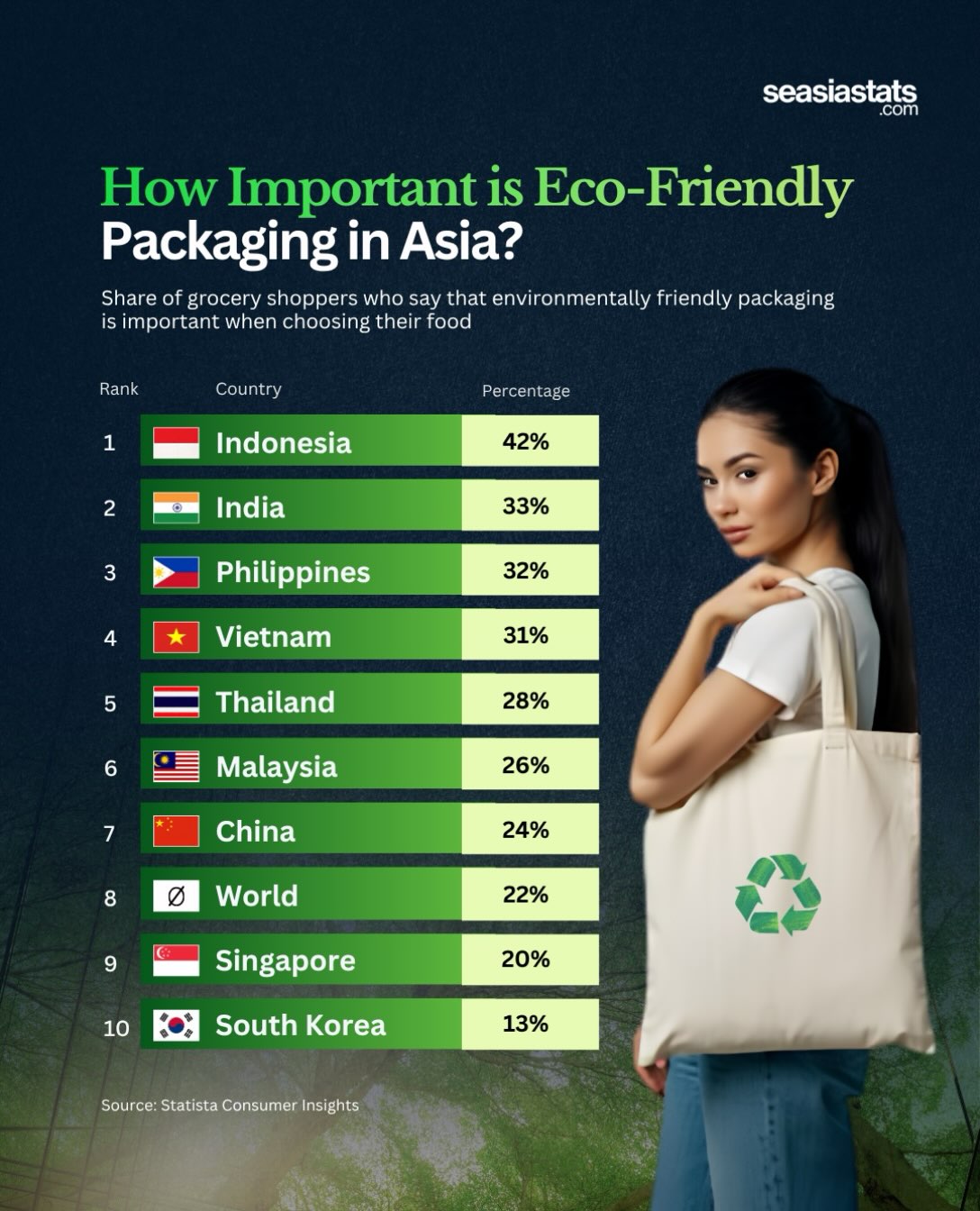
Sustainability is becoming an increasingly significant factor for consumers throughout Asia, affecting their buying habits and influencing what they expect from businesses. According to Statista Consumer Insights, a considerable proportion of consumers in several Asian markets place importance on environmentally friendly packaging when purchasing products.
The results reflect rising environmental consciousness and indicate that businesses across the region could benefit from introducing more sustainable packaging alternatives.
Indonesia leads the surveyed Asian markets, with 42 percent of consumers saying that eco-friendly packaging is important to them. This high level of concern highlights growing awareness of environmental challenges, including plastic pollution and waste disposal.
As one of the world's major contributors to plastic waste entering the oceans, Indonesia has witnessed increasing initiatives from government authorities and private companies to promote sustainable consumption and encourage the adoption of environmentally responsible packaging.
India ranks second, with 33 percent of consumers expressing an interest in eco-friendly packaging. Given its enormous and expanding consumer market, the country offers considerable potential for businesses that emphasize sustainability and seek to minimize packaging waste.
The Philippines occupies third place, with 32 percent, followed closely by Vietnam at 31 percent. In both markets, increasing environmental awareness and concerns over waste management are prompting consumers to consider the environmental consequences of their purchasing choices more carefully.
Thailand also demonstrates considerable interest in sustainable packaging, with 28 percent of consumers identifying it as an important consideration when shopping.
Malaysia follows with 26 percent, meaning that more than a quarter of consumers surveyed value environmentally friendly packaging. China, despite its position as the region's largest consumer market, records a comparatively lower share of 24 percent.
However, considering China's enormous population and consumer base, this proportion still represents a substantial number of people who are conscious of environmental issues and interested in more sustainable packaging options.
Singapore records 20 percent, indicating that one in five consumers considers eco-friendly packaging important. Although the figure is lower than those recorded in several neighboring markets, sustainability continues to receive attention in the city-state, where government programs encourage environmental responsibility and efforts to reduce waste.
South Korea reports the lowest proportion among the countries surveyed, at 13 percent. While the result suggests that sustainable packaging may have less influence on purchasing decisions there than in other surveyed markets, environmental protection remains relevant to wider discussions about sustainable development and corporate responsibility.
Overall, the Statista Consumer Insights findings demonstrate varying levels of consumer interest across Asian markets, while pointing to a broader recognition of packaging's environmental impact.
Companies that adopt sustainable packaging practices could enhance their brand image, attract environmentally conscious customers, and respond more effectively to changing consumer preferences throughout Asia.